
Burlington's Q3 2026: Contradictions Emerge on Weather, Tariffs, and Demographics
 Aime Summary
Date of Call: November 25, 2025
Financials Results
- Revenue: Total sales +7% in Q3; comparable store sales +1% in Q3; year-to-date total sales +8% vs +11% prior year
- EPS: Q3 adjusted EPS $1.80, up 16% YOY; updated full-year 2025 adjusted EPS guidance $9.69–$9.89, up 16–18% YOY
- Gross Margin: Q3 gross margin 44.2%, up 30 bps YOY (merchandise margin +10 bps; freight -20 bps)
- Operating Margin: Q3 adjusted EBIT margin 6.2%, up 60 bps YOY; Q4 guidance +30–50 bps; FY2025 guidance expansion of 60–70 bps vs prior year
Guidance:
- Q4 FY2025: comparable store sales flat to +2%; total sales +7% to +9%.
- Q4 FY2025: adjusted EBIT margin +30–50 bps; Q4 adjusted EPS $4.50–$4.70 (+9% to +14% YoY).
- FY2025: comp +1% to +2%; total sales ≈ +8%; EBIT margin +60–70 bps; adjusted EPS $9.69–$9.89 (+16% to +18% YOY).
- Preliminary FY2026: total sales growth expected high single-digits; at least 110 net new stores; comps 0% to +2%; operating margin flat at 2% comp with +10–15 bps per point above.
Business Commentary:
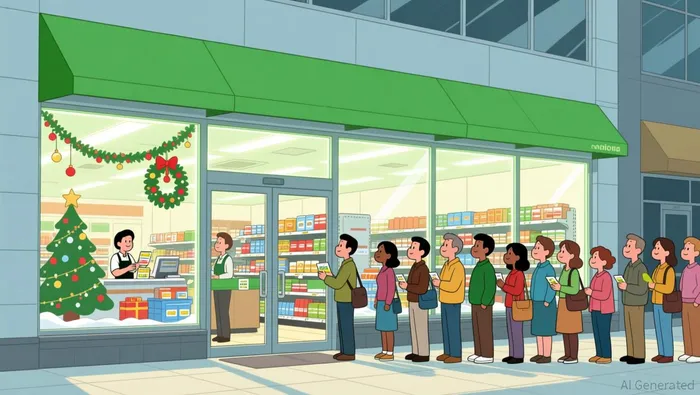
* Sales and Market Performance: - Burlington Stores reportedtotal sales increased by 7% in Q3, building upon the 11% sales growth from the previous year. - Despite a 1% comp store sales growth in Q3, the company exceeded expectations, driven by strong results from new store openings and various efficiency initiatives.- Margin and Earnings Expansion:
- Burlington achieved a
60 basis pointsincrease in adjusted EBIT margin for Q3, surpassing expectations despite a1%comp store sales growth. This was driven by margin expansion strategies, including freight expense leverage, supply chain efficiency, and offsetting tariff pressures through strategic product sourcing and pricing adjustments.
Store Expansion and Pipeline Strength:
- The company opened
73net new stores in Q3, contributing to a total store count of1,211, and plans to open at least110new stores in 2026. The increase in store openings is supported by a robust real estate pipeline and strong performance of new stores, which have met or exceeded financial targets.
Weather Impact on Comps:
- Warmer-than-usual weather in September, which accounts for the majority of cold weather merchandise sales, led to a significant
10%decline in sales of cold-weather categories. - This weather impact was a primary factor in the company's
1%comp store sales growth, contributing to a difference with off-price peers who reported higher comps.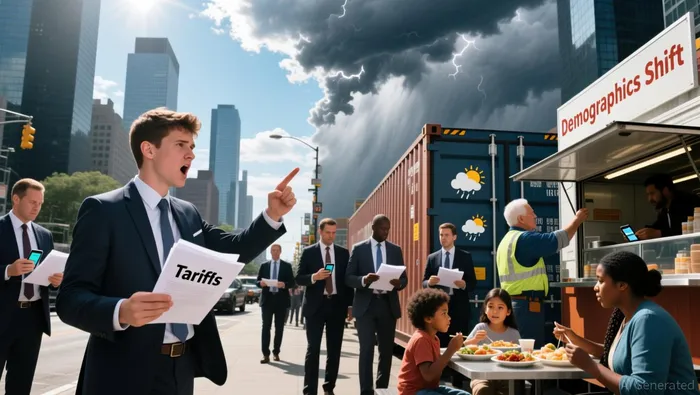
Sentiment Analysis:
Overall Tone: Positive
- Management beat Q3 earnings and expanded margins: "we still delivered margin expansion...and earnings growth that significantly beat our guidance." They raised Q4 and full-year margin/EPS guidance and said they are "tracking in line" toward their longer-range goals, increasing FY26 store openings and expecting continued margin expansion.
Q&A:
- Question from Matthew Boss (JPMorgan Chase & Co): So on relative performance, your comp this quarter came in below both of your off-price peers. This is a clear reversal from results in the second quarter and over the last year. Clearly, you cited weather was a factor, but how concerned are you by this change in your relative comp versus peers?
Response: Weather was the biggest driver and explains roughly half the gap vs. peers; the remainder requires further analysis and the company will investigate to address the performance difference.
- Question from Matthew Boss (JPMorgan Chase & Co): And then, Kristin, as a follow-up, could you provide more color on the 60 basis points of operating margin expansion in the quarter, particularly just given as we think about the pressures that you faced from tariffs and the 1% comp?
Response: Q3 EBIT expanded +60bps driven by merchandise margin improvement (tariff mitigation), freight efficiencies (-20bps), product sourcing cost leverage (-40bps) and SG&A leverage (-20bps), partly offset by +20bps from higher depreciation.
- Question from Irwin Boruchow (Wells Fargo Securities, LLC): I guess my question kind of piggybacking off of Matt's. So the comp growth in Q3 was lower than peers, but the margin and earnings were actually pretty much better. How should we reconcile that? And then really more importantly, are there choices that you made during the quarter that may have driven the higher margin in Q3 at the expense of sales?
Response: Yes — deliberate tariff-mitigation choices (reducing receipts in heavily impacted categories and trimming inventories to force faster turns) improved margins and absorbed tariff pressure but likely reduced sales; many actions have been reversed as tariffs eased.
- Question from Irwin Boruchow (Wells Fargo Securities, LLC): Got it. And then maybe, Kristin, just to elaborate maybe a little more on the 2026 initial outlook, key risk opportunities in the outlook, anything else you could share?
Response: Preliminary 2026 plan is conservative: high-single-digit sales growth, ≥110 net new stores, comps 0–2%; operating margin modeled flat at 2% comp with +10–15bps per point above; offsetting positives (merch margin, supply gains) and negatives (DC startup costs, higher depreciation).
- Question from Lorraine Maikis (BofA Securities): Michael, one of your off-price peers is accelerating comps with more focus on marketing, more in-store inventory and a store refresh. Do you see any risk that Burlington will lose market share?
Response: Not materially — off-price demand is broad and Burlington is taking share from non-off-price retailers; company will monitor peers and adopt useful innovations but views sector strength as overall positive.
- Question from Lorraine Maikis (BofA Securities): And I wanted to follow up on pricing. Did you take price in 3Q? And what impact did that have on your comp? And then what's your strategy on pricing for the fourth quarter?
Response: Avoided broad price increases despite tariffs, using tariff mitigation instead; limited pricing tests were run in some categories and generally worked; will remain cautious and continue to test.
- Question from John Kernan (TD Cowen): Michael, sounds like you see an opportunity to take up the number of new store openings and the cadence of growth. Can you expand a bit upon this? What are you seeing in terms of the new store pipeline, both from a real estate perspective and also potential new store productivity?
Response: New stores are meeting or exceeding productivity targets; pipeline is strong — 104 net openings this year and at least 110 planned for 2026, bolstered by 45 Joann bankruptcy leases.
- Question from John Kernan (TD Cowen): Got it. Maybe as a follow-up, obviously, all 3 off-price retailers are resonating strongly with consumers. I liked how Michael framed the industry's opportunity. You're clearly feeling more bullish on the number of stores, maybe a little bit more cautious on comp sales, but more bullish on the potential margin expansion potential for the business. Is that the right way to think about it?
Response: Yes — company is on track to long-range targets, more bullish on new-store cadence and margin expansion, but remains cautious on near-term comps while targeting 4–5% average annual comps over the remaining plan to 2028.
- Question from Brooke Roach (Goldman Sachs Group, Inc.): Michael, I'd like to ask you about the trends that you're seeing with the lower income customer. How did these customers perform in the third quarter? And are there any other callouts in terms of customer demographics that are worth sharing?
Response: Lower-income customers remain resilient and stores in lower-income trade areas continue to outperform; Hispanic-heavy stores slipped in Q3 but declines are localized and market-specific.
- Question from Brooke Roach (Goldman Sachs Group, Inc.): Great. And then my follow-up would be for Kristin. Kristin, can you give us more color about your guidance for the fourth quarter, both in terms of comp sales and for earnings?
Response: Q4 guidance maintained: comps 0–2%, total sales +7–9%; raised Q4 margin and EPS outlook to EBIT +30–50bps and EPS $4.50–$4.70 driven by freight/supply and store efficiencies.
- Question from Alexandra Straton (Morgan Stanley): Michael, can you talk about the availability of off-price merchandise as you're heading into the fourth quarter? And then I have a quick follow-up.
Response: Buying environment is very strong with ample merchandise and values across categories; reserve and store flow are well supplied.
- Question from Alexandra Straton (Morgan Stanley): Perfect. And then just on the cold weather merchandise in the quarter. Is there any just additional detail you can provide on that dynamic, the impact on the overall comp for the chain? I know you've given a lot of details, but anything else worth highlighting there?
Response: Cold-weather categories (~20% of assortment) caused ~200bps direct drag on Q3 comps; lower traffic from milder weather also reduced ancillary purchases, pushing total drag to multiple percentage points; comps rebounded to mid-single digits once weather turned.
- Question from Mark Altschwager (Robert W. Baird & Co.): Kristin, could you give us some more detail on regional trends, category trends as well as any of the detailed comp metrics for Q3?
Response: Southeast was strongest; West/Northeast/Midwest in line; Southwest trailed. Top categories: beauty, accessories, shoes; home was softer. Traffic down but conversion and average basket size increased.
- Question from Mark Altschwager (Robert W. Baird & Co.): Excellent. And then, Michael, as we look at the Q4 comp guidance, do you view that as conservative just given typically less weather sensitivity in the fourth quarter?
Response: Not seeing meaningful upside — Q4 faces a tough two-year stack (Q4 last year +6%), so guidance (0–2%) is cautious and management does not expect significant upside at this time.
Contradiction Point 1
Weather Impact on Sales
It involves differing explanations for the impact of weather on sales, which could affect investor expectations regarding the company's ability to manage external factors.
How concerned are you about this decline in your relative performance compared to peers? - Matthew Boss (JPMorgan Chase & Co)
2026Q3: We ran a 1% comp in Q3 compared to their 6% and 7%. Weather was the biggest driver of our slowdown. Mild weather affects our business significantly due to our strong brand equity in outerwear. - Michael O'Sullivan(CEO & Director)
What are the first-quarter sales trends, and why is the first-quarter comp guidance more conservative than the rest of the year? - Matthew Boss (JPMorgan)
2025Q4: The first quarter trend was weaker than expected, influenced by weather and the timing of tax refunds. The weakness was concentrated in the Midwest and Northeast regions due to unfavorable weather. - Michael O'Sullivan(CEO & Director)
Contradiction Point 2
Tariff Impact on Sales and Strategy
It involves differing explanations of how tariffs affected sales and the company's strategic response, which could impact investor understanding of the company's ability to manage external pressures.
Can you explain the 60 basis point operating margin expansion this quarter, despite tariff pressures? - Matthew Boss (JPMorgan Chase & Co)
2026Q3: We made strategic decisions to manage tariff impacts, which may have affected sales but improved margins. - Michael O'Sullivan(CEO & Director)
What were the causes of the margin contraction in Q1 and the expected margin expansion trends throughout the year? - Matthew Boss (JPMorgan)
2025Q4: The margin expansion is expected to be modest in Q1 due to less leverage from merchandise margin aid, supply chain lease increases, and fixed-cost deleverage. - Michael O'Sullivan(CEO & Director)
Contradiction Point 3
Customer Demographics and Performance
It highlights differing accounts of customer demographics and their performance, which could influence investor perceptions of the company's market positioning.
How did low-income customers perform in Q3, and are there any other notable demographic trends? - Brooke Roach (Goldman Sachs)
2026Q3: The lower-income customer performed well, performing above the chain. Hispanic customers, however, showed a slowdown in Q3, varying by location. The overall economic uncertainty makes this demographic a focus for us. - Michael O'Sullivan(CEO & Director)
Can you break down your 2024 comp trend by trade-down shoppers versus existing customers? - Irwin Boruchow (Wells Fargo)
2025Q4: In Q4, both need-a-deal and want-a-deal customers contributed to 6% comp growth. Lower-income regions performed strongly, indicating success with need-a-deal shoppers. Additionally, stronger growth in higher income areas indicates trade-down customers were critical. - Michael O'Sullivan(CEO & Director)
Contradiction Point 4
Off-Price Market Position and Competition
It reflects differing perspectives on the competitive landscape and market position within the off-price retail sector, which could impact strategic decisions and investor perceptions.
A discount competitor is accelerating comps with increased marketing and in-store inventory. Could this pose a risk of losing market share for Burlington? - Lorraine Maikis (BofA Securities)
2026Q3: We see off-price as healthy, and we don't feel threatened by our peers. We compete in a large market with fragmented apparel, accessories, and home goods. We believe the shift from traditional full-price retail to off-price is unlikely to end soon. - Michael O'Sullivan(CEO & Director)
Are you seeing strength in lower-income consumers and other demographic trends in comp performance? - Lorraine Hutchinson (Bank of America)
2025Q1: Our sales slowdown was broad-based, affecting all demographic trade areas. Lower-income trade areas outperformed the rest of the chain but slowed down along with the rest of the company. Stores along the southern border underperformed in Q1. - Michael O'Sullivan(CEO)
Contradiction Point 5
Consumer Behavior and Demographic Trends
It involves differing assessments of consumer behavior and demographic trends, which are crucial for understanding market dynamics and customer segmentation strategies.
How did lower-income customers perform in Q3, and were there other notable demographic trends? - Brooke Roach (Goldman Sachs)
2026Q3: The lower-income customer performed well, performing above the chain. Hispanic customers, however, showed a slowdown in Q3, varying by location. The overall economic uncertainty makes this demographic a focus for us. - Michael O'Sullivan(CEO & Director)
Are you seeing strength in lower-income consumers and any other notable trends in comp performance across demographic groups? - Lorraine Hutchinson (Bank of America)
2025Q1: Our slowdown in comp growth was broad-based, affecting all demographic trade areas. Lower-income trade areas outperformed the rest of the chain but slowed down along with the rest of the company. - Michael O'Sullivan(CEO)

Discover what executives don't want to reveal in conference calls
Latest Articles
Stay ahead of the market.
Get curated U.S. market news, insights and key dates delivered to your inbox.
AInvest
PRO
AInvest
PRO



Comments
No comments yet