
Burkina Faso’s Foiled Coup: A Crossroads for Political and Economic Stability?
On April 21, 2025, Burkina Faso’s military junta announced the thwarting of a major coup plot aimed at destabilizing the regime of Captain Ibrahim Traoré. The alleged plan, involving collaboration with foreign-based dissidents and terrorist groups, underscores the fragility of governance in a country already ravaged by Islamist violence and regional political tensions. As the junta consolidates power through accusations of foreign-backed subversion, the economic stakes—already dire—are growing ever more precarious.
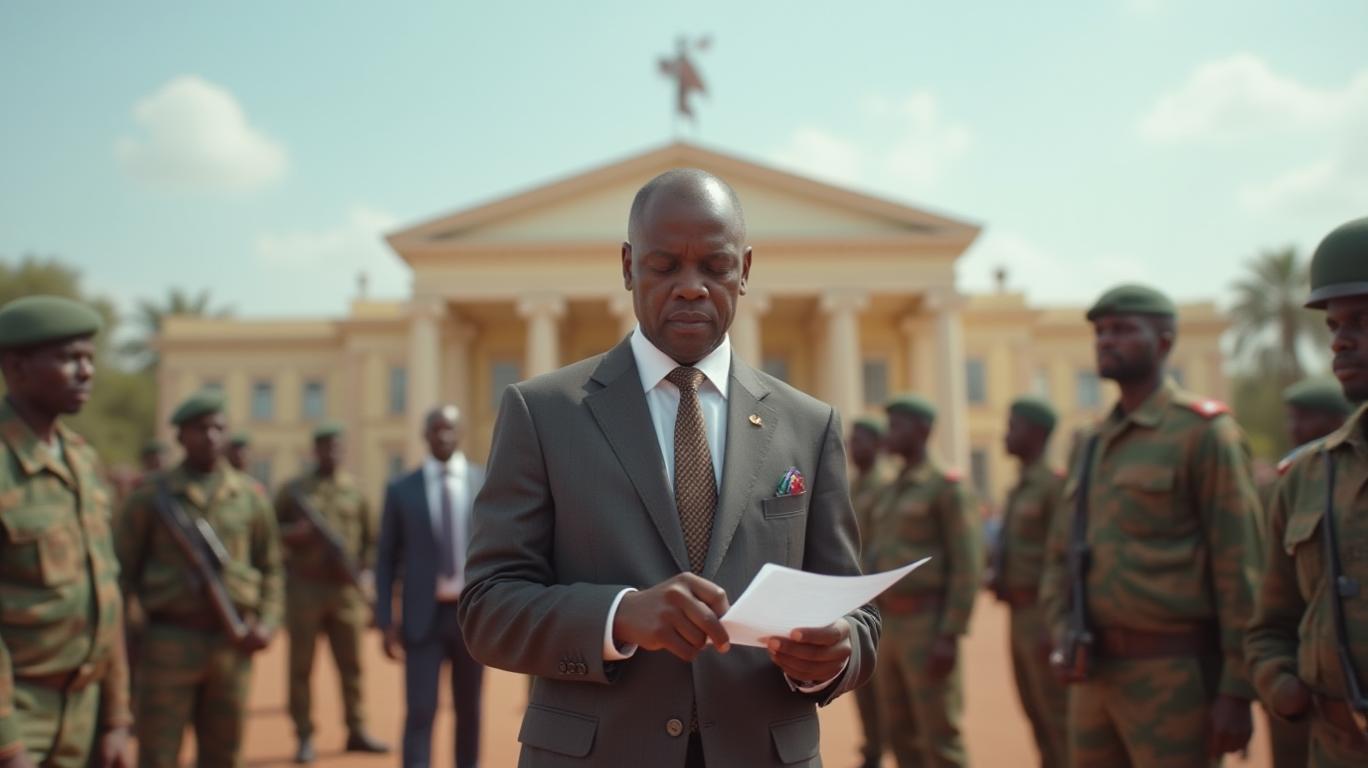
The Coup Plot and Its Political Fallout
The announcement of the foiled coup came amid heightened tensions with neighboring Côte d’Ivoire, which the junta accused of harboring the plot’s masterminds: Major Joanny Compaoré and Lieutenant Abdramane Barry, both former military officers now residing in Abidjan. Security Minister Mahamadou SanaSANA-- claimed the conspirators planned simultaneous attacks on the presidential palace and civilian targets to “sow total chaos” and install an international oversight regime. The arrests of suspected collaborators, including northern security commander Captain Elysée Tassembedo, highlighted internal divisions within the military.
The junta’s response has been unequivocal: Captain Traoré warned of “merciless” retaliation against perceived enemies, a rhetoric that mirrors his regime’s pattern of repression. Since seizing power in 2022, the junta has arrested judges, journalists, and opposition figures while cracking down on dissent. According to Human Rights Watch, extrajudicial killings and forced disappearances have surged, with over 50 cases reported in 2024 alone.
The index shows a steady decline, hitting a record low in 2025 amid rising coup-related tensions.
Regional Tensions and Economic Consequences
The coup plot’s alleged ties to Côte d’Ivoire reflect deepening regional divisions. Burkina Faso, Mali, and Niger withdrew from the Economic Community of West African States (ECOWAS) in January 2025, citing sanctions against Niger’s junta, and formed the Confederation of Sahel States (CSS). This shift has strained trade ties, particularly with Côte d’Ivoire, once a key partner.
Trade fell by 40% in 2024 as diplomatic rifts worsened, with 2025 projections pointing to further declines.
The CSS’s reliance on Russian military support—a response to Western isolation—adds another layer of complexity. While Moscow’s involvement has included arms sales and training programs, it has yet to translate into tangible economic benefits for Burkina Faso’s population, 40% of whom live in poverty. Meanwhile, Islamist groups like JNIM and ISGS continue to expand their control, with ACLED reporting a 15% rise in drone-based attacks in early 2025.
Security Spending vs. Humanitarian Needs
The junta’s prioritization of security over economic reform is exacerbating the crisis. Military expenditure now accounts for 25% of the national budget, up from 12% in 2020.
Yet this spending has not stabilized the country. Over 2 million citizens are internally displaced, and food insecurity affects 30% of households. International donors, already hesitant due to the junta’s authoritarianism, are withdrawing aid. The World Bank paused a $150 million education project in March , citing governance concerns.
Conclusion: A Precarious Balancing Act
Burkina Faso’s foiled coup attempt is not merely a political drama but a stark reminder of its economic vulnerability. The junta’s strategy of blaming external enemies to justify repression may buy short-term control, but it risks further isolating the country economically and diplomatically. With regional trade collapsing, aid drying up, and security spending crowding out essential services, the path to stability remains elusive.
Investors and policymakers must recognize that Burkina Faso’s future hinges on two factors: regional reconciliation to rebuild trade corridors and a shift toward inclusive governance that addresses the root causes of instability. Without these, the country’s economy—already teetering on the brink—faces a downward spiral, with no international safety net in sight.
The world is watching to see whether Burkina Faso’s leaders can pivot from survival politics to sustainable solutions—or if the next crisis will be harder to stop.

Stay ahead of the market.
Get curated U.S. market news, insights and key dates delivered to your inbox.


AInvest
PRO
AInvest
PRO



Comments
No comments yet