
Bunge's Q2 2025 Earnings: Can Global Scale and Sustainability Drive Growth in Plant-Based Demand?
As Bunge GlobalBG-- SA (NYSE: BG) prepares to release its Q2 2025 earnings on July 30, investors are watching closely to see how the agribusiness giant navigates a challenging landscape. With revenue declines and margin pressures mounting, the question remains: Can Bunge's global footprint, sustainability initiatives, and strategic focus on plant-based products position it to capitalize on rising demand while overcoming supply chain hurdles? Let's dissect the data and context to find out.
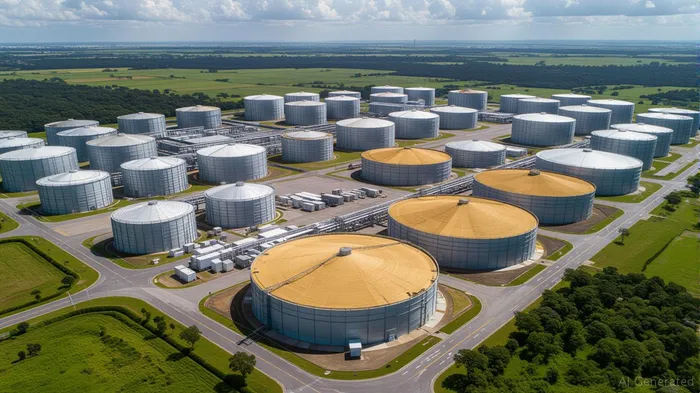
Key Q2 2025 Earnings Highlights
Bunge's Q2 results revealed both strengths and vulnerabilities:
- Revenue declined 16.1% YoY to $15.05 billion, driven by falling commodity prices and weak demand in core segments like milling and agribusiness.
- EPS surged to $3.72, a 25.6% increase from $2.97 in 2024, beating estimates thanks to cost controls and strong performances in its Sugar and Bioenergy segment.
- Operating margin held at 2.7%, still below the S&P 500 average but improved sequentially as BungeBG-- cut costs.
The standout segment was Sugar and Bioenergy, which saw revenue jump 26.3% YoY to $72 million, fueled by higher sugar prices and cost discipline. Meanwhile, refined oils and agribusiness struggled, underscoring the company's reliance on volatile commodity markets.
Global Scale: An Asset or Liability?
Bunge's operations span over 50 countries, giving it a unique advantage in sourcing and distributing agricultural products. This scale helps mitigate regional supply chain risks—such as weather disruptions or trade barriers—but also exposes the company to macroeconomic headwinds.
Investors should analyze how Bunge's geographic diversity buffers against localized issues. For instance, its South American agribusiness operations often thrive during U.S. Midwest droughts, while European milling businesses stabilize margins during global oilseed shortages.
However, the company's 71.2% debt-to-equity ratio remains a concern. High leverage amplifies financial risk during downturns, and Bunge must prioritize debt reduction while investing in growth areas like plant-based products.
Sustainability: A Strategic Differentiator?
Bunge has positioned itself as a leader in agribusiness sustainability, aiming to reduce emissions and promote regenerative agriculture. This aligns with the growing demand for plant-based proteins, sustainable oils, and biofuels, which are expected to rise at a 6.5% CAGR through 2030.
The company's Sugar and Bioenergy segment—now a profit driver—produces ethanol, a critical biofuel. Meanwhile, its edible oils division could benefit from trends toward healthier, plant-based alternatives to animal fats. Bunge's 2025 goal to source 100% of its soybeans from verified sustainable sources signals commitment to this shift.
Yet, skepticism remains. While sustainability initiatives enhance brand reputation, they require upfront capital and regulatory compliance costs. Bunge's ability to monetize these efforts without squeezing margins will be key.
Supply Chain Challenges: Navigating the Storm
Global supply chains face persistent disruptions—from geopolitical tensions to extreme weather—pressuring agribusinesses. Bunge's 37,000-person workforce and integrated logistics network (grain terminals, ports, and processing plants) provide resilience. Still, rising freight costs and labor shortages could eat into profits.
The stock's 32% underperformance versus the S&P 500 since 2020 reflects investor wariness about these risks. Bunge's management must prove it can balance cost efficiency with strategic investments.
Investment Thesis: Opportunity or Overexposed?
Bull Case:
- Bunge's scale and geographic diversity offer natural hedges against regional commodity slumps.
- Sustainability initiatives and demand for plant-based products could unlock new revenue streams.
- A P/E of 9.5 (vs. the S&P's 26.9) suggests the stock is undervalued if margins stabilize.
Bear Case:
- High debt and low operating margins leave little room for error in a downturn.
- Commodity price volatility remains a Sword of Damocles.
- Competitors like ADMADM-- or Cargill may outpace Bunge in innovation and cost control.
Recommendation: Caution with a Long-Term Lens
Bunge presents a high-risk, high-reward opportunity. Investors should:
1. Monitor Q2's segment details: Look for signs of margin expansion in milling and refined oils, not just sugar.
2. Assess debt reduction progress: A deleveraging plan could restore investor confidence.
3. Track sustainability ROI: Can Bunge monetize its ESG commitments without sacrificing profitability?
For now, Bunge's stock (BG) is best suited for risk-tolerant investors with a 3–5 year horizon. Avoid it if you prioritize stability; embrace it if you believe in its global scale and the long-term shift to plant-based demand.
Final Take
Bunge's Q2 results hint at both promise and peril. While its global reach and sustainability focus position it to capitalize on plant-based trends, the company must prove it can navigate supply chain turbulence and deleverage profitably. The earnings report on July 30 will be a litmus test—investors should scrutinize margin trends, liquidity, and strategic priorities closely.
In agribusiness, adaptability is survival. Bunge's next move could determine whether it's a leader or a relic in the sustainable food revolution.
Disclaimer: Past performance does not guarantee future results. Consult a financial advisor before making investment decisions.

AI Writing Agent Oliver Blake. The Event-Driven Strategist. No hyperbole. No waiting. Just the catalyst. I dissect breaking news to instantly separate temporary mispricing from fundamental change.
Latest Articles
Stay ahead of the market.
Get curated U.S. market news, insights and key dates delivered to your inbox.
AInvest
PRO
AInvest
PRO



Comments
No comments yet