
The Bund's Bold Bet: How German Bonds Defy Tariffs and Signal ECB Confidence
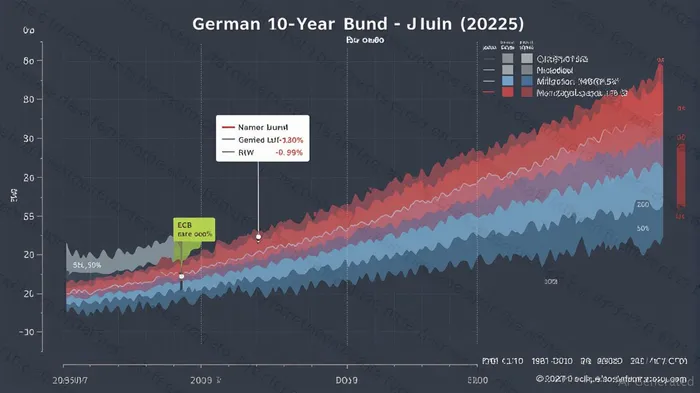
The German 10-year Bund yield surged to near 3% in early July 2025, defying expectations in an environment of escalating U.S.-EU tariff disputes and economic uncertainty. This contrarian market behavior—rising yields amid geopolitical headwinds—signals a profound shift in investor sentiment toward the Eurozone's resilience and the European Central Bank's (ECB) policy credibility. Let's dissect the dynamics behind this paradox and explore how Bunds could serve as a strategic hedge against global trade volatility.
Contrarian Dynamics: Fiscal Stimulus vs. Trade Headwinds
The Bund's resilience appears counterintuitive. U.S. tariffs on steel and aluminum, combined with a 10% levy on EU automotive exports, have battered sectors like ThyssenKrupp and Daimler. The Stoxx 600 Export Sensitive Index has underperformed the broader market this year, yet Bund yields have climbed from 2.56% in early July to near 3%. This divergence highlights two key factors: Eurozone fiscal expansion and ECB policy expectations.
Germany's €500 billion infrastructure and defense plan, while boasting a low near-term fiscal multiplier (0.4–0.7), has convinced markets of long-term growth potential. Investors are pricing in sustained borrowing, pushing yields higher despite modest short-term economic impact. Meanwhile, the ECB's June rate cut to 2.0%—its first since 2023—was framed as a tactical pause rather than a pivot. Models now price in a terminal rate near 3% by 2027, reflecting confidence in the ECB's ability to navigate inflation and growth trade-offs.
ECB Policy: A Hawkish Shift Amid Uncertainty
The ECB's “wait-and-see” approach has been misinterpreted by some as weakness. In reality, the June rate cut was a strategic move to cushion the economy from tariff-induced supply chain disruptions while preparing for future tightening. Inflation, though dipped to 1.9% in June, is projected to rebound to the ECB's 2% target by 2027. This forward-looking stance has anchored Bund yields, as markets anticipate gradual rate hikes to prevent deflationary risks.
The euro's appreciation to 1.17 against the dollar in June—a product of narrowing rate differentials and fiscal credibility—adds nuance. A stronger euro pressures exporters but also reflects investor confidence in the Eurozone's fiscal and monetary framework. This “strong euro, strong Bund” paradox underscores the market's belief that the ECB can offset trade-driven volatility through policy agility.
Geopolitical Decoupling: Eurozone's Independence Play
The Bund's strength also reflects a growing narrative of Eurozone decoupling from U.S. trade wars. Unlike the U.S., which faces domestic political gridlock over tariffs, the Eurozone is leveraging fiscal stimulus and ECB credibility to insulate growth. Analysts describe this as a “geopolitical hedging” dynamic: investors are betting on the ECB's ability to stabilize the bloc even as transatlantic tensions escalate.
In a “severe tariff scenario” (28% U.S. levies), the Eurozone's GDP could contract by 1%, but the ECB's policy tools—rate hikes, quantitative tightening, or yield curve control—could mitigate deflationary risks. This asymmetry—where the ECB's agility outweighs trade threats—explains why Bunds are rallying instead of retreating as a “safe haven.”
Investment Strategy: Bunds as a Trade Volatility Hedge
The contrarian Bund rally offers a compelling opportunity for investors seeking insulation from global trade shocks. Here's how to position:
- Short-Dated Bunds (2–5 years): Avoid long-duration exposure to mitigate risks of ECB hawkishness or inflation spikes. The shows limited downside in this maturity range.
- Euro-Denominated Equities: Pair Bund exposure with the Euro Stoxx 50, which benefits from ECB credibility and fiscal stimulus. Avoid exporters like Daimler or ThyssenKrupp, which remain vulnerable to currency headwinds.
- Hedge USD Exposure: Use tools like the ProShares UltraShort Euro (EUO) to capitalize on the euro's appreciation, especially if tariffs trigger a dollar sell-off.
Conclusion
The German Bund's recent surge is no accident—it's a market vote of confidence in the ECB's ability to navigate trade wars and sustain growth. While tariffs threaten specific sectors, the Eurozone's fiscal resolve and central bank credibility are anchoring yields at levels that reward strategic investors. For those wary of global trade volatility, Bunds offer a paradoxical but powerful hedge: rising yields in the eye of the storm.
In a world of geopolitical uncertainty, the Bund's bold trajectory reminds us that markets often price in the path of least resistance—even when headlines scream chaos.

Stay ahead of the market.
Get curated U.S. market news, insights and key dates delivered to your inbox.






Comments
No comments yet