
BullZilla ($BZIL): The Meme Coin with Engineered Scarcity and Viral Mechanics Set for 2025 Dominance


 Aime Summary
In the volatile world of meme coins, structural innovation often separates fleeting trends from enduring value. BullZilla ($BZIL) emerges as a standout contender in 2025, leveraging a meticulously designed framework that combines engineered scarcity, urgency-driven pricing, and community incentives to create a defensible investment case. Unlike speculative projects like Pepe (PEPE) and Bonk (BONK), which rely on social virality and sporadic token burns, BullZilla’s Progressive Price Engine, Roar Burn Mechanism, and HODL Furnace staking model are engineered to drive structured demand and long-term value retention.
Structural Advantages: Scarcity and Urgency as Catalysts
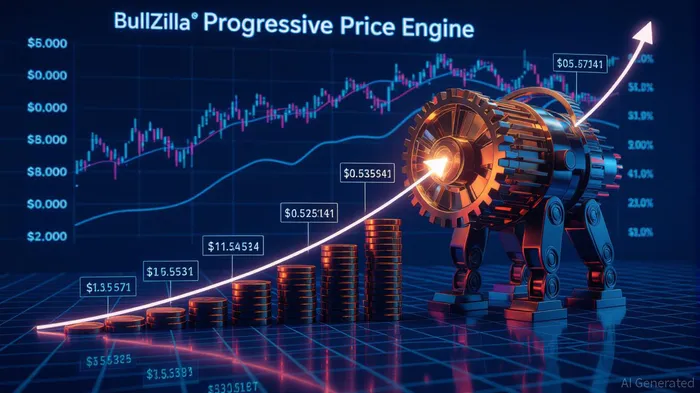
BullZilla’s presale, launching on August 29, 2025, operates on a Progressive Price Engine that increases the token price every 48 hours or when $100,000 is raised in a stage, whichever occurs first [1]. This creates a self-reinforcing cycle: early buyers secure tokens at the initial price of $0.00000575, while later participants face exponentially higher costs. By the final stage, the price is projected to reach $0.00527141, a 900x increase from the presale floor [2]. Such a mechanism not only incentivizes early participation but also embeds a FOMO (fear of missing out) dynamic into the token’s design.
Scarcity is further enforced through the Roar Burn Mechanism, which permanently removes tokens from circulation at each presale milestone [1]. For example, a $10,000 investment at the initial price could yield 1.74 billion tokens, with the potential to grow to $9.16 million if the token reaches its projected listing price [5]. This deflationary approach contrasts sharply with inflationary models like Pepe, which lacks structured utility and relies on sporadic burns [1].
Utility-Driven Staking and Community Incentives
BullZilla’s HODL Furnace staking mechanism offers up to 70% APY, with higher returns for longer lock-up periods (1, 2, or 3 months) [2]. This not only rewards long-term holders but also reduces circulating supply, stabilizing volatility. Additionally, the Roarblood Vault allocates 20% of the total supply to liquidity, referral rewards, and ecosystem development, ensuring sustainable growth without value dilution [1]. Community-driven initiatives like the Roar-to-Earn program further tie token utility to active participation, fostering organic adoption [4].
In contrast, Pepe’s tokenomics lack structured utility, relying solely on social media virality and speculative trading [1]. While Bonk integrates with Solana-based dapps and offers gas fee utility, its value remains tied to community sentiment and DAO-driven burns, which are less predictable than BullZilla’s engineered scarcity [3].
Presale Urgency and the 2025 Investment Case
The presale’s 24-stage structure creates a hard deadline for investors to act. With the price doubling every 48 hours or upon hitting $100,000 per stage, the window for low-cost entry closes rapidly [2]. This urgency is compounded by the Roar Burn Mechanism, which ensures that each stage’s token supply is permanently reduced, amplifying scarcity. For instance, a $10,000 investment made in the first week could yield 1.74 billion tokens, whereas the same investment made in the final stages would secure only 19 million tokens [5].
BullZilla’s tokenomics also prioritize retail accessibility, with 50% of the total supply allocated to the presale, compared to Pepe’s 93.1% initial burn, which leaves no roadmap or governance [1]. This structured distribution ensures broad participation while maintaining long-term value retention.
Conclusion: A Hybrid Model for Structured Growth
BullZilla’s hybrid approach—merging meme coin virality with deflationary mechanics and utility-driven incentives—positions it as a unique asset in the 2025 crypto cycle. While Pepe and Bonk remain subject to market whims, BullZilla’s engineered scarcity and urgency-driven design create a defensible investment case for early-stage investors. As the presale approaches its launch date, the combination of structured growth, community engagement, and predictable scarcity makes BullZilla a compelling opportunity in an otherwise speculative market.
**Source:[1] BullZilla Presale Starts August 29: Are You Ready for the Roar? [https://www.xt.com/en/blog/post/bullzilla-presale-starts-august-29-are-you-ready-for-the-roar][2] Early Entry at $0.00000575 Makes BullZilla One of the 3 Best New Meme Coins to Buy Now [https://coincentral.com/early-entry-at-0-00000575-makes-bullzilla-one-of-the-3-best-new-meme-coins-to-buy-now/][3] Bonk Price Prediction 2025: Will It Reach $0.001? [https://coincub.com/bonk-price-prediction/][4] BullZilla’s Roar Burn Mechanism Redefines Meme Coin Scarcity [https://www.ainvest.com/news/bullzilla-roar-burn-mechanism-redefines-meme-coin-scarcity-2508/][5] Early Entry at $0.00000575 Makes BullZilla One of the 3 Best New Meme Coins to Buy Now [https://coincentral.com/early-entry-at-0-00000575-makes-bullzilla-one-of-the-3-best-new-meme-coins-to-buy-now/]

Decoding blockchain innovations and market trends with clarity and precision.
Latest Articles
Stay ahead of the market.
Get curated U.S. market news, insights and key dates delivered to your inbox.


AInvest
PRO
AInvest
PRO



Comments
No comments yet