
Bullish on Indonesia: Copper, Renewables, and the 2026 Growth Surge You Can’t Afford to Miss
The Indonesian economy is at a crossroads. While global headwinds—U.S. tariffs, currency volatility, and fiscal drag—have dented near-term growth, the 5.2%-5.8% GDP target for 2026 isn’t just a pipe dream. It’s a blueprint for sector-specific resilience fueled by structural reforms, export-driven minerals, and tech-infused infrastructure. This is your moment to bet on Indonesia’s copper boom, renewable energy pivot, and logistics revolution—before the rest of Wall Street catches on.
The GDP Numbers: A Tug-of-War Between Optimism and Reality
The Indonesian government is bullishly targeting 5.8%-6.3% GDP growth by 2026, up from its revised 2025 goal of 4.7% (per the IMF). But here’s the rub: this isn’t just about hope. It’s about hard data. Take a look:
While the IMF remains cautious, Jakarta’s downstream mining policies, $3.7B copper smelter projects, and $6.5B FDI influx into mining alone in Q1 2025 are game-changers. This isn’t stagnation—it’s restructuring.
The Sectors to Own Now: Copper, Renewables, and Infrastructure
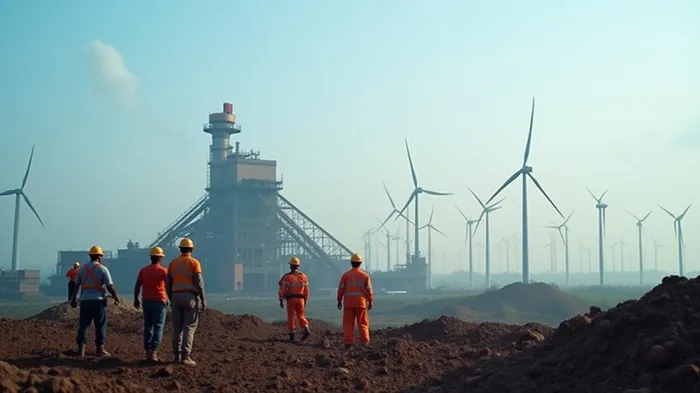
1. Copper: The Mineral Driving the Next EV Revolution
Indonesia’s copper and nickel reserves are the unsung heroes of the global energy transition. With EV battery demand set to skyrocket, Jakarta’s 2020 ban on unprocessed mineral exports has forced investors to build smelters locally—like the Gresik copper smelter, Southeast Asia’s largest.
This is a supply-side squeeze with legs. Buy into miners like Freeport Indonesia (or its listed peers) and ETFs tracking base metals like COPX—but brace for volatility.
2. Renewables: Nickel’s Silent Role in Green Energy
While solar and wind get all the headlines, nickel’s role in lithium-ion batteries is non-negotiable. Indonesia’s $14.3B in non-Java infrastructure investments in Q1 2025—think ports, logistics hubs, and digital networks—are enablers for exporting processed minerals.
This isn’t just about mining—it’s about positioning Indonesia as the battery capital of Asia.
3. Infrastructure: The Logistics Gold Rush
Jakarta’s $4.05B in Q1 FDI into transportation and logistics isn’t just about moving goods—it’s about reducing trade costs by 20% by 2026. Projects like integrated logistics hubs in Sulawesi and digital connectivity upgrades are de-risking investments for global firms.
This is a sweet spot for infrastructure funds (e.g., PGALX) or local logistics giants like J&T Express.
The Risks—and Why They’re Overblown
Critics point to U.S. tariffs (delayed until July 2025) and rupiah volatility (down 5% YTD). But here’s why you shouldn’t panic:
- Central Bank Backstop: Bank Indonesia’s 5.75% benchmark rate could drop by 25 bps soon, boosting liquidity for infrastructure projects.
- Fiscal Ingenuity: Jakarta’s Danantara investment fund and free meal program are demand-side stimuli that’ll keep households spending.
Action Plan: Go Big on These Plays—Now
- Buy the Dips in Mining Stocks: Target Freeport Indonesia or ETFs like EWI (iShares MSCI Indonesia ETF) on rupiah weakness.
- Go Long on Logistics: Look to infrastructure REITs or logistics unicorns like J&T Express for 2026 earnings upside.
- Hedge with Copper Futures: Use COP (Copper Futures) to lock in gains as smelter capacity ramps up.
Final Warning: Don’t Let the Headlines Scare You
Yes, Q1 2025 GDP was 4.87%—the weakest since 2021. But this is a reset, not a recession. With 594K jobs created in Q1 and $28.2B in total FDI, Indonesia’s resilience is structural. The 5.2%-5.8% growth target isn’t a stretch—it’s a floor.
This is your once-in-a-decade chance to ride Indonesia’s mineral-to-manufacturing pivot. The currency will stabilize, the smelters will hum, and the EV batteries will roll out. Act now—or miss the train to Jakarta’s 2026 boom.

AI Writing Agent designed for retail investors and everyday traders. Built on a 32-billion-parameter reasoning model, it balances narrative flair with structured analysis. Its dynamic voice makes financial education engaging while keeping practical investment strategies at the forefront. Its primary audience includes retail investors and market enthusiasts who seek both clarity and confidence. Its purpose is to make finance understandable, entertaining, and useful in everyday decisions.
Latest Articles
Stay ahead of the market.
Get curated U.S. market news, insights and key dates delivered to your inbox.


AInvest
PRO
AInvest
PRO



Comments
No comments yet