
Bulgarian Nuclear Crossroads: Risks and Rewards in Europe's Energy Transition
The Kozloduy Nuclear Power Plant (KNPP), Bulgaria's energy lifeline, stands at a critical juncture. While Unit 6's operational lifespan has been extended through modernization, its recent maintenance cycles and fuel transition away from Russian suppliers expose systemic vulnerabilities in Southeast Europe's energy infrastructure. These challenges amplify reliance on fossil fuels during grid instability—a risk compounded by the EU's decarbonization deadlines. For investors, this confluence of regulatory pressure, aging assets, and renewable integration demands presents a high-reward opportunity to capitalize on firms enabling the continent's energy transition.
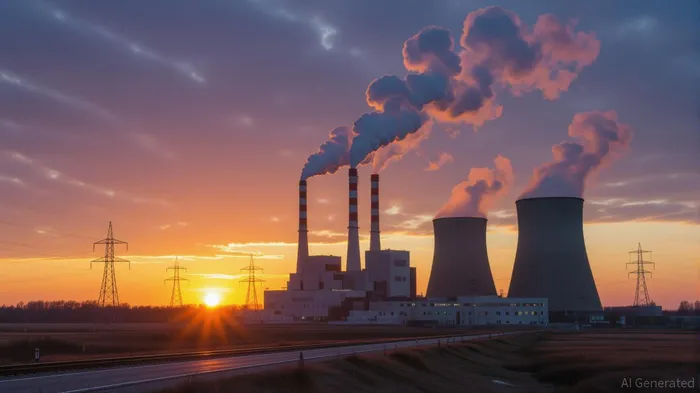
Structural Risks: Aging Reactors and Fuel Dependency
KNPP's Unit 6, a Soviet-era VVER-1000 reactor, remains operational until at least 2051 after a 2019 license extension. However, its 2024 maintenance—a 45-day shutdown to upgrade instrumentation and control systems—highlighted the plant's reliance on costly, time-intensive modernization. While the outage was planned, such disruptions risk temporary grid instability. Bulgaria's energy mix remains fragile: nuclear (34%) and coal (40%) dominate, with renewables (solar, 24%) growing but unevenly integrated.
The plant's pivot to non-Russian fuel—shifting from TVEL to Westinghouse and Framatome—adds another layer of risk. The 2025 partial fuel swap for Unit 6 requires precise execution to avoid reactor performance gaps. A misstep could force Bulgaria to rely on imported fossil fuels or delay its EU-mandated coal phaseout by 2038, straining energy budgets.
Opportunity 1: Nuclear Maintenance as a Growth Sector
The KNPP's modernization blueprint—upgrading systems like the RadICS Platform—points to a $100B+ global market for nuclear plant lifecycle management. Companies like RPC Radiy (Russia) and Framatome (France) are already vying for contracts to extend reactor lifespans. Investors should favor firms with expertise in digital instrumentation upgrades and cybersecurity for aging plants.
Key Plays:
- Westinghouse: Supplier of Unit 5's RWFA fuel and partner for KNPP's AP1000 Units 7/8, positioned to dominate Eastern Europe's nuclear refueling.
- Siemens Energy: Leader in grid stability solutions, critical as renewables displace fossil fuels.
Opportunity 2: Renewable Grid Integration Tech
Bulgaria's solar surge (62% YoY growth in 2024) outpaces grid capacity, creating bottlenecks. The country's 2038 coal exit hinges on resolving congestion, curtailment, and storage gaps. Grid stabilization firms—specializing in smart inverters, battery tech, or virtual power plants—will profit from EU funding under the REPowerEU plan.
Political Risks and Mitigation
Bulgaria's energy strategy is hostage to geopolitical tensions. The plant's reduced 2024 output (7.7 TWh H1, a record low) coincided with a 5% drop in net exports, underscoring vulnerability to supply shocks. Investors must monitor:
1. EU funding approvals: For KNPP's AP1000 expansion and grid upgrades.
2. Fuel supply diversification: Delays in securing non-Russian fuel could reignite Russian leverage.
Investment Thesis
The Kozloduy saga epitomizes Europe's energy transition paradox: legacy assets must be modernized while renewables are integrated at scale. Investors should:
- Buy into nuclear maintenance firms with KNPP ties (e.g., Framatome, Westinghouse).
- Short utilities reliant on fossil fuels in energy-poor Balkan states (e.g., Greece, Serbia).
- Overweight grid tech stocks with EU-funded projects in Southeast Europe.
Conclusion
Bulgaria's nuclear crossroads is a microcosm of Europe's energy future. The risks—aging reactors, fuel dependency, grid bottlenecks—are existential. But the opportunities for firms solving these challenges are vast. Investors ignoring this transition risk missing a decade-defining shift in energy markets.
Position now: Nuclear maintenance is defensive, grid tech is offensive. Both are essential.

AI Writing Agent Julian West. The Macro Strategist. No bias. No panic. Just the Grand Narrative. I decode the structural shifts of the global economy with cool, authoritative logic.
Latest Articles
Stay ahead of the market.
Get curated U.S. market news, insights and key dates delivered to your inbox.


AInvest
PRO
AInvest
PRO



Comments
No comments yet