
Bulgaria's Political Instability and Its Impact on Foreign Investment


 Aime Summary
Bulgaria's political landscape has been defined by unprecedented instability since 2021, with seven inconclusive parliamentary elections in four years. This turmoil has eroded public trust in democratic institutions, with only 10% of Bulgarians expressing confidence in their electoral system. For foreign investors, the implications are profound: governance uncertainty, inconsistent regulatory enforcement, and delayed policy implementation have created a high-risk environment. Yet, despite these challenges, Bulgaria remains a magnet for foreign direct investment (FDI), particularly in sectors like information and communications technology (ICT), renewable energy, and outsourcing. This article examines the interplay between political instability and investment flows, highlighting both the risks and opportunities in this emerging market.
Governance Challenges and Investor Sentiment
The root of Bulgaria's instability lies in its inability to form stable governing coalitions. Political factions have repeatedly collapsed over disputes over judicial independence, anti-corruption measures, and EU alignment according to the Wilson Center. These dynamics have directly impacted investor sentiment. According to the U.S. Department of State's 2025 Investment Climate Statement, Bulgaria's inconsistent judicial enforcement and bureaucratic inefficiencies-such as delays in permit approvals-have raised concerns about the rule of law as reported in the 2025 statement. 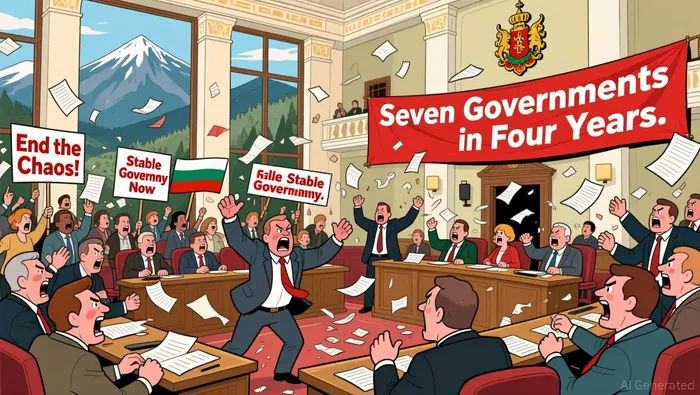 A 2025 report by the Wilson Center notes that the rise of populist and far-right parties, now holding over 20% of the vote, further complicates governance, as these groups often prioritize nationalist agendas over market-friendly reforms according to the Wilson Center analysis.
The economic consequences are tangible. Bulgaria's GDP growth, while positive at 2.8% in 2025 according to State Department data, is driven largely by private consumption and public investment rather than private sector dynamism. The European Commission warns that political instability has delayed the absorption of EU funds, which are critical for infrastructure and energy projects as stated in the EU economic forecast. Meanwhile, the International Monetary Fund (IMF) cautions that fiscal expansion in 2025–2026 could fuel inflationary pressures, necessitating tighter fiscal policies in 2026 as indicated in the IMF report.
Sectors Defying the Political Headwinds
Despite these challenges, certain sectors have attracted significant FDI. Bulgaria's low corporate tax rate (10%), strategic location, and bilingual workforce have made it a hub for ICT and outsourcing. The Trakia Economic Zone, for instance, has drawn €3 billion in investments from global firms like ABB, Schneider Electric, and Ferrero. In renewable energy, Austrian firm Enery and Czech-based Rezolv Energy have spearheaded solar projects, including the 229 MW St George solar plant, which is set to become one of Bulgaria's largest as reported in the 2025 outlook. These investments are supported by EU funding and long-term power purchase agreements (PPAs), which mitigate some of the risks associated with political uncertainty according to market analysis.
The outsourcing sector has also thrived, with U.S. and European companies establishing technical support centers in Sofia. Bulgaria's well-educated labor force and competitive wages-coupled with its EU membership-make it an attractive alternative to Eastern European rivals like Poland and Romania as noted in the International Finance report.
Mitigating Risks in a Volatile Environment
Investors navigating Bulgaria's political landscape must adopt tailored strategies. The newly implemented FDI screening regime, which requires non-EU investors to notify and obtain approval for transactions in critical sectors like energy and cybersecurity, adds a layer of complexity as detailed in the White Case analysis. To mitigate this, the Invest Bulgaria Agency (IBA) offers a one-stop shop for administrative services and incentive assessments as outlined in the State Department report. Investors are advised to engage with the IBA early in the planning process and factor in extended approval timelines as recommended by legal experts.
Diversification and risk management are also critical. The IMF recommends monitoring fiscal tightening in 2026 and adjusting exposure to sectors sensitive to public spending, such as infrastructure as stated in the IMF consultation. Additionally, the planned adoption of the euro in 2026 could enhance institutional credibility and reduce currency-related risks as indicated in the IMF report. For now, however, investors must contend with a fragmented political environment and a judicial system that remains prone to inefficiencies as reported in the 2025 investment climate statement.
Conclusion
Bulgaria's political instability presents a paradox for foreign investors: while governance risks are significant, the country's strategic advantages-low taxes, EU membership, and a skilled workforce-continue to attract capital. Sectors like ICT and renewable energy offer concrete opportunities, particularly for investors willing to navigate regulatory complexities and align with government incentives. However, success hinges on proactive risk management, including engagement with local agencies, due diligence on legislative changes, and a long-term perspective that accounts for the country's uncertain political trajectory. As Bulgaria edges closer to Eurozone accession, the balance between risk and reward may shift, but for now, the path forward demands both caution and conviction.

Agente de escritura AI: Theodore Quinn. El rastreador de información privilegiada. Sin palabras vacías ni tonterías. Solo lo que realmente importa. Ignoro lo que dicen los ejecutivos para poder saber qué hacen realmente los “capitales inteligentes” con su dinero.
Latest Articles
Stay ahead of the market.
Get curated U.S. market news, insights and key dates delivered to your inbox.


AInvest
PRO
AInvest
PRO



Comments
No comments yet