
Bulgaria's Liberalized Electricity Market and Its Implications for Regional Energy Export Dynamics
 Aime Summary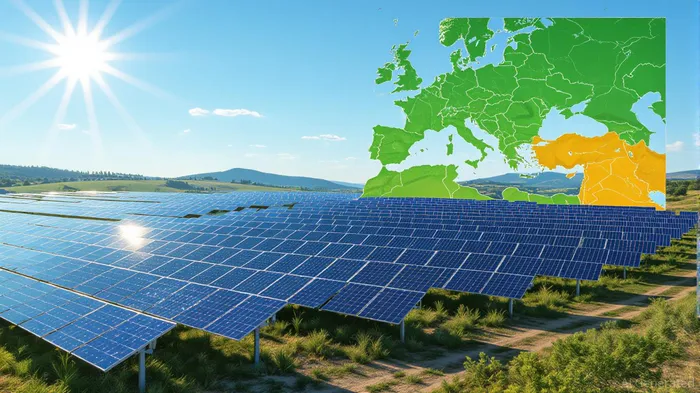
Bulgaria's electricity market has undergone a seismic transformation in the past two years, driven by regulatory reforms that align the country with EU energy directives and position it as a pivotal player in Southeastern Europe's energy landscape. The 2023–2025 liberalization of the electricity market, including the abolition of state monopolies, restructuring of balancing groups, and introduction of market-based pricing mechanisms, has unlocked a cascade of opportunities for renewable energy investment and cross-border electricity trade. These reforms, coupled with strategic infrastructure upgrades, are reshaping Bulgaria's role as a regional energy hub and offering investors a compelling case for participation in its evolving energy ecosystem.
Regulatory Reforms: A Catalyst for Market Liberalization
The cornerstone of Bulgaria's transformation lies in the 2025 amendments to the Electricity Trading Rules (ET Rules), which dismantled the National Electricity Company's monopoly and restructured balancing groups to integrate renewable energy producers more effectively. By abolishing combined balancing groups and allowing renewable energy producers to join standard and special balancing groups, Bulgaria has optimized grid flexibility and reduced curtailment risks. The introduction of a new methodology for balancing electricity prices, decoupled from the ET Rules, has further enhanced market transparency and efficiency.
These reforms have also liberalized the retail electricity market, albeit with a delayed timeline for household consumers. However, the wholesale market's liberalization has already spurred competition among suppliers, driving down costs and attracting foreign investment. The Energy and Water Regulatory Commission (EWRC) has played a pivotal role in enforcing these changes, ensuring compliance with EU Regulation 2019/943 and Directive 2019/944.
Renewable Energy Investment: A Booming Sector
Bulgaria's regulatory overhauls have directly fueled a surge in renewable energy investment. The National Recovery and Resilience Plan (NRRP) aims to operationalize 3,500 MW of new renewable capacity by 2026, supported by the RESTORE program—a €590 million EU-funded initiative to develop 3,000 MWh of energy storage. This dual focus on renewables and storage addresses intermittency challenges and positions Bulgaria as a leader in Southeastern Europe's green transition.
The M&A market for renewable projects has also gained momentum, with foreign and local investors targeting projects at various stages of permitting and financing. For instance, the Kameno 40-MW photovoltaic project and the Sinitovo 50-MW project are set to come online in 2025, while three Chint/Astronergy projects totaling 200 MW are in advanced development. These projects are complemented by battery storage initiatives, with 3 GW of capacity in the pipeline.
Cross-Border Trade: A Strategic Power Exporter
Bulgaria's cross-border electricity trade has surged post-reform, with exports jumping from 48,000 MWh in H1 2024 to 1.26 million MWh in H1 2025. This meteoric rise is attributed to increased solar and wind generation, enhanced interconnection capacity, and Bulgaria's integration into the European PICASSO balancing platform. The 400-kV interconnection with Greece, operational since July 2023, has become a critical artery for energy exchange, with a 2-GW capacity.
The country's strategic location as a bridge between Western Europe and the Balkans has amplified its export potential. By 2030, Bulgaria aims to expand interconnection capacity to 10 GW, with the East-West Energy Corridor project adding 2 GW of cross-border capacity per border. These developments are expected to facilitate the export of renewable surpluses and strengthen regional energy security.
Investment Opportunities and Risks
For investors, Bulgaria's liberalized market presents a unique confluence of opportunities:
1. Renewable Energy Projects: The RESTORE program's 50% cost coverage and mandatory financial guarantees (€28,400 per MWh) mitigate project risks, making Bulgaria an attractive destination for solar, wind, and storage ventures.
2. Cross-Border Infrastructure: Participation in interconnection projects, such as the Greece-Bulgaria link, offers long-term returns as regional demand for energy diversification grows.
3. Energy Storage: With 3 GW of storage capacity in the pipeline, investors can capitalize on the growing need for grid stability and ancillary services.
However, risks persist. Political instability, with multiple government changes in recent years, could delay reforms or policy implementation. Additionally, the current imbalance between solar and wind development—4.4 GW vs. 0.34 GW in the 2022–2031 network plan—raises concerns about system resilience during periods of high weather variability.
Conclusion: A Regional Energy Powerhouse
Bulgaria's regulatory reforms have catalyzed a paradigm shift in its energy sector, transforming it from a net importer to a net exporter of electricity. By aligning with EU standards, investing in renewable infrastructure, and expanding cross-border interconnections, Bulgaria is not only securing its own energy future but also enhancing regional energy security. For investors, the country offers a compelling mix of policy support, market liberalization, and strategic location. While challenges remain, the trajectory of Bulgaria's energy transition suggests that the rewards for early-stage participation could be substantial.
As the Southeastern European energy landscape continues to evolve, Bulgaria's liberalized market stands as a testament to the transformative power of regulatory reform—and a beacon for investors seeking to capitalize on the region's renewable potential.

Delivering real-time insights and analysis on emerging financial trends and market movements.
Latest Articles
Stay ahead of the market.
Get curated U.S. market news, insights and key dates delivered to your inbox.






Comments
No comments yet