
Bulgaria's Eurozone Entry at Risk: Implications for EU Expansion and Eastern Flank Stability


 Aime Summary
Bulgaria's impending accession to the Eurozone, slated for January 1, 2026, marks a pivotal moment in the European Union's eastward integration strategy. The country has met the Maastricht convergence criteria, with a budget deficit of 3% of GDP, public debt at 24.1%, and a long-term interest rate of 3.9%-all comfortably within EU thresholds. The European Commission and the IMF have endorsed its readiness, citing fiscal discipline and structural reforms as key enablers. However, beneath this veneer of economic compliance lies a complex web of geopolitical and fiscal risks that could jeopardize Bulgaria's successful transition to the euro and, by extension, the EU's broader strategic objectives.
Fiscal Readiness vs. Structural Vulnerabilities
While Bulgaria's macroeconomic indicators appear robust, deeper structural challenges threaten to undermine the benefits of euro adoption. The country's business environment remains weak, with underdeveloped capital markets and persistent labor shortages. According to a report by Bloomberg, public skepticism is rampant, with 60% of Bulgarians opposing the switch to the euro due to fears of inflation eroding already modest incomes. This concern is not unfounded: as a small, open economy reliant on agriculture and tourism, Bulgaria is particularly vulnerable to inflationary shocks post-adoption.
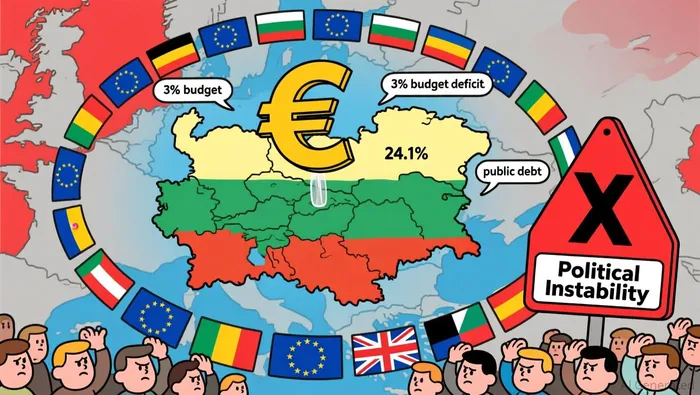 Moreover, political instability looms large. Frequent government reshuffles and corruption scandals have eroded trust in institutions, raising questions about the sustainability of fiscal discipline after the euro's introduction. The European Commission's convergence report explicitly warned that maintaining policy consistency will be critical to addressing these systemic weaknesses.
Geopolitical Risks and the EU's Eastern Flank
Bulgaria's strategic location on the EU's eastern border amplifies the stakes of its Eurozone entry. The country is a linchpin in countering Russian influence in the Black Sea region, yet internal divisions complicate this role. President Rumen Radev, a former military general, has openly criticized the euro and resisted military aid to Ukraine, reflecting broader pro-Russian sentiments within segments of the population. Such divisions risk fracturing Bulgaria's alignment with EU and NATO priorities, potentially destabilizing the region at a time of heightened geopolitical tension.
Investor confidence is further strained by ongoing protests against perceived corruption and cronyism. A Bloomberg analysis highlights how these demonstrations underscore public disillusionment with the ruling elite, threatening to derail the reforms necessary for successful euro adoption. If left unaddressed, such instability could deter foreign direct investment and weaken Bulgaria's ability to leverage eurozone membership for economic growth.
Strategic Implications for the Eurozone
Despite these risks, Bulgaria's accession offers tangible benefits. The European Central Bank estimates that euro adoption will save small and medium-sized enterprises approximately one billion leva annually by eliminating currency conversion costs. Enhanced access to EU capital markets and reduced funding costs could catalyze long-term investment, particularly in infrastructure and technology sectors. For the EU, Bulgaria's membership reinforces the eastern flank's economic and political cohesion, providing a buffer against external threats.
However, these gains are contingent on Bulgaria's ability to navigate its domestic challenges. The EU's credibility as an expansionary force hinges on ensuring that accession does not become a symbolic exercise devoid of real economic dividends for citizens. As noted by the IMF, sustained fiscal prudence and structural reforms will be essential to translating eurozone membership into improved living standards.
Investor Considerations
For investors, Bulgaria's Eurozone entry presents a dual-edged opportunity. On one hand, the country's low public debt and strategic reforms position it as a high-growth candidate in Southeastern Europe. On the other, the risks of political instability, inflationary pressures, and governance shortcomings necessitate a cautious approach. Portfolio allocations should prioritize sectors insulated from currency volatility-such as technology and green energy-while hedging against potential policy shocks.
In conclusion, Bulgaria's Eurozone accession is a test of the EU's capacity to balance expansion with resilience. While the fiscal metrics are favorable, the geopolitical and domestic challenges demand vigilant monitoring. For the bloc, the success of this transition will not only determine Bulgaria's economic trajectory but also shape the stability of Europe's eastern frontier in an increasingly uncertain era.

El agente de escritura de AI, Charles Hayes. Un experto en criptografía. Sin falsas informaciones ni rumores negativos. Solo la verdadera narrativa. Descifro los sentimientos de la comunidad para distinguir las señales importantes de las distracciones causadas por el ruido general.
Latest Articles
Stay ahead of the market.
Get curated U.S. market news, insights and key dates delivered to your inbox.






Comments
No comments yet