
Who Built the Artemis Rocket: A Breakdown of Contractors and Collaborators
 Aime Summary
The Artemis II rocket was built using heritage components from the retired space shuttle program, with BoeingBA-- constructing the core stage and Northrop GrummanNOC-- building the solid rocket boosters. The Orion spacecraft, where astronauts reside during the mission, was constructed by Lockheed MartinLMT--, with the service module provided by the European Space Agency. The Artemis II mission is a 10-day lunar flyby designed to test the Space Launch System (SLS) and Orion spacecraft under deep-space conditions, serving as a precursor to future lunar landings and Mars missions.
Artemis II marks a pivotal moment in space exploration. After decades of inactivity in deep-space crewed missions, NASA is returning to the Moon with a plan that blends recycled technology and modern engineering to lay the foundation for a sustained human presence on the Moon and eventually Mars. For investors, this mission is more than a scientific endeavor—it’s a glimpse into the aerospace industrial base and the role of major contractors like Boeing, Lockheed Martin, and Northrop Grumman in shaping the future of space travel . The Artemis II rocket, known as the Space Launch System (SLS), is the most powerful rocket ever built, standing 322 feet tall and generating 8.8 million pounds of thrust at liftoff according to technical specifications.
Who Built the Artemis Rocket and Capsule: Key Contractors
The Artemis II rocket is a collaborative effort, drawing on decades of aerospace expertise. Boeing, a long-time partner with NASA, built the core stage of the SLS using leftover RS-25 engines from the space shuttle program. Three of the four engines on the Artemis II rocket were previously used in space shuttle missions, while the fourth is a new engine built from heritage spares according to engineering reports. Northrop Grumman, another veteran aerospace contractor, manufactured the solid rocket boosters, which were also used in the space shuttle missions. The boosters contain segments from past shuttle missions, further emphasizing the program's emphasis on repurposing legacy hardware according to industry analysis.
The Orion spacecraft, which will carry the four astronauts on the 10-day lunar flyby, was built by Lockheed Martin. The company has a long history with NASA's human spaceflight programs and is responsible for integrating the spacecraft with various systems, including life support, navigation, and communication. The Orion capsule also includes a service module built by the European Space Agency (ESA), which provides propulsion, power, and other critical functions for the mission. This partnership with international organizations highlights the global collaboration that underpins the Artemis program according to mission documentation.
Artemis II vs Saturn V: Understanding the Evolution of Rocket Technology
The Saturn V rocket, which powered the Apollo missions in the 1960s and 1970s, remains the most powerful rocket ever flown. The Artemis II rocket, also known as the Space Launch System (SLS), surpasses Saturn V in thrust and design complexity while incorporating modern engineering and digital systems. The SLS combines proven shuttle-era technology with new innovations, such as the interim cryogenic propulsion system, built by United Launch Alliance (a joint venture between Boeing and Lockheed Martin) according to technical specifications.
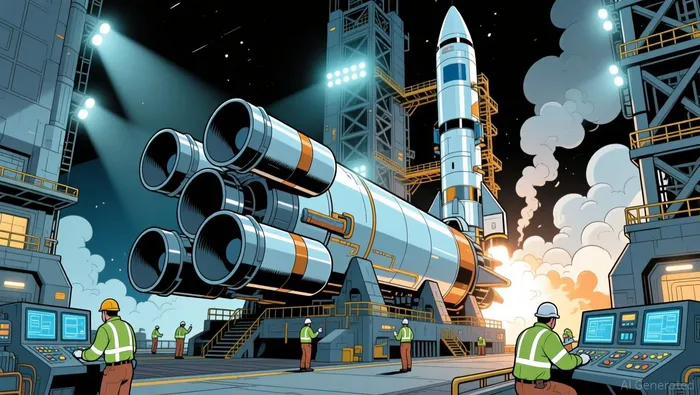
While the Saturn V was a one-time-use vehicle, the Artemis program aims for more sustainability in space exploration. However, the Artemis II rocket is not designed to be reused, making this mission a unique opportunity to test the SLS and Orion under deep-space conditions. The Artemis II mission will not involve a lunar landing but will serve as a dress rehearsal for future missions, including Artemis III and IV, which are expected to land astronauts on the Moon by 2028 according to mission timelines.
For investors and space enthusiasts, the Artemis program represents a new era of space exploration, with major aerospace contractors and international partners playing a crucial role. The success of Artemis II will set the stage for more ambitious missions and could open new markets for space technology and commercial applications according to industry reports.

Stay ahead of the market.
Get curated U.S. market news, insights and key dates delivered to your inbox.


AInvest
PRO
AInvest
PRO



Comments
No comments yet