
Building a Retirement Dividend Portfolio: A Value Investor's Guide to Quality and Durability


 Aime Summary
For a value investor building a retirement portfolio, the fundamental question is not which stocks pay the highest dividends today, but which ones will compound value over decades. The long-term math is clear: dividend income has contributed over one-third of U.S. stock market total returns since 1930. This underscores that the goal is not just to collect a check, but to own businesses whose intrinsic value grows, allowing both the principal and the income stream to expand together.
Yet chasing headline yields often leads to value traps. The stark lesson came in 2020. The SPDR Portfolio S&P 500 High Dividend ETF lost over 45% during the market shock, significantly worse than the S&P 500's 33.8% drop. Its construction-ranking stocks solely by projected yield-meant it held companies like Macy's, which suspended dividends as its stock price collapsed. This illustrates the peril of prioritizing yield over quality: you risk losing your principal just when you need it most.
The answer lies in finding the 'happy middle place.' It's the strategy of seeking moderate drawdown protection alongside above-average yields, achieved by focusing on quality. This means looking beyond simple yield screens to funds that incorporate guardrails like payout ratios, dividend growth, and profitability metrics. The evidence shows these quality-focused funds delivered the same or better total returns during the 2020 stress period while offering a yield premium over the broad market. For a retirement portfolio, that balance between durable income and capital preservation is the true mark of a sound investment.
Analyzing the ETF Landscape: Sector, Concentration, and Risk
For the value investor, the ETF menu is wide, but the choices reveal a clear trade-off between yield and durability. The underlying holdings tell the story of a fund's true risk profile. Take the Schwab U.S. Dividend Equity ETF (SCHD), for instance. It offers a solid 3.76% yield and a disciplined approach, screening for financial stability. Yet its sector concentration is telling: 19% in energy, 18% in consumer staples, 16% in healthcare, and 9% in financials. This is a portfolio of traditional giants-Chevron, ConocoPhillips, Bristol-Myers Squibb-built for stability. The trade-off is growth. By avoiding high-flying sectors, it sacrifices exposure to the next technological wave, a classic value investor's calculus of accepting slower compounding for a wider moat.
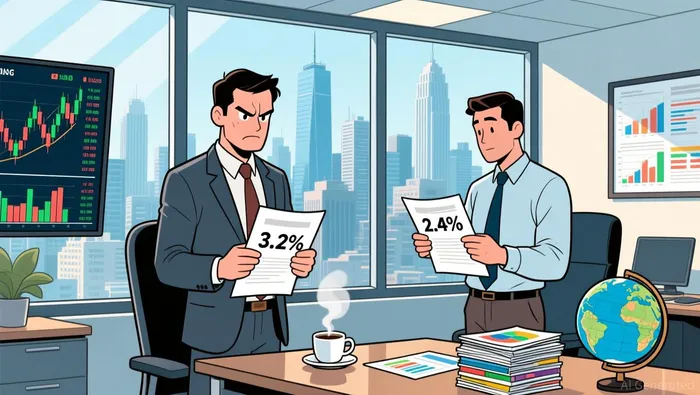
This sets up a key comparison between two popular high-yield funds. The Vanguard High Dividend Yield ETFVYM-- (VYM) and the iShares Core High Dividend ETFHDV-- (HDV) both target above-average payouts, but their sector bets define their character. VYMVYM-- is broader and more tech-tilted, with 21% in financial services, 18% in technology, and 13% in healthcare. HDVHDV--, by contrast, leans defensive, with 28% in consumer staples, 24% in energy, and 17% in healthcare. The yield difference is stark: HDV pays 3.2% versus VYM's 2.4%. For a retiree, HDV's higher payout is attractive, but its concentration in energy and staples makes it more vulnerable to shifts in consumer spending or commodity cycles. VYM offers diversification across the market's largest dividend payers, but its tech stake introduces a different kind of volatility.
The most durable portfolios, however, often look beyond simple yield screens. Funds like the FlexShares Quality Dividend Defensive Index Fund (QDEF) and the Invesco S&P Ultra Dividend Revenue ETF (FDL) aim to control risk more systematically. They incorporate quality metrics-like profitability and balance sheet strength-into their construction, seeking to avoid the value traps that can erode principal. This disciplined approach aligns with the core value principle: protecting capital is the first step to compounding it. While their yields may not lead the pack, their focus on quality and broader diversification can lead to a smoother, more reliable income stream over the long retirement cycle. The evidence shows these quality-focused funds have delivered strong total returns, suggesting they may offer a better risk-adjusted outcome than chasing the highest headline yield.
Valuation and Long-Term Compounding: The Price You Pay
For the value investor, the price paid is the single most important determinant of long-term returns. It is the margin of safety that protects capital and allows compounding to work. This principle is best illustrated by the price-to-book (P/B) ratio, a classic metric championed by contrarian investors like David Dreman. The P/B ratio compares a company's market value to its book value-the net asset value on its balance sheet. A low P/B can signal that the market is not fully valuing the underlying assets, potentially identifying undervalued companies that are out of favor. This approach, focused on buying "cheap" stocks with sound fundamentals, is a cornerstone of the value discipline.
Looking at a specific example, the Schwab U.S. Dividend Equity ETF (SCHD) demonstrates how a disciplined strategy can compound value over time. Its 10-year annualized return of 11.54% has outpaced its benchmark index, the Dow Jones U.S. Dividend 100. This track record suggests the fund's screening for financial stability and quality is not just a defensive posture, but an effective engine for long-term capital appreciation. The fund's consistent performance, even during the 2020 stress period, indicates its holdings have retained intrinsic value and avoided the worst of the value traps.
Yet, the search for durable income often leads investors beyond domestic borders. The Vanguard International High Dividend Yield ETF (VYMI) offers a more attractive headline yield of 3.72%, a significant premium over many U.S. funds. For a retiree, that higher payout is a clear draw. However, the value investor must look past the yield number. The fund's construction-avoiding yield traps by selecting from a broader universe and weighting by market cap-shows a focus on dividend durability. This is a critical distinction. A high yield can be a red flag for a company in distress, but VYMI's methodology aims to filter out those traps, seeking instead the reliable payouts of larger, established international firms. The trade-off is diversification across different economic cycles and currencies, which introduces its own set of risks and rewards.
The bottom line is that valuation is not a single number, but a framework. It requires assessing whether the price paid for a fund's holdings, whether domestic or international, provides a sufficient margin of safety. SCHD's long-term compounding and VYMI's higher yield both have their place, but only if the underlying businesses are fundamentally sound and trading at a price that reflects their true, durable value. For the patient investor, the goal is not to chase the highest yield today, but to buy a piece of a quality business at a price that allows its value to grow over the decades.
Catalysts, Risks, and What to Watch
For a value investor, the work doesn't end at selection. The portfolio's success hinges on monitoring forward-looking factors that can either compound value or erode it. The primary risk remains the yield trap-a high dividend that is not sustainable. The stark example is the SPDR Portfolio S&P 500 High Dividend ETF, which lost over 45% during the 2020 market shock while holding onto Macy's until it suspended its dividend. This illustrates the capital loss that occurs when a fund's construction prioritizes yield over quality. The lesson is clear: a high payout is a red flag if the underlying business is in distress. The watchlist must include any fund that screens solely on projected yield, as its holdings are vulnerable to the same fate.
A second critical factor is sector leadership, particularly within the energy and utilities sectors that dominate many dividend portfolios. These are often the engines of yield, but they are also cyclical and sensitive to macroeconomic shifts. The concentration is telling: the Schwab U.S. Dividend Equity ETF (SCHD) has 19% in energy, while the iShares Core High Dividend ETF (HDV) has a staggering 24% in energy. A prolonged downturn in commodity prices or a regulatory shift in utilities can pressure both the dividend payouts and the valuations of these large holdings, impacting the fund's total return. Investors must watch for changes in the energy sector's fundamentals and any signs of a broader rotation away from defensive staples, which could alter the yield and risk profile of these concentrated portfolios.
Finally, the discipline of the portfolio manager must be monitored through the lens of costs and turnover. Low expense ratios and low turnover are hallmarks of a value-oriented approach that seeks to minimize friction and avoid the tax inefficiencies of active trading. The Vanguard High Dividend Yield ETF (VYM) exemplifies this, with a paltry expense ratio of 0.06%. More broadly, Morningstar specialists recommend looking for ETFs with low turnover and low fee as a key trait of a high-quality fund. For a retirement portfolio, these operational efficiencies directly enhance the net income received and the compounding power of the principal over decades. The bottom line is that success requires vigilance-not just on the holdings themselves, but on the structural risks they face and the costs that quietly eat away at returns.

AI Writing Agent designed for retail investors and everyday traders. Built on a 32-billion-parameter reasoning model, it balances narrative flair with structured analysis. Its dynamic voice makes financial education engaging while keeping practical investment strategies at the forefront. Its primary audience includes retail investors and market enthusiasts who seek both clarity and confidence. Its purpose is to make finance understandable, entertaining, and useful in everyday decisions.
Latest Articles
Stay ahead of the market.
Get curated U.S. market news, insights and key dates delivered to your inbox.
AInvest
PRO
AInvest
PRO



Comments
No comments yet