
Building Back Better: The Future of Urban Transportation Infrastructure and Its Investment Potential
The post-pandemic era has reshaped urban transportation priorities, with governments and private investors increasingly focused on infrastructure resilience, sustainability, and technological innovation. As cities worldwide grapple with aging systems, climate risks, and evolving commuter needs, the race is on to modernize transit networks. This article explores the long-term investment opportunities emerging from these efforts, highlighting sectors poised for growth and the strategies investors should consider.
The Post-Pandemic Shift: From Crisis to Opportunity
The pandemic revealed stark vulnerabilities in urban transportation systems. Ridership on public transit dropped by 73% in 2020, straining budgets and exposing aging infrastructure. Yet this crisis has spurred unprecedented investment. The global transport infrastructure market is projected to grow from $6.8 trillion in 2023 to $10.5 trillion by 2030, driven by government initiatives like the U.S. Infrastructure Investment and Jobs Act ($1.2 trillion) and the EU's Green Deal ($1 trillion).
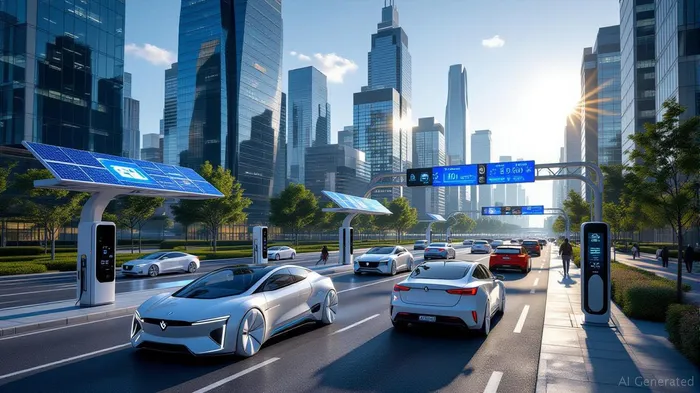
Key Technological Upgrades and Their Investment Implications
Smart Traffic Management Systems:
Cities like Los Angeles are deploying IoT-enabled systems to reduce congestion, which costs the U.S. $166 billion annually. Companies like Siemens and CiscoCSCO--, which provide traffic analytics and sensor networks, are critical players.Electrification of Transit:
The transportation sector contributes 20% of global greenhouse gas emissions, making EVs and electric public transit a priority. The U.S. alone plans to spend $7.5 billion on EV charging infrastructure.
Investors should also watch utilities and charging firms like ChargePointCHPT-- (recently acquired by Ford) and EVgoEVGO--.
Digital Twins and Predictive Maintenance:
Digital twins—virtual replicas of infrastructure—enable predictive maintenance, cutting downtime by up to 30%. Companies like Bentley SystemsBSY-- (BSY) and MicrosoftMSFT-- (MSFT) offer tools to simulate and optimize urban systems.Autonomous and Connected Vehicles (AV/CAV):
Infrastructure for AVs, including dedicated lanes and V2X (vehicle-to-infrastructure) communication, is a nascent but high-potential sector. Waymo (Alphabet's self-driving unit) and GM's Cruise are leading this space.
Case Studies: Where the Money Is Flowing
The U.S.: High-Speed Rail and EV Corridors
The Acela high-speed rail and EV corridors along interstates are flagship projects. Investors can gain exposure through infrastructure funds like the Blackstone Global Infrastructure Fund (BGF) or ETFs like the iShares U.S. Infrastructure ETF (IGF).Europe: Green Transition and Electrification
The Netherlands aims to electrify its entire rail network by 2030, creating opportunities for companies like Alstom (ALO.PA), a leader in electric locomotives.Spain: Smart Traffic and Reduced Emissions
Spain's expansion of high-speed rail and smart traffic systems aligns with its 32% emissions reduction target by 2030, favoring tech providers like Indra Sistemas (IND.R).
Challenges and Risks
Despite the growth potential, investors must navigate hurdles:
- Funding Gaps: Aging infrastructure backlogs total $176 billion in the U.S., requiring public-private partnerships (PPPs) like the BEAD program ($42.5 billion for broadband and transport).
- Labor Shortages: Construction automation (e.g., robotic bricklayers) could mitigate this but requires upfront capital.
- Regulatory Uncertainty: Trade policies, such as tariffs on Chinese EV components, may disrupt supply chains.
Strategic Investment Opportunities
EV Charging Infrastructure:
With global EV sales expected to hit 30 million annually by 2030, charging networks are a necessity. Consider EVgo (EVGO) or Tesla's Supercharger expansion.Smart City Tech Providers:
Firms like Intel (INTC) (AI chips for traffic systems) and IBM (IBM) (urban data analytics) are foundational to smart cities.Climate Resilience Projects:
Flood-resistant materials and elevated transit systems will gain traction. Companies like Lundin Mining (LUMIY) (infrastructure metals) and Royal Boskalis Westminster (BOSS.AS) (engineering services) are positioned to benefit.Public-Private Partnerships (PPPs):
Investors can access projects via infrastructure debt funds or equity stakes in PPP ventures. The Brookfield Infrastructure Partners (BIP) offers exposure to global transport assets.
Conclusion: A Resilient Future Requires Long-Term Vision
Urban transportation infrastructure is at a crossroads. Investors who prioritize reliability upgrades, sustainability, and technological innovation will capture returns as cities rebuild. Key sectors—smart traffic systems, EV infrastructure, and digital twins—are no longer speculative but essential.
For the risk-tolerant, early-stage AV and CAV firms offer growth potential, though scalability remains uncertain. Conservative investors can lean on established players like Siemens or infrastructure funds with proven track records.
The message is clear: resilience is the new baseline. Governments and markets are aligning behind this vision, making now the time to invest in the transit systems of tomorrow.
Disclaimer: Past performance does not guarantee future results. Consult a financial advisor before making investment decisions.

Delivering real-time insights and analysis on emerging financial trends and market movements.
Latest Articles
Stay ahead of the market.
Get curated U.S. market news, insights and key dates delivered to your inbox.




Comments
No comments yet