
Building the Foundations of Institutional Trust: Strategic Partnerships and the Future of Digital Asset Infrastructure


 Aime Summary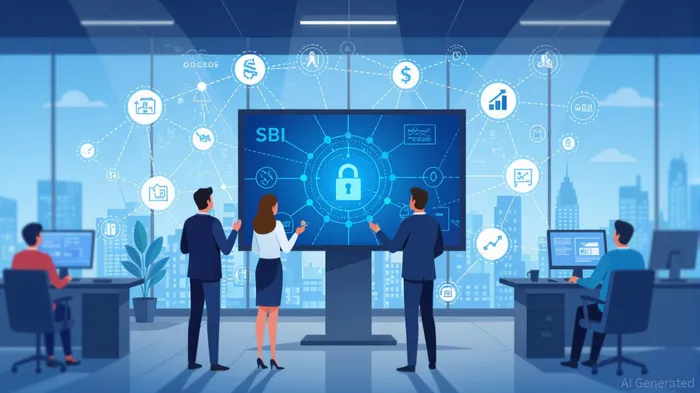
The institutional adoption of digital assets is no longer a speculative narrative but a structural shift in global finance. As central banks, asset managers, and regulators recalibrate their frameworks to accommodate tokenized assets and decentralized infrastructure, one truth has emerged: trust and compliance are the linchpins of this transition. The recent partnership between Japan's SBI Group and ChainlinkLINK-- exemplifies how strategic alliances are accelerating the maturation of the crypto ecosystem, transforming it from a speculative frontier into a regulated, institutional-grade asset class. For investors, this evolution presents a compelling case for early positioning in infrastructure enablers—the unsung heroes of this new financial paradigm.
The SBI-Chainlink Collaboration: A Blueprint for Institutional Adoption
SBI Group, a financial titan managing over $200 billion in assets, has long positioned itself at the intersection of traditional finance and digital innovation. Its 2025 partnership with Chainlink, a leader in blockchain oracleORCL-- networks, is a masterstroke in addressing two critical barriers to institutional adoption: interoperability and regulatory compliance. By integrating Chainlink's Cross-Chain Interoperability Protocol (CCIP), SBI is enabling seamless, privacy-compliant transfers of tokenized assets across blockchain networks. This is not merely a technical upgrade—it is a foundational step toward creating a global financial infrastructure where real-world assets like real estate and bonds can be traded with the efficiency of digital tokens.
The partnership also leverages Chainlink's SmartData services to automate on-chain reporting of net asset values (NAVs) for tokenized funds. This innovation reduces operational friction for institutions, which have historically been deterred by the complexity of reconciling blockchain-based assets with traditional accounting standards. Meanwhile, Chainlink's Proof of Reserve technology ensures real-time transparency for stablecoins, a critical feature for regulators and investors wary of the 2022 stablecoin collapses.
Why Infrastructure Enablers Matter
The SBI-Chainlink collaboration is not an isolated event but part of a broader trend. Institutional investors are increasingly prioritizing infrastructure that bridges the gap between decentralized systems and regulatory frameworks. Consider the data: a 2025 SBI survey found that 76% of 50+ financial institutions expressed interest in tokenized securities, yet 89% cited inadequate infrastructure as a barrier. This gap represents a golden opportunity for companies like Chainlink, which provide the “plumbing” for institutional-grade DeFi.
The implications are profound. By deploying payment-versus-payment (PvP) solutions for cross-border transactions, SBI and Chainlink are addressing one of the most persistent inefficiencies in global finance. These tools, tested in Singapore's Project Guardian with UBSUBS-- Asset Management, now move from prototype to production at scale. For investors, this signals a shift from speculative “token” plays to value-creating “infrastructure” plays.
Regulatory Tailwinds and Market Dynamics
Japan's regulatory environment is a critical catalyst. The country's proposed 20% flat tax on crypto gains and its exploration of crypto ETFs align with global efforts to standardize digital asset taxation and investment vehicles. These reforms are not just about compliance—they are about legitimacy. As governments reduce the friction between crypto and traditional markets, they unlock capital flows that could dwarf current institutional participation.
Investment Thesis: Early Positioning in Infrastructure Enablers
For investors, the lesson is clear: infrastructure enablers are the bedrock of the next phase of DeFi growth. Unlike speculative tokens, these companies offer defensible moats—technical expertise, regulatory partnerships, and recurring revenue from institutional clients. Chainlink's dominance in oracle services, for instance, is underpinned by its first-mover advantage and enterprise-grade security. Similarly, SBI's deep pockets and regulatory credibility in Japan position it as a gatekeeper for Asia-Pacific institutional adoption.
The risks, of course, are non-trivial. Regulatory shifts could delay timelines, and technological bottlenecks may emerge. Yet, the broader trend is inescapable: institutions are not retreating from digital assets but accelerating their integration. For those with a long-term horizon, the SBI-Chainlink partnership is a harbinger of a future where blockchain infrastructure is as critical as the internet was in the 1990s.
Conclusion: A New Era of Financial Infrastructure
The institutionalization of digital assets is not a question of “if” but “how fast.” Strategic partnerships like SBI's with Chainlink are not just technical collaborations—they are political and economic statements. They signal to regulators, investors, and the public that blockchain is no longer a fringe experiment but a core component of the financial system.
For investors, the path forward is to identify and support the infrastructure enablers that will underpin this transformation. These are the companies that will not only survive the next crypto winter but thrive in the spring that follows. In a world where trust is the ultimate currency, the winners will be those who build the bridges between tradition and innovation.

Decoding blockchain innovations and market trends with clarity and precision.
Latest Articles
Stay ahead of the market.
Get curated U.S. market news, insights and key dates delivered to your inbox.






Comments
No comments yet