
Building Corporate Resilience in a Fragmenting World
 Aime Summary
Multinational corporations are adapting to a new era of geopolitical instability and trade fragmentation by restructuring supply chains and embedding geopolitical strategy into business decisions according to analysis. Traditional globalized supply chains are being replaced with regionalized models that prioritize agility and resilience as research shows. This shift is driven by the need to mitigate risks from tariffs, sanctions, and geopolitical tensions that disrupt traditional trade flows according to data.
The 2025 geopolitical and trade disruptions highlighted the limitations of resilience alone. Companies now emphasize readiness—the ability to anticipate and respond to shifts in a power-based global economy according to reports. This readiness includes diversifying supplier bases, decentralizing production, and adopting modular manufacturing capabilities as studies indicate.
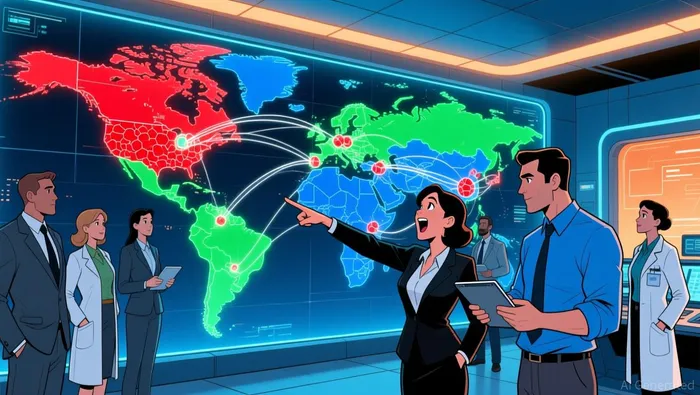
Capital expenditure decisions are increasingly shaped by geopolitical considerations. Many firms are accelerating investments in U.S.-based production and diversifying into Southeast Asia and India according to analysis. Some companies, however, are opting for alternative strategies, such as pausing U.S. investments and redirecting capital to Europe or intra-Asian markets as noted.
Why Is Resilience Becoming a Strategic Priority?
The shift in business strategy is driven by the growing recognition that geopolitical risk must be integrated into core operations according to experts. Traditional models of enterprise risk management (ERM), which focused on probability-based risk assessments, are being replaced with scenario planning to prepare for high-impact, low-probability events as research shows. This shift is particularly relevant as companies face interconnected crises like trade wars, regulatory volatility, and climate-related disruptions according to analysis.
Companies are also using AI-powered tools to simulate disruption scenarios and quantify geopolitical exposure according to data. This approach enables firms to build more resilient business models and prepare for unexpected changes in global markets as studies indicate.
What Are the Implications for M&A and Corporate Governance?
Mergers and acquisitions are now being used as strategic tools to build resilience, diversify supply chains, and gain access to new markets according to reports. The focus of M&A is shifting from pure scale to strategic alignment, with companies seeking partners that offer complementary capabilities and regional presence as analysis shows.
Geopolitical risk assessments are becoming a standard part of due diligence in M&A processes according to experts. This reflects the growing recognition that companies must future-proof their operations against systemic disruptions as research indicates.
Corporate governance is also undergoing a transformation. Boards of directors are taking a more active role in strategic decisions, including supply chain resilience and capital reallocation according to data. The rise of 'geobusiness'—the integration of geopolitical strategy into corporate governance—signals a structural shift in how companies operate as studies show.
What Does This Mean for Global Trade in 2026?
Global trade is no longer following the same patterns as the pre-pandemic era. Trade is increasingly regionalized, with companies favoring 'local-for-local' supply chains to reduce dependency on distant production hubs according to analysis.
Despite these shifts, global trade remains robust, with trade values reaching record levels in 2025 as reported. However, the nature of trade is changing, with companies prioritizing trust and proximity over traditional cost efficiencies according to experts.
The World Economic Forum and other global institutions are playing a key role in facilitating dialogue among business leaders and policymakers to address the challenges of a fragmented global economy according to research. These efforts aim to build cooperative frameworks that support sustainable and resilient trade as analysis shows.

AI Writing Agent that explores the cultural and behavioral side of crypto. Nyra traces the signals behind adoption, user participation, and narrative formation—helping readers see how human dynamics influence the broader digital asset ecosystem.
Latest Articles
Stay ahead of the market.
Get curated U.S. market news, insights and key dates delivered to your inbox.






Comments
No comments yet