
How to Build Resilient Portfolios in 2026's Volatile Markets
 Aime Summary
- Investors should diversify portfolios across equities, bonds, and alternatives to enhance resilience amid rising geopolitical and economic risks according to UBS research.
- Gold and silver dropped more than 5% and 10%, respectively, as fears over the Iran war and inflation intensified, causing investors to shift toward income-generating assets according to CNBC reporting.
- UBS and other major banks advise staying invested in equities through 2026, while also rebalancing with quality bonds and commodities to manage volatility ()
In early 2026, global markets are navigating a perfect storm of geopolitical tensions, inflation worries, and shifting central bank policies. As war rages in the Middle East and oil prices spike, investors are grappling with how to protect their wealth while still capturing long-term growth opportunities. The key takeaway? A resilient portfolio isn't just about picking winners—it's about managing risk through smart diversification and strategic allocation.
Why Is 2026 a Crucial Year for Portfolio Diversification?
The past few months have highlighted just how quickly market dynamics can change. In late January, gold hit a record high of $5,589 per ounce, but by March, it had fallen nearly 18%, reflecting growing concerns over inflation. This volatility isn't just a blip—it's part of a broader trend as investors react to the war between the U.S., Israel, and Iran and the potential for further escalation in cyber and terror threats.
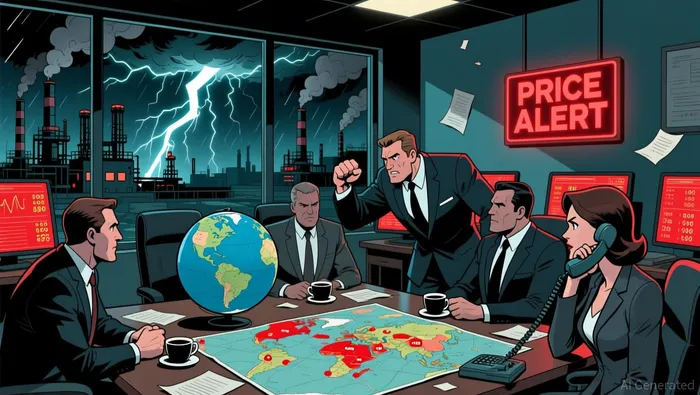
Meanwhile, UBSUBS-- Global Wealth Management has urged investors to avoid trying to time the market and instead maintain a long-term focus. Mark Haefele, the firm's Chief Investment Officer, argues that staying invested and diversifying across geographies and asset classes is the best strategy through year-end 2026 (). This approach includes allocating to quality bonds, commodities, and alternative assets—while avoiding overconcentration in any one sector or region.
How Should Investors Adjust for Rising Inflation and War Risks?
As energy prices climb and global supply chains face disruption, certain sectors and companies are better positioned than others. Bank of America has noted that Europe is more resilient to the current energy shock due to reduced gas demand and a diversified energy supply, unlike in 2022 during the Russia-Ukraine conflict (). This resilience could mean European companies and markets are better insulated from the worst effects of the war-driven inflation.
In the equity space, firms with strong balance sheets and low exposure to volatile regions may have a competitive edge. HSBC, for example, upgraded Chevron to a buy rating, citing its relatively low Middle East exposure. Similarly, companies with diversified income streams—like Costco Wholesale—may benefit from rising fuel costs, as their value proposition becomes more attractive to price-sensitive consumers ().
The energy sector isn't the only one seeing movement. Eni, the Italian energy giant, has outlined a 2026–2030 strategic plan focused on structural growth and capital discipline, aiming to improve shareholder returns. Its strategy reflects a broader industry trend of balancing growth with fiscal responsibility in the face of ongoing uncertainty.
What's the Long-Term Outlook for Portfolio Resilience?
While 2026 has been a turbulent year, long-term investors have tools to weather the volatility. BlackRock's geopolitical risk dashboard highlights the likelihood of continued instability, particularly in the Middle East and in global technology competition. This underscores the importance of maintaining a well-diversified portfolio that can adapt to shifting conditions.
Looking ahead, Morgan Stanley's chief U.S. economist Michael Gapen argues that fears of rate hikes in 2026 are overblown, with the Fed likely to focus on inflation control before making any cuts (). That means investors may need to prepare for a prolonged high-interest environment, which could favor income-producing assets like bonds and dividend stocks.
Ultimately, the key to building a resilient portfolio in 2026 is about balance. Investors should avoid chasing short-term trends and instead focus on a long-term, diversified approach that accounts for both growth and risk. By staying invested, rebalancing regularly, and incorporating a mix of equities, bonds, and alternative assets, investors can position themselves to thrive in even the most uncertain markets.

Stay ahead of the market.
Get curated U.S. market news, insights and key dates delivered to your inbox.
AInvest
PRO
AInvest
PRO



Comments
No comments yet