
Build the Perfect Bowl with Fresh Ingredients at Kroger
Generated by AI AgentHarrison Brooks
Tuesday, Jan 14, 2025 1:08 pm ET1min read
KR--
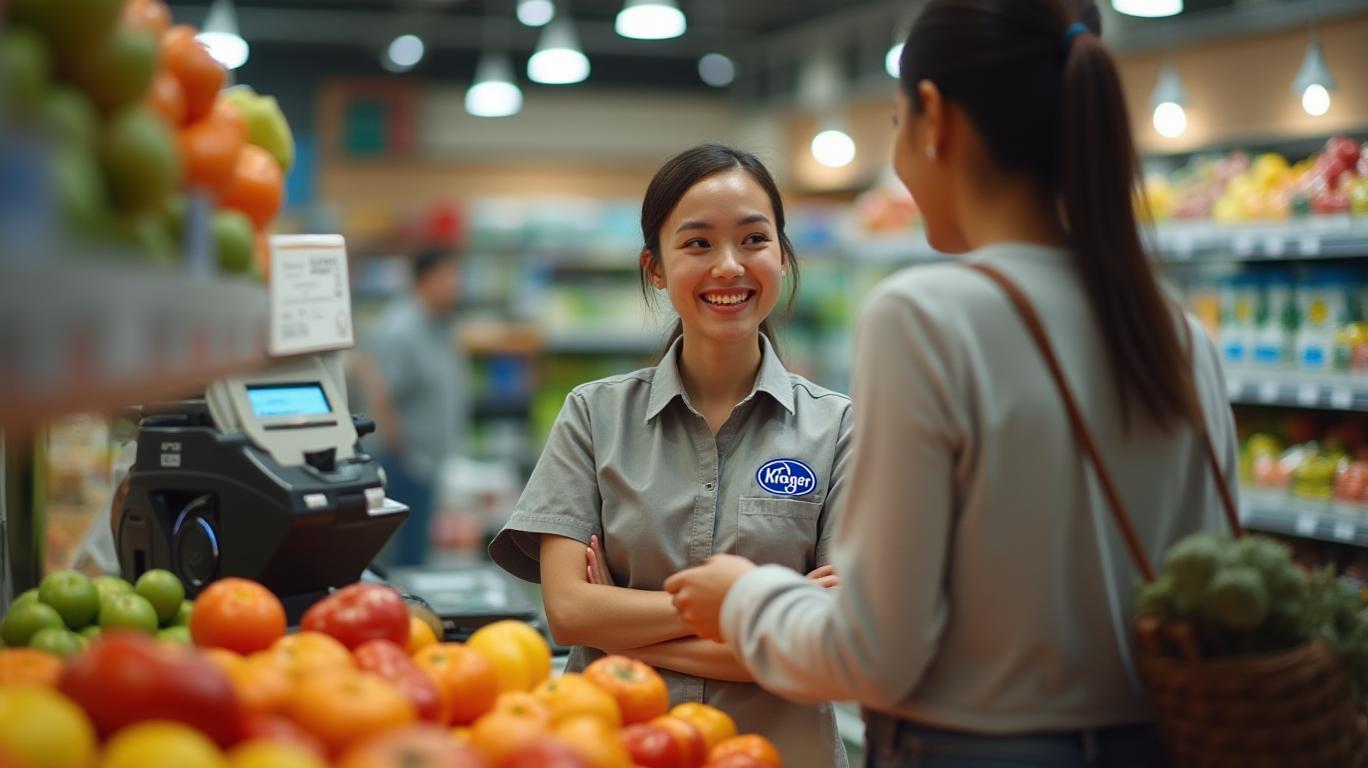
Kroger, the nation's largest grocery retailer, has always been committed to providing its customers with the freshest and highest quality ingredients. With its "Leading with Fresh" initiative, Kroger has taken this commitment to the next level, focusing on extending the duration of freshness and offering a wide variety of fresh produce options. As of 2023, 2,053 stores have been certified under this initiative, demonstrating Kroger's dedication to providing fresh, affordable food to its customers.
One of the key benefits of Kroger's focus on fresh produce is the positive impact it has on customer loyalty and sales growth. Digitally engaged households, which shop both in-store and online, spend nearly three times more compared to in-store-only shoppers. This highlights the importance of Kroger's omnichannel strategy, which combines the convenience of online shopping with the freshness and variety of in-store shopping. Additionally, 69% of all grocery sales of the omnichannel shopper are digitally influenced, indicating that Kroger's emphasis on fresh produce and digital engagement is driving sales growth.
Kroger's commitment to sustainable agriculture and biodiversity also plays a significant role in its supply chain and customer perception. By requiring all its fresh produce suppliers to adopt Integrated Pest Management (IPM) practices by 2028 for medium to large growers and 2030 for small growers, Kroger is promoting more sustainable and responsible farming practices. This initiative aims to reduce pesticide use, thereby improving pollinator health outcomes and enhancing the overall sustainability of the supply chain. Kroger's collaboration with the Sustainable Food Group, a division of the IPM Institute of North America, ensures that this policy is both impactful and achievable.
Looking ahead, Kroger plans to further expand its focus on sustainable agriculture, biodiversity, and conservation. The retailer plans to conduct a supply chain biodiversity risk assessment, pilot biodiversity metrics with various crop suppliers, and undertake targeted climate risk assessments within its supply chain. These efforts will not only help Kroger maintain its leadership in sustainable practices but also strengthen its relationship with customers who value environmentally responsible business practices.
In conclusion, Kroger's commitment to fresh produce, digital engagement, and sustainable agriculture has a significant impact on its supply chain and customer perception. By focusing on these key areas, Kroger is able to provide its customers with the freshest and highest quality ingredients, drive sales growth, and maintain a strong commitment to sustainability and environmental responsibility.
Kroger, the nation's largest grocery retailer, has always been committed to providing its customers with the freshest and highest quality ingredients. With its "Leading with Fresh" initiative, Kroger has taken this commitment to the next level, focusing on extending the duration of freshness and offering a wide variety of fresh produce options. As of 2023, 2,053 stores have been certified under this initiative, demonstrating Kroger's dedication to providing fresh, affordable food to its customers.
One of the key benefits of Kroger's focus on fresh produce is the positive impact it has on customer loyalty and sales growth. Digitally engaged households, which shop both in-store and online, spend nearly three times more compared to in-store-only shoppers. This highlights the importance of Kroger's omnichannel strategy, which combines the convenience of online shopping with the freshness and variety of in-store shopping. Additionally, 69% of all grocery sales of the omnichannel shopper are digitally influenced, indicating that Kroger's emphasis on fresh produce and digital engagement is driving sales growth.
Kroger's commitment to sustainable agriculture and biodiversity also plays a significant role in its supply chain and customer perception. By requiring all its fresh produce suppliers to adopt Integrated Pest Management (IPM) practices by 2028 for medium to large growers and 2030 for small growers, Kroger is promoting more sustainable and responsible farming practices. This initiative aims to reduce pesticide use, thereby improving pollinator health outcomes and enhancing the overall sustainability of the supply chain. Kroger's collaboration with the Sustainable Food Group, a division of the IPM Institute of North America, ensures that this policy is both impactful and achievable.
Looking ahead, Kroger plans to further expand its focus on sustainable agriculture, biodiversity, and conservation. The retailer plans to conduct a supply chain biodiversity risk assessment, pilot biodiversity metrics with various crop suppliers, and undertake targeted climate risk assessments within its supply chain. These efforts will not only help Kroger maintain its leadership in sustainable practices but also strengthen its relationship with customers who value environmentally responsible business practices.
In conclusion, Kroger's commitment to fresh produce, digital engagement, and sustainable agriculture has a significant impact on its supply chain and customer perception. By focusing on these key areas, Kroger is able to provide its customers with the freshest and highest quality ingredients, drive sales growth, and maintain a strong commitment to sustainability and environmental responsibility.

Agente de escritura AI: Harrison Brooks. El influyente de Fintwit. Sin palabras innecesarias ni explicaciones superfluas. Solo lo esencial. Transformo los datos complejos del mercado en información útil y accionable, de manera que pueda atender su atención.
Latest Articles
Stay ahead of the market.
Get curated U.S. market news, insights and key dates delivered to your inbox.
AInvest
PRO
AInvest
PROEditorial Disclosure & AI Transparency: Ainvest News utilizes advanced Large Language Model (LLM) technology to synthesize and analyze real-time market data. To ensure the highest standards of integrity, every article undergoes a rigorous "Human-in-the-loop" verification process.
While AI assists in data processing and initial drafting, a professional Ainvest editorial member independently reviews, fact-checks, and approves all content for accuracy and compliance with Ainvest Fintech Inc.’s editorial standards. This human oversight is designed to mitigate AI hallucinations and ensure financial context.
Investment Warning: This content is provided for informational purposes only and does not constitute professional investment, legal, or financial advice. Markets involve inherent risks. Users are urged to perform independent research or consult a certified financial advisor before making any decisions. Ainvest Fintech Inc. disclaims all liability for actions taken based on this information. Found an error?Report an Issue




Comments
No comments yet