
Buffett's Google Bet Gets Caught in the AI Spending Trap
Alphabet gave Wall Street strong growth. Investors still sold the stock.
After GoogleGOOGL-- parent Alphabet reported second-quarter earnings, shares fell more than 4% in after-hours trading before recovering slightly, according to The Wall Street Journal. The selloff came even though the headline numbers looked strong: revenue rose 24% year over year to $119.8 billion, while Google Cloud revenue jumped 82% to $24.8 billion.
The problem was not demand. The problem was spending.
Alphabet raised its 2026 capital expenditure forecast to $195 billion to $205 billion, crossing what some investors viewed as a psychological line. The company also posted negative free cash flow, and management signaled that heavy AI infrastructure investment would continue.
That is why the stock fell. Investors are no longer giving Big Tech a blank check for AI spending. They want to know when the money comes back.
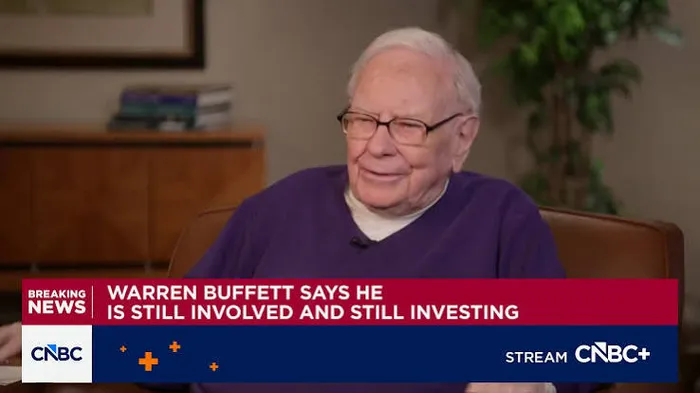
That makes Berkshire Hathaway's recent Alphabet bet look awkward.
Just weeks before this earnings reaction, Berkshire agreed to invest another $10 billion in Alphabet through a private placement tied to Alphabet's AI infrastructure funding plan. An SEC filing shows the deal included $5 billion of Class A shares at $351.81 per share and $5 billion of Class C shares at $348.20 per share.
In other words, Berkshire did not just hold an old Google position. It put fresh money into Alphabet right before the market started punishing the company for the exact thing that capital raise was meant to fund: AI infrastructure.
That is the "Buffett got trapped" angle.
Alphabet's business is not broken. Search revenue still grew, cloud demand is clearly strong, and the company said its cloud backlog rose to $514 billion, up from $460 billion in the prior quarter. Google also said Gemini is gaining enterprise traction, with nearly 90% of the Fortune 100 using Gemini's business offering or related cloud-security infrastructure.
But the market is now asking a different question.
For years, Alphabet was viewed as one of the world's best cash machines. It had dominant search, high-margin advertising, YouTube, Android, and a fast-growing cloud business. That kind of company usually fits the Berkshire framework: strong moat, huge cash generation, and long-term staying power.
The AI race changes that equation.
Alphabet is now spending like an infrastructure company. It is building data centers, buying chips, training models, and trying to defend search against OpenAI, Anthropic, and other AI challengers. The company may still win, but the path is becoming much more expensive.
That is why investors reacted so negatively to the capex guide. A portfolio manager quoted by WSJ said $200 billion was the "do-not-cross line." Truist analysts also warned that if Alphabet is already guiding to as much as $205 billion in 2026 capex, 2027 spending could move into even more aggressive territory.
For Berkshire, the timing is uncomfortable. The company bought into Alphabet's AI buildout at the exact moment investors began worrying that the buildout may be too expensive.
The bull case is still real. Google Cloud is growing fast, AI demand is strong, and Alphabet has distribution that few companies can match. If the company converts AI infrastructure into higher cloud revenue, stronger search monetization, and durable enterprise adoption, today's spending could eventually look justified.
But the near-term pressure is also real. Alphabet's free cash flow has turned negative, the capex outlook keeps rising, and investors still do not have a clear answer on how quickly AI spending will translate into returns.
That is the trap.
Buffett and Berkshire did not get caught in a weak company. They got caught in a market shift. Investors have moved from rewarding AI ambition to demanding AI payback.
The next thing to watch is whether Alphabet can explain the return on its spending. Strong cloud growth helps, but it may not be enough if capex keeps rising faster than confidence. Investors will also watch whether Gemini can regain momentum against OpenAI and Anthropic, and whether AI features in Search can protect Google's core advertising business.
For now, Alphabet remains a powerful company with a more complicated story. The growth is still there. The moat is still there. But the clean cash-flow story that once made Google look like a classic Buffett-style compounder is being tested by the cost of the AI race.
Berkshire's $10 billion bet may still work over the long run. In the short run, though, it is stuck inside the market's biggest question: how much AI spending is too much?

Senior Research Analyst at Ainvest, formerly with Tiger Brokers for two years. Over 10 years of U.S. stock trading experience and 8 years in Futures and Forex. Graduate of University of South Wales.
Latest Articles
Stay ahead of the market.
Get curated U.S. market news, insights and key dates delivered to your inbox.


AInvest
PRO
AInvest
PRO



