
Buffett’s Final Act: Berkshire’s New Era and the Tariff Crossroads
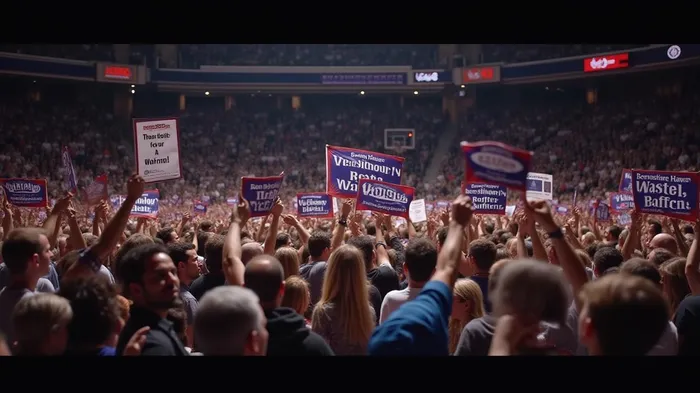
The Omaha faithful gathered under a cloud of change. At Berkshire Hathaway’s 2025 annual shareholders meeting, Warren Buffett, 94, announced his departure as CEO—a symbolic end to an era. The event, dubbed “Woodstock for Capitalists,” became a crucible of transition, as Buffett handed the reins to Greg Abel while issuing stark warnings about trade wars and market volatility. For investors, the week marked a pivotal reckoning: Can Berkshire’s legacy survive without its Oracle?
The Succession Plan: A New Chapter for Berkshire
Buffett’s retirement announcement—effective by year-end—ended months of speculation. Abel, 62, the vice chairman overseeing non-insurance operations, will replace him, while Buffett retains his role as chairman until his death. The transition reflects a strategic shift: Abel’s hands-on management style contrasts with Buffett’s famously hands-off approach.
“Greg can do better at many things,” Buffett admitted, praising Abel’s ability to streamline Berkshire’s sprawling empire, which spans railroads, candy brands, and insurance. Analysts at UBS noted Abel’s track record in boosting efficiency at Berkshire HathawayBRK.B-- Energy, a division now valued at $40 billion.
Yet challenges loom. Berkshire’s cash reserves hit a record $347 billion—up from $334 billion in late 2024—but Buffett warned against hasty investments: “If you told me we had to invest $50 billion every year until we got down to $50 billion—that would be the dumbest thing in the world.”
Tariffs and Trade: Buffett’s Stark Warning
Buffett’s sharpest critique targeted U.S. trade policies. “Tariffs are a big mistake,” he declared, calling them “an act of war” that risked destabilizing global trade. His comments echoed Berkshire’s Q1 2025 report, which cited tariffs as a “significant risk” to operating results.
The timing was prescient: the S&P 500 had dipped 4% year-to-date, while Berkshire’s stock rose 19% amid its defensive business mix. Yet Buffett dismissed short-term swings: “What has happened in the last 30, 45, or 100 days … is really nothing.”
The stakes are existential. Berkshire’s $1.1 trillion market cap relies on cross-border synergies—from BNSF Railway shipping goods to Dairy Queen franchises abroad. A trade war could unravel that web.
The Apple Paradox: Confidence in Cook, Caution in Cash
Buffett praised Apple CEO Tim Cook for boosting Berkshire’s returns, yet Berkshire reduced its Apple stake by nearly 50% in 2024 (from 790 million to 400 million shares). The move underscored Buffett’s evolving strategy: “Cook has made Berkshire a lot more money than I’ve ever made Berkshire.”
Yet the sale highlights a dilemma. With cash piling up, Berkshire faces pressure to deploy it—yet opportunities remain scarce. Buffett’s mantra of “disciplined investing” now faces its toughest test.
Conclusion: A Bridge Between Eras
Buffett’s exit marks a seismic shift, but Berkshire’s future hinges on two constants: its cash hoard and its culture of patience. Abel’s leadership must balance Buffett’s legacy with a new world of geopolitical tensions and volatile markets.
For investors, the takeaway is clear: Berkshire’s value lies not in short-term bets but in its enduring businesses and the wisdom of its leaders—past and present. As Buffett put it, “America thrives by leveraging its competitive advantages.” Whether Berkshire can do the same under a new captain remains to be seen, but the stakes, like its cash reserves, are astronomical.
Final Thought: In an era of uncertainty, Berkshire’s resilience depends on Abel’s ability to channel Buffett’s ethos while navigating uncharted waters. The Oracle’s final act may be over—but the story of his empire is far from done.

Stay ahead of the market.
Get curated U.S. market news, insights and key dates delivered to your inbox.




Comments
No comments yet