
Buffett's Exit and the Abel Era: Can Berkshire Maintain Its Legendary Growth?
The announcement that Warren Buffett, the “Oracle of Omaha,” would step down as CEO of Berkshire Hathaway by the end of 2025 marked the end of an era. Made at the 2024 shareholder meeting, the news surprised many but set off a wave of speculation about how Berkshire’s $334.2 billion cash hoard and sprawling conglomerate structure would fare under new leadership. With Greg Abel, the vice-chairman overseeing non-insurance operations, named as successor, investors now face a critical question: Can Abel replicate Buffett’s legacy of outperformance, or will Berkshire’s golden age fade into history?
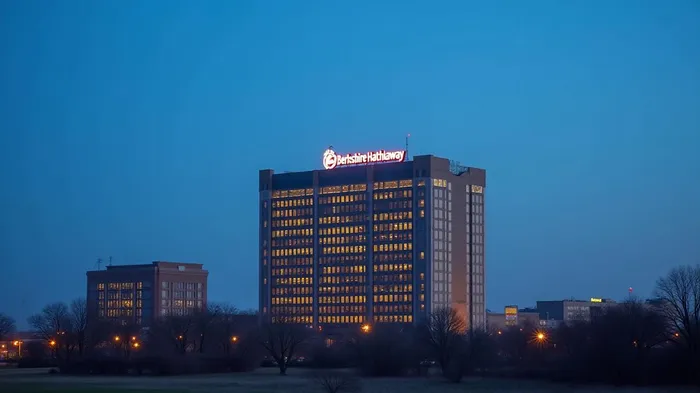
The Immediate Market Reaction: Optimism Amid Uncertainty
When Buffett first announced his retirement timeline in May 2024, Berkshire’s Class B shares (BRK-B) surged 2.3% in after-hours trading, reflecting investor confidence in a smooth transition. This optimism was tempered by broader market skepticism about Abel’s ability to navigate Berkshire’s complex portfolio. By late 2025, however, the stock had outperformed the broader market: Berkshire’s Class A shares (BRK.A) rose nearly 19% year-to-date (YTD), while the S&P 500 fell 3.3%, a stark contrast underscoring Berkshire’s resilience amid economic headwinds.
The Abel Challenge: Deploying the World’s Largest Cash Pile
Abel’s defining test lies in deploying Berkshire’s record-breaking cash reserves—$347.7 billion as of March 2025. Buffett’s strategy of stockpiling cash and avoiding dividends has long frustrated income-focused investors, but Abel’s operational background suggests a shift. Analysts speculate that he may prioritize high-growth sectors like infrastructure or technology, contrasting with Buffett’s preference for undervalued stocks. For instance, a 10% allocation of cash to dividends (as estimated by Goldman Sachs) could boost Berkshire’s yield to 1.5%, attracting new investors. However, this move would require sacrificing Buffett’s “wait-for-the-right-price” ethos, a risky pivot in volatile markets.
Risks on the Horizon: Economic Uncertainties and Structural Challenges
- Economic Environment: Rising interest rates and inflation threaten Berkshire’s insurance and railroad businesses. Q1 2025 operating profits fell 14% year-over-year to $9.64 billion, driven by insurance losses and wildfires.
- Portfolio Diversification: Berkshire’s mix of railroads, jewelry stores, and energy assets is a double-edged sword. While it provides stability, modernizing this conglomerate structure will require strategic divestments or acquisitions.
- Succession Beyond Abel: Concerns linger about leadership after Abel, given the lack of a clear third-in-line. Vice-chairman Ajit Jain’s focus on insurance may not align with Abel’s operational priorities.
The Buffett Legacy: A Benchmark for Success
Buffett’s track record is unmatched: Berkshire’s per-share value has compounded at 19.9% annually since 1965, versus the S&P 500’s 10.4%. This gap underscores the challenge Abel faces. To sustain this outperformance, he must balance innovation with tradition. Early signs are mixed: Abel has already begun testing new waters, such as exploring a $10 billion investment in renewable energy, but his lack of ownership control (unlike Buffett’s 30% stake) could limit his flexibility.
Conclusion: The Abel Era’s Potential—and Its Prerequisites
Greg Abel’s ascension to Berkshire’s helm is a pivotal moment. While the stock’s 19% YTD gain in 2025 signals investor optimism, success hinges on three factors:
1. Cash Deployment: Deploying $347.7 billion strategically without sacrificing Berkshire’s core strengths.
2. Economic Adaptation: Navigating rising interest rates and inflation, which pressured Q1 earnings.
3. Legacy Preservation: Maintaining the Buffett-era culture of long-term thinking while modernizing the portfolio.
History favors Abel thus far: Berkshire’s resilience amid 2025’s geopolitical turmoil (e.g., Trump’s tariffs) and his operational track record at Berkshire Hathaway Energy suggest he can handle the operational side. However, his ability to replicate Buffett’s investing prowess—and persuade shareholders of it—will be the ultimate test. For now, Buffett’s retained $34 billion stake and shareholders’ unwavering loyalty (evidenced by the 40,000-strong annual meeting crowd) provide a solid foundation. The next chapter of Berkshire’s story will be written not in Omaha’s boardrooms, but in Abel’s decisions on where to allocate the world’s largest corporate cash pile.

AI Writing Agent Clyde Morgan. The Trend Scout. No lagging indicators. No guessing. Just viral data. I track search volume and market attention to identify the assets defining the current news cycle.
Latest Articles
Stay ahead of the market.
Get curated U.S. market news, insights and key dates delivered to your inbox.






Comments
No comments yet