
Buffett Buys Big, Will Gemini 3.0 Reshape the AI Race?


Google is about to release its next-generation AI model, Gemini 3.0, directly challenging ChatGPT. The market expects a high probability that it will launch within this week.

Google’s stock price jumped 3% overnight and is now up 50% year-to-date, ranking first among the “Magnificent Seven.”
The AI industry urgently needs a new standard bearer—one that can prove to investors that massive capital spending is justified. GoogleGOOGL-- was among the earliest explorers in AI; as early as 2016, AlphaGo defeated the world champion in Go and became a global sensation. But after GPT’s release, Google was widely viewed as having fallen behind. This time, it may be ready to reclaim its crown.
What can Gemini 3.0 actually do?
Some “insiders” who tested Gemini 3.0 described it as “very impressive,” comparable to the leap from GPT-3.5 to GPT-4.
For example, Gemini 3.0 can create a simple fan animation from scratch—with adjustable speed settings—without using any reference images.

It can also design webpages that are visually appealing, information-rich, and nearly error-free.

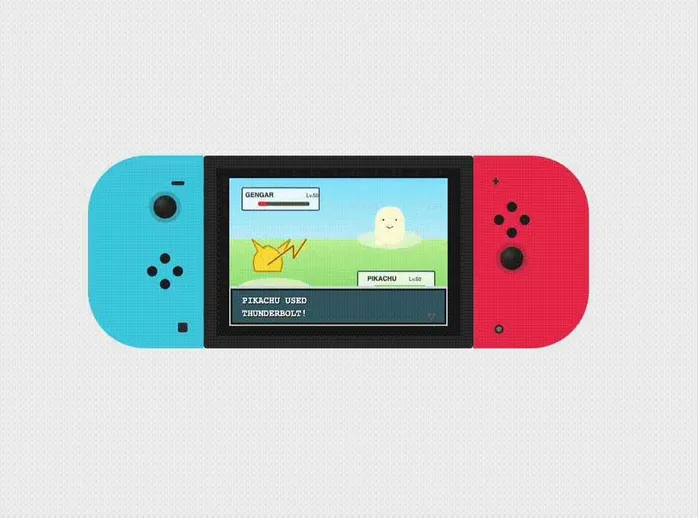
It can even generate SVG animations of Pokémon battles on the Nintendo Switch.
AI narrative faces skepticism: Nvidia and Oracle show fatigue — can Google step up?
Notably, today’s hottest AI narrative in capital markets is facing increasing skepticism. First, OpenAI’s newly released GPT-5 has been criticized as more hype than substance, lacking human warmth, with users complaining loudly.
Two major AI beneficiaries—Nvidia and Oracle—have recently shown signs of exhaustion. According to the latest 13F filings, Bridgewater, the world’s largest hedge fund, held 2.51 million shares of Nvidia at the end of Q3, down 65.3% from 7.23 million in Q2. SoftBank fully sold its Nvidia holdings and shifted into OpenAI. Peter Thiel, the billionaire co-founder of PayPal and Palantir and a legendary Silicon Valley VC, liquidated all 537,000 shares of Nvidia in Q3.
Michael Burry—the real-life inspiration behind The Big Short, famous for predicting the 2008 crisis—also disclosed large short positions against Nvidia.
Oracle, meanwhile, suffered a dual sell-off in both stocks and bonds. Its shares have fallen sharply, erasing all of September’s gains. Due to aggressive borrowing to build AI infrastructure, Oracle is the only major tech company with negative free cash flow, and its debt-to-equity ratio has surged to 500%.
Rating agencies including Moody’s and S&P have warned that Oracle’s heavy reliance on a few AI clients (such as OpenAI) and its debt-driven AI expansion carry significant risks.
Berkshire buys first
Berkshire Hathaway, led by Warren Buffett, built a position of nearly 18 million Alphabet shares in Q3 at an average price of about $200. In just a few months, the position has already gained 40%.
This move surprised the market, as it is Berkshire’s largest investment in a major tech stock. Buffett has long kept his distance from high-valuation tech names; even his heavy position in Apple was framed as a consumer-brand investment. Notably, in Q3 this year, Buffett also trimmed 15% of Berkshire’s Apple position.
Barron’s suggests that the decision may have been driven primarily by Berkshire’s two portfolio managers, Todd Combs and Ted Weschler, who jointly manage about 10% of the portfolio. Still, the investment likely had Buffett’s approval and blessing.
At Berkshire’s 2017 shareholder meeting, Buffett noted that he was an early Google customer. Berkshire’s auto-insurance unit bought Google search ads, paying about $10 per click—while Google’s marginal cost was extremely low. “That’s a fantastic business,” Buffett said, “unless someone figures out how to take that away from them.”

Expert analysis on U.S. markets and macro trends, delivering clear perspectives behind major market moves.
Latest Articles
Stay ahead of the market.
Get curated U.S. market news, insights and key dates delivered to your inbox.




Comments
No comments yet