
Buffett's Billion-Dollar Gamble: How Cash and Caution Fueled a Record Surge
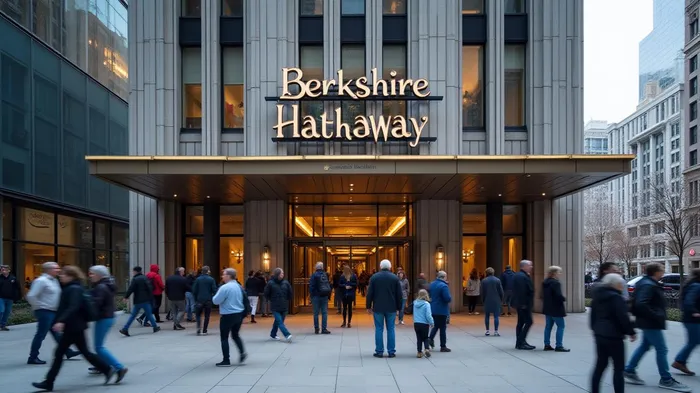
Over the past week, Warren Buffett’s net worth surged to a staggering $166 billion, marking a $24.1 billion year-to-date gain through April 29, 2025. This meteoric rise—amid a $500 billion collective loss by the world’s 500 richest individuals—spotlights Buffett’s contrarian strategy: a fortress of cash, disciplined exits from overvalued tech, and a focus on defensive sectors.
The Cash King’s Playbook
Buffett’s success hinges on a $347 billion cash reserve—a record high for Berkshire Hathaway—held largely in short-term U.S. Treasury bills. These holdings, yielding around 4% annually, provided a steady income stream while tech stocks like AppleAAPL-- (AAPL) and Microsoft (MSFT) plummeted.
While the S&P 500 fell 3.3% in 2025, Berkshire’s stock rose 19%, outperforming even its own historical trends. Buffett’s “wait-and-see” approach insulated the conglomerate from market volatility triggered by President Trump’s tariffs, which caused the S&P 500 to drop 10.7% between April 2 and April 29.
Key Move: Selling 70% of Berkshire’s Apple stake in 2024—before its 16.4% YTD decline—locked in gains while avoiding losses. “We don’t want to be greedy with overvalued assets,” Buffett noted in his shareholder letter, a mantra that contrasts sharply with tech billionaires like Elon Musk, who lost $97 billion in the same period.
The Shareholder Meeting: A Blueprint for the Future
At Berkshire’s annual meeting on May 3–4, Buffett’s successor Greg Abel emphasized the $347 billion cash pile as both a defensive shield and a strategic weapon. Investors, however, grilled executives on two critical issues:
- Cash Utilization: With interest rates rising, Berkshire’s Treasury holdings could generate even more income. But shareholders want to see capital deployed in acquisitions or dividends. Abel hinted at “opportunities in undervalued sectors,” though no specifics were announced.
- Leadership Transition: Vice Chairman Ajit Jain, who leads Berkshire’s profitable insurance division, faces no clear successor. Buffett acknowledged the difficulty of replacing him but noted that “new talent is already being groomed.”
Navigating the Storm
Despite Buffett’s gains, risks loom large. The Q1 2025 earnings report revealed a 14% drop in operating profits to $9.64 billion, driven by losses from Southern California wildfires and a weakening U.S. dollar. Analysts warn that Berkshire’s size—its $700 billion market cap—limits its ability to grow like smaller firms.
Yet Buffett’s philosophy endures. “We focus on what we can control,” Abel said, echoing his mentor’s mantra. The conglomerate’s diversified portfolio—spanning railroads, utilities, and consumer brands—has shielded it from sector-specific downturns.
Conclusion: A Model for Volatile Times
Warren Buffett’s net worth surge isn’t just a personal triumph—it’s a masterclass in risk management. By prioritizing liquidity, avoiding speculative fads, and focusing on long-term value, he’s navigated a market where tech moguls like Musk and Bezos lost billions.
For investors, the takeaway is clear: cash is king, and discipline outlasts hype. As Buffett’s Berkshire continues to defy gravity, the question remains: Can the next generation of leaders replicate his legacy? With $347 billion in reserves and a playbook proven over decades, the odds look good—but the answers will come in time.
Final data point: As of May 4, Buffett’s net worth stood near $166 billion, a 16% lead over Bill Gates and a stark contrast to Elon Musk’s $97 billion loss. The Oracle of Omaha isn’t just wealthy—he’s a strategist who’s betting on patience, and winning big.

Stay ahead of the market.
Get curated U.S. market news, insights and key dates delivered to your inbox.






Comments
No comments yet