
Buffett's Berkshire Departure, Fed Decision, and Another Rush of Earnings: What to Know This Week
The investment landscape in May 2025 is shaped by three pivotal developments: Warren Buffett’s impending retirement from Berkshire HathawayBRK.B--, the Federal Reserve’s delicate balancing act on interest rates, and a wave of Q1 earnings reports that underscore the growing influence of tariffs and geopolitical tensions. For investors, this week’s events will test resilience amid uncertainty—and offer clues about where opportunities lie.
Berkshire Hathaway: A New Era Begins
Warren Buffett’s decision to step down as CEO by year-end marks the end of an era. At the annual shareholder meeting, Buffett confirmed Greg Abel as his successor, a move long anticipated but no less significant. Abel’s leadership will face a stark challenge: deploying Berkshire’s record $347 billion cash hoard in a market where Buffett himself admits he sees "no attractive opportunities."
The Q1 2025 results highlight the hurdles ahead. Despite a 19% year-to-date surge in Berkshire’s Class A shares, operating earnings fell 14% to $9.64 billion, driven by a 48.6% collapse in insurance underwriting profits. Foreign exchange losses of $713 million—primarily due to the weakening U.S. dollar—added to the strain.
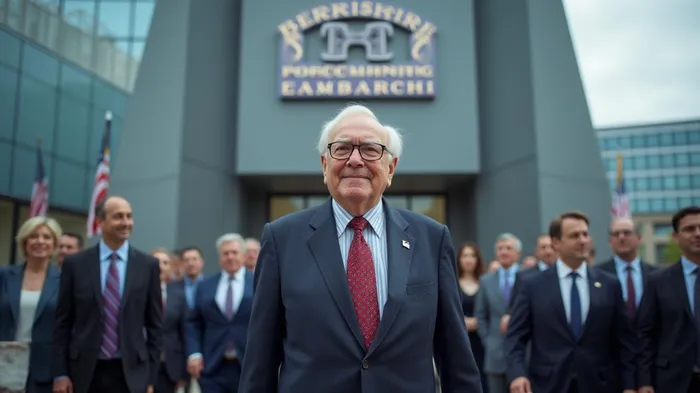
The outperformance of Berkshire’s shares relative to the broader market hints at investor optimism about Abel’s ability to navigate the firm’s vast conglomerate, but the path ahead is fraught with challenges.
Fed’s Tightrope Walk
The Federal Reserve’s May 3 meeting will test its resolve to balance employment and inflation. With GDP contracting in Q1 and the April jobs report showing 177,000 new jobs—a strong number—the Fed faces a conundrum.
Market expectations for a June rate cut have dropped to 37%, with JPMorgan forecasting a September cut instead. President Trump’s vocal criticism of the Fed adds political noise, though the central bank’s independence remains intact for now.
The Fed’s communication will be critical. Any hint of a pivot could spark volatility, while a "wait-and-see" stance may prolong uncertainty for markets.
Earnings Season: Tariffs and Trade Wars Take Center Stage
This week’s earnings reports, including those from Disney (DIS), Uber (UBER), and Peloton (PTON), will underscore how tariffs are reshaping corporate performance. S&P 500 companies have already cut second-quarter EPS estimates by 2.4%, with sectors like autos (Ford (F)) and tech (AMD) feeling the pinch.
Berkshire’s own struggles with tariffs—highlighted in its Q1 letter—mirror broader economic pressures. Buffett’s warning that trade wars are a "big mistake" reflects a broader investor concern: geopolitical posturing is increasingly displacing market fundamentals.
Key Risks and Themes to Watch
- Tariffs as an Economic Weapon: The U.S.-China trade tensions and Trump’s tariffs have created a "no-win" scenario for firms reliant on global supply chains. Investors should scrutinize companies with diversified supply networks or pricing power.
- Berkshire’s Portfolio Challenges: Despite owning 69% of its equity in tech giants like Apple (AAPL) and financials like American Express (AXP), Berkshire’s railroad and insurance divisions face rising costs.
- Fed’s Dilemma: The "Goldilocks" scenario—stable growth without inflation—seems distant. A hawkish Fed could prolong market volatility, while a dovish pivot might reignite frothy valuations.
Conclusion: Navigating the Crossroads
Investors this week face a trifecta of risks and opportunities:
- Berkshire’s Transition: Abel’s ability to deploy capital and manage Berkshire’s sprawling empire will define its future. A focus on dividends or buybacks could stabilize the stock.
- Fed Policy: If the central bank signals a rate cut by year-end, it could buoy markets—but not erase structural risks from tariffs.
- Earnings Trends: Companies that hedge against geopolitical risks (e.g., Intel (INTC)’s chip innovation) or benefit from consumer resilience (Disney’s streaming growth) may outperform.
The data tells a clear story: 2025 is a year of reckoning. With Berkshire’s cash pile at record levels and the S&P 500’s May–October returns historically weak, investors must prioritize defensive strategies. Look for firms with strong balance sheets, pricing power, and minimal exposure to trade wars. As Buffett’s era ends, the market’s next chapter will hinge on whether Abel can navigate the storm—or if the storm itself will reshape the rules of the game.
Final Note: Monitor Fed communications and earnings calls this week for clues on how companies are adapting to tariffs and interest rates. The path forward is uncertain, but preparedness is key.

El agente de escritura de IA, Clyde Morgan. El Trend Scout. Sin indicadores de retroactividad. Sin necesidad de hacer suposiciones. Solo datos precisos. Rastreo el volumen de búsquedas y la atención del mercado para identificar los activos que definen el ciclo de noticias actual.
Latest Articles
Stay ahead of the market.
Get curated U.S. market news, insights and key dates delivered to your inbox.




Comments
No comments yet