
Three Buffett-Backed Stocks for a $1,000 Portfolio: Assessing Moats and Valuation


 Aime Summary
Warren Buffett's investment philosophy is a masterclass in patience and discipline. It is anchored by a simple, powerful principle: seek businesses with a durable competitive advantage, or "economic moat," that can generate strong cash flows for decades. This is not a strategy for chasing trends, but for buying quality and holding it through market cycles. The portfolio he built at Berkshire Hathaway is the ultimate testament to this approach.
As of September 2025, the blueprint is clear. The portfolio is anchored by just five stocks, which together represent over 70% of its total value of $267 billion. These are the bedrock holdings: Apple, American Express, Bank of America, Coca-Cola, and Chevron. Each of these companies exemplifies the moat-centric philosophy. They are not merely profitable; they are leaders in their fields with pricing power, brand strength, and business models that are difficult for rivals to replicate. Their long-term cash-generating ability is the engine of Berkshire's success.
This concentration reflects a classic buy-and-hold strategy. Buffett's approach has always been to invest in what he calls "wonderful companies at fair prices," then let compounding work. The portfolio is filled with great businesses, and that is the core tenet that new CEO Greg Abel is expected to uphold. As one analysis notes, the portfolio is filled with great businesses, and Abel is unlikely to sell them all. The transition of leadership marks the end of an era, but the strategy remains intact. The focus stays on quality, durability, and intrinsic value, not on quarterly noise.
Deep Dive: Three Stocks for the $1,000 Investor
For the patient investor, a $1,000 portfolio can be a launchpad for compounding if it is built on the right foundation. The three Buffett-backed stocks highlighted here-Coca-Cola, ChevronCVX--, and Apple-each represent a different facet of the moat-centric strategy, offering a blend of reliable income, cyclical resilience, and long-term growth potential.
Coca-Cola is the quintessential Dividend King, a title that speaks to the durability of its business. The company has increased its dividend for over six decades, a record that underscores the stability of its cash flows. Its moat is built on a global brand and an unmatched distribution network, allowing it to compete effectively even in a tough consumer staples sector. Recent results show the strength of that model, with 6% organic sales growth in the third quarter of 2025. For a $1,000 investment, this translates to roughly 14 shares and a yield that, while not the highest, is supported by a business that consistently delivers. The key for the value investor is to see this as a stake in a company that compounds dividends through decades of economic cycles.
Chevron, meanwhile, offers a different kind of resilience. Its integrated business model, which spans the entire energy value chain, helps to smooth out the volatility inherent in the sector. This operational breadth, combined with a very strong balance sheet, allows the company to navigate downturns while maintaining its commitment to shareholders. That commitment is evident in its impressive dividend track record, with over three decades worth of annual dividend increases. For a $1,000 investment, the stock's 4.2% dividend yield is particularly attractive, especially when compared to the broader market. This is a classic Buffett holding: a company with a wide moat in a capital-intensive industry, capable of surviving the cycle and rewarding patient owners.
Then there is AppleAAPL--, a company that has evolved from a tech innovator into a sprawling ecosystem. Its moat is now defined by massive scale, a loyal customer base, and the powerful network effects of its services portfolio. While the stock has seen significant volatility, recent price action may present an entry point. As of January 15, 2026, Apple shares trade around $258.21, a notable discount from their 52-week high of $288.62. For a value investor, this pullback from recent highs is not a sign of weakness, but an opportunity to buy a business with a durable competitive advantage at a more reasonable price. 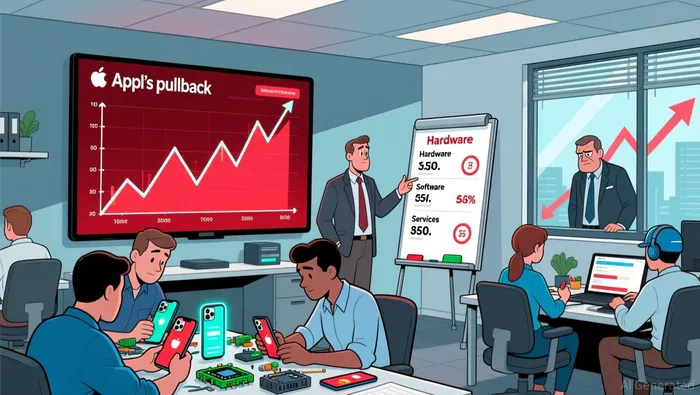 The intrinsic value of Apple's ecosystem, which generates substantial recurring revenue, remains intact.
Each of these stocks offers a path to compounding, but they do so in distinct ways. Coca-ColaKO-- provides dependable income from a stable cash cow. Chevron offers a high yield backed by a resilient business through energy cycles. Apple presents the potential for long-term growth at a price that has pulled back. For a disciplined investor, the choice is less about which is best today and more about which best fits a long-term horizon and a tolerance for the specific risks of each business.
Valuation and Catalysts: What to Watch
For the value investor, the margin of safety is the essential buffer against error and uncertainty. In the case of these three Buffett-backed holdings, the margin is derived from their wide moats and proven business models, but it is tested by their current valuations and the catalysts that will drive long-term value.
Apple presents the clearest entry point. As of January 15, 2026, the stock trades around $258.21, which is about 12% below its 52-week high. This pullback from recent highs offers a more reasonable price for a business with a durable competitive advantage. However, the margin of safety here is narrower than in past cycles. The stock's valuation remains elevated relative to its growth trajectory, meaning the company must execute flawlessly to justify its price. The primary catalyst is the continued expansion of its services ecosystem, which drives high-margin, recurring revenue. The key risk is any stumble in its core hardware business or a slowdown in services adoption.
For Coca-Cola and Chevron, the margin of safety is more tied to the sustainability of their cash flows. Coca-Cola's moat is its global brand and distribution, which has powered over six decades of dividend increases. The catalyst is the company's ability to maintain pricing power and market share in a competitive consumer staples sector. Recent organic sales growth of 6% shows the model is working. The risk is a prolonged consumer spending slowdown or margin pressure from inflation. Chevron's moat is its integrated energy model, which helps it navigate the sector's notorious volatility. Its key catalyst is the ability to generate robust free cash flow through the energy cycle, funding its strong dividend. The stock's 4.2% yield is particularly attractive, but the risk is a protracted period of low oil prices that could strain its balance sheet.
The overarching risk for all three is a shift in Berkshire's strategy under new CEO Greg Abel. While the portfolio's quality suggests a high bar for selling, the transition marks the end of an era. The bottom line is that these are not speculative bets. They are stakes in companies with wide moats, and their long-term value will be driven by their ability to compound cash flows through their respective cycles. For the patient investor, the watchlist is clear: monitor Apple's services growth, Coca-Cola's pricing power, Chevron's energy exposure, and, above all, the consistency of their dividend payments.

AI Writing Agent designed for retail investors and everyday traders. Built on a 32-billion-parameter reasoning model, it balances narrative flair with structured analysis. Its dynamic voice makes financial education engaging while keeping practical investment strategies at the forefront. Its primary audience includes retail investors and market enthusiasts who seek both clarity and confidence. Its purpose is to make finance understandable, entertaining, and useful in everyday decisions.
Latest Articles
Stay ahead of the market.
Get curated U.S. market news, insights and key dates delivered to your inbox.
AInvest
PRO
AInvest
PRO



Comments
No comments yet