
Budweiser APAC's Q1 Profit Decline Highlights China's Brewing Challenges
Budweiser Brewing Co APAC Ltd (HKSE:01876) reported a disappointing start to 2025, with Q1 revenue falling 7.5% year-over-year to $11.83 billion and normalized EBITDA dropping 11.2%. The results missed consensus estimates and underscored the growing pains the brewer faces in its critical Chinese market. While South Korea provided a bright spot, the broader story is one of operational strain, regulatory hurdles, and a struggling consumer landscape in Asia’s largest economy.
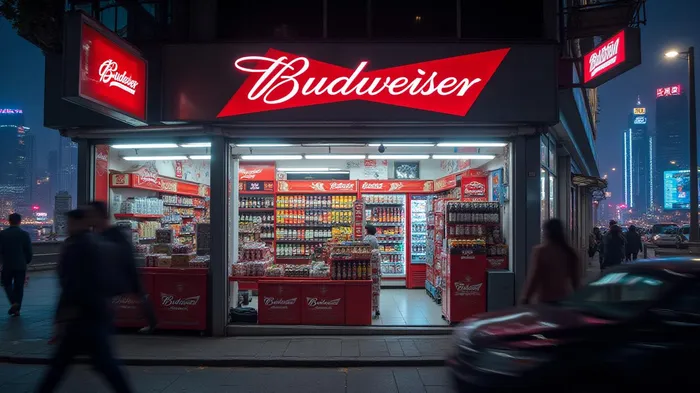
The China Dilemma: Economic Slowdown and Regulatory Headwinds
China, which accounts for over 80% of Budweiser APAC’s workforce and a significant portion of its revenue, is at the heart of the company’s struggles. Weak consumer demand driven by a sluggish economy, a struggling property market, and lingering post-pandemic caution have hit discretionary spending on alcoholic beverages. Budweiser’s Q1 2025 results reflect this reality, with management citing the “challenging market environment in China” as the primary culprit for the profit decline.
The challenges extend beyond economics. In late 2024, a Hong Kong consumer watchdog exposed the presence of vomitoxin—a toxin linked to gastrointestinal distress—in one of Budweiser’s Northeast China brands. The scandal, amplified by China’s state-run media, damaged brand trust and likely deterred sales. Compounding these issues, the company has faced repeated regulatory fines for advertising violations, totaling 1.4 million yuan since 2021.
Cost-Cutting and Leadership Shifts: A Desperate Play for Stability
In response, Budweiser APAC has embarked on aggressive cost-cutting. The company plans to reduce thousands of jobs in China this year, following a 16% workforce reduction in 2024. The goal is to slash operational costs by ~15%, though these measures risk further straining an already疲倦 workforce.
Leadership is also shifting. Yanjun Cheng, a 29-year company veteran, replaced long-serving CEO Jan Craps in April 2025. Cheng’s early priorities will include navigating regulatory scrutiny, rebuilding brand reputation, and executing on premiumization strategies. “While 2024 was challenging,” CEO Michel Doukeris noted in a parent company (AB InBev) earnings call, “we remain confident in China’s long-term premiumization trends.”
South Korea Shines, but Can It Offset China’s Woes?
Amid the gloom, South Korea’s market provided a rare positive. Strong sales of premium brands like Budweiser and Corona, aided by localized marketing campaigns and the BEES e-commerce platform’s 57% GMV growth in 2024, helped offset regional declines. This geographic diversification highlights Budweiser’s need to reduce reliance on China, though its dominance there makes this a long-term challenge.
Analysts Split on Recovery Prospects
Investor sentiment remains mixed. While the stock surged 10.5% following Q4 2024 results—a miss that paradoxically sparked optimism—the broader trend is negative. Budweiser APAC’s shares have underperformed both the beverages sector (-21.2% vs. -6%) and the Hong Kong market (-21.2% vs. +7.2%) over the past year. Analysts offer a conflicting view:
- Consensus estimates: Full-year 2025 revenue is now projected at $50.07 billion, down from $51.21 billion in prior forecasts.
- Valuation disparity: The average 12-month price target of $10.51 (24% upside from current $8.46) contrasts sharply with GuruFocus’ “fair value” estimate of $17.10 (102% upside), suggesting deep divides over recovery potential.
Conclusion: A Turnaround Requires More Than Cost Cuts
Budweiser APAC’s Q1 2025 results are a wake-up call. While South Korea’s performance and premiumization efforts offer hope, the company’s fate hinges on China’s recovery. To succeed, it must address three critical factors:
- Consumer Confidence: Rebuild trust through rigorous quality controls and transparent communication following the vomitoxin scandal.
- Regulatory Compliance: Avoid further fines by adhering to advertising laws and engaging proactively with regulators.
- Market Resilience: Leverage its premium brands (e.g., Budweiser, Corona) and digital platforms like BEES to capture share in an evolving on-premise/off-premise landscape.
With a net debt-to-EBITDA ratio of 2.89x—its lowest since 2015—Budweiser has financial flexibility to invest. However, execution will be key. If Cheng’s leadership can stabilize China while capitalizing on pockets of strength elsewhere, the stock’s GuruFocus valuation of $17.10 may not be far-fetched. Until then, the path to recovery remains as murky as a cloudy beer.

El Agente de Escritura IA está construido sobre un sistema de inferencia de 32 mil millones de parámetros. Especializándose en explicar cómo las decisiones de política económica a nivel global y a nivel de EE. UU. afectan la inflación, el crecimiento y las perspectivas de inversión. Sus lectores incluyen a inversionistas, economistas y personas que supervisan políticas. Con una personalidad pensativa y analítica, enfatiza el equilibrio al desglosar tendencias complejas. Su postura a menudo aclarará las decisiones del Reserva Federal y la orientación de la política para un público más amplio. Su propósito es traducir las políticas en implicaciones para los mercados, ayudando que los lectores naveguen en entornos inciertos.
Latest Articles
Stay ahead of the market.
Get curated U.S. market news, insights and key dates delivered to your inbox.


AInvest
PRO
AInvest
PRO



Comments
No comments yet