
Budget Airlines and Government Contracts: Navigating Risk and Reward in a Shifting Aviation Landscape
 Aime Summary
The post-pandemic aviation sector is witnessing a renaissance of budget carriers, with Breeze Airways and Avelo Airlines emerging as key players leveraging federal contracts, route expansion, and operational agility to navigate a volatile market. For investors, these airlines exemplify the delicate balance between capitalizing on government partnerships and mitigating reputational and financial risks. Their strategies—and the challenges they face—offer critical insights for those seeking exposure to a sector still rebounding from pandemic-era disruptions.
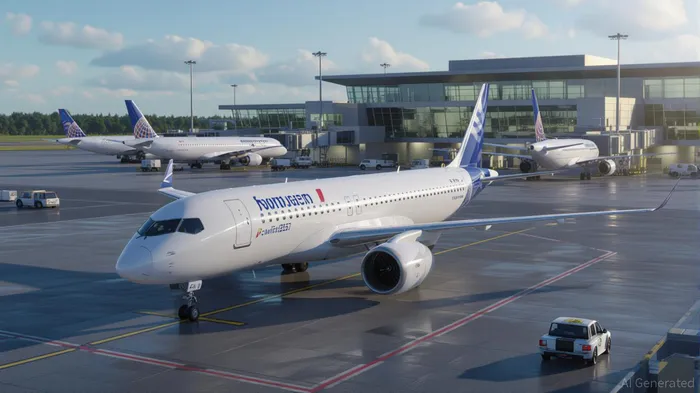
Breeze Airways: Strategic Expansion and Federal Support
Breeze Airways has positioned itself as a disruptor in the regional aviation space, prioritizing underserved markets and leveraging federal grants to sustain growth. By June 2025, the airline had expanded its network to 300 routes across 76 cities, including a 2,253-nautical-mile route from Rhode Island to Los Angeles—a testament to its ambition to connect secondary markets with long-haul efficiency. Federal support has been pivotal: a Small Community Air Service Development (SCASD) Grant enabled its Las Vegas route from West Virginia, generating $27.5 million in economic output and reducing local fares by 12.5%.
Breeze's international expansion, approved by the Department of Transportation in June 2025, further underscores its strategic use of federal partnerships. While specific destinations remain unannounced, the airline's focus on leisure hubs in the Caribbean and Gulf aligns with its domestic model of low fares and premium service. By 2027, Breeze plans to turn Rhode Island's PVD into a connecting hub, creating 400 jobs and supporting one million annual passengers.
Key Risks:
- Regulatory Uncertainty: International route approvals depend on complex negotiations and geopolitical factors.
- Operational Complexity: Expanding into international markets requires managing cross-border logistics, labor, and compliance.
Avelo Airlines: Controversy and Resilience
Avelo Airlines' journey has been marked by both operational excellence and ethical controversy. Despite being named “America's Most Reliable Airline” in 2024 for its 83.9% on-time performance, the carrier's Q1 2025 financials revealed a 28% decline in unit revenue and a 24% drop in average fares in returning markets. This vulnerability to economic downturns—exacerbated by its reliance on price-sensitive leisure travelers—highlights the fragility of its business model.
The airline's partnership with U.S. Immigration and Customs Enforcement (ICE) for deportation flights, however, has introduced a dual-edged sword. While the $151 million subcontract through CSI Aviation provided critical revenue, it sparked nationwide protests and a boycott led by the Stop Avelo Coalition. Avelo's exit from West Coast operations, including Hollywood Burbank Airport, was attributed to “financial and competitive pressures,” though activists argue the ICE contract's reputational toll was significant.
Key Risks:
- Reputational Damage: Controversial contracts may alienate consumers and investors.
- Financial Volatility: Heavy dependence on a single high-margin contract leaves the airline exposed to market shifts.
Investor Considerations: Balancing Growth and Governance
For investors, both airlines present unique opportunities and challenges:
- Breeze Airways:
- Opportunity: Strong federal support for route expansion in underserved markets, coupled with a focus on international leisure travel, positions Breeze as a long-term play in regional aviation. Its 135% year-over-year flight growth and 152.5% increase in weekly seats indicate robust scalability.
Caution: International expansion carries regulatory and geopolitical risks. Investors should monitor Breeze's ability to secure interline agreements and maintain cost efficiency.
Avelo Airlines:
- Opportunity: Avelo's operational efficiency—ranked highest in on-time arrivals and cancellations—demonstrates its ability to compete in a crowded market. Its East Coast pivot and new international routes (e.g., Nassau, Bahamas) could drive future growth.
- Caution: The ICE contract's ethical implications may persist, affecting brand loyalty and investor sentiment. Diversifying revenue streams beyond controversial contracts is critical for long-term stability.
The Road Ahead
The aviation sector's post-pandemic recovery hinges on carriers that can adapt to shifting consumer behavior and regulatory landscapes. Breeze and Avelo exemplify two divergent paths: one prioritizes federal partnerships and strategic infrastructure, while the other navigates the ethical complexities of high-margin contracts.
For investors, the key takeaway is diversification. Breeze's federal-backed expansion offers a more predictable trajectory, while Avelo's resilience in a volatile market underscores the potential—and risks—of bold, unconventional strategies. As the sector evolves, airlines that balance innovation with ethical governance will likely outperform.
In a landscape where government contracts and operational agility define success, the choices these airlines make today will shape their viability tomorrow. Investors who recognize the interplay between risk, reward, and regulatory dynamics will be best positioned to capitalize on the aviation sector's next chapter.

Delivering real-time insights and analysis on emerging financial trends and market movements.
Latest Articles
Stay ahead of the market.
Get curated U.S. market news, insights and key dates delivered to your inbox.


AInvest
PRO
AInvest
PRO



Comments
No comments yet