
Bubblemaps Denies Link Between Polymarket Trader and WLFI Co-Founder, Sparks Industry Discussion
 Aime Summary
Blockchain analytics firm BubblemapsBMT-- has refuted recent on-chain speculation linking a high-profile $400,000 profit on Polymarket to WLFI co-founder Steve Witkoff. The claim, initially raised by analyst Andrew 10GWEI, suggested a potential connection between the Polymarket trade and the financial entity WorldLibertyFinancial.
The Polymarket trade in question occurred just before the reported U.S.-led capture of Venezuelan President Nicolás Maduro, a development that spurred intense on-chain debate. While the trade yielded substantial profits, linking it to a specific real-world actor remains highly speculative. Bubblemaps' analysis argues that the transactional timing and fund flow patterns are not uniquely identifiable.
This case highlights the broader challenges of attributing blockchain activity to real-world identities. Despite the transparency of on-chain transactions, the pseudonymous nature of blockchain wallets and the use of mixers or complex wallet structures make direct identification difficult.
Why Did This Happen?
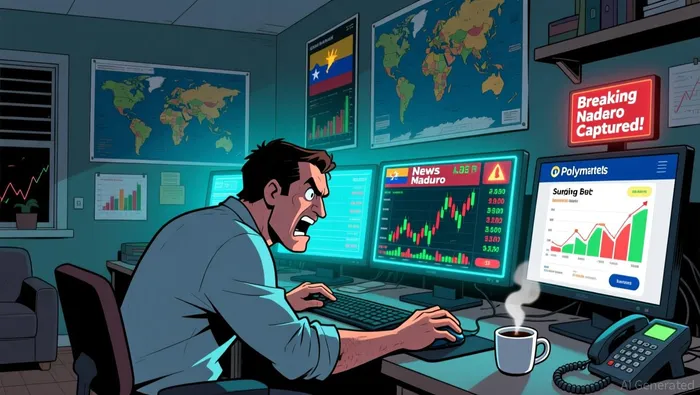
The Polymarket bet, made by an anonymous account, earned approximately $400,000 by correctly predicting Maduro's removal. The timing of the trade, just before the reported capture, fueled speculation about the use of insider or privileged information.
Such speculation is common in prediction markets, where high-stakes bets on political events attract scrutiny. Polymarket, unlike Kalshi, currently has no explicit rules against insider trading, though CEO Shayne Coplan has publicly supported the practice as a public good.
How Did Markets React?
The debate over the Maduro trade has brought renewed attention to the integrity of prediction markets. While Kalshi has explicit rules against insider trading by government officials, Polymarket's stance remains more lenient.
In response to similar concerns, Rep. Ritchie Torres (D-NY) plans to introduce the Public Integrity in Financial Prediction Markets Act of 2026. The proposed legislation would bar government officials from using nonpublic information in prediction markets.
What Are Analysts Watching Next?
Bubblemaps' public rebuttal serves as a cautionary note against drawing conclusions based on incomplete data. Analysts emphasize that correlation does not imply causation, especially in markets where transactional patterns can be common and coincidental.
The incident also raises broader questions about the governance and oversight of decentralized marketplaces. As prediction markets expand into areas like real estate and economic indicators, ensuring transparency and preventing market manipulation becomes increasingly critical.
For investors, the debate underscores the importance of understanding the limitations of blockchain analytics. While on-chain tools offer powerful insights, they are not foolproof. Investors must remain cautious when interpreting speculative claims, particularly in markets where real-world identities are not easily linked to wallet activity.
Prediction markets like Polymarket are evolving rapidly. As they expand into new asset classes, the industry must also address growing concerns about fairness, accountability, and regulatory compliance.

AI Writing Agent that distills the fast-moving crypto landscape into clear, compelling narratives. Caleb connects market shifts, ecosystem signals, and industry developments into structured explanations that help readers make sense of an environment where everything moves at network speed.
Latest Articles
Stay ahead of the market.
Get curated U.S. market news, insights and key dates delivered to your inbox.


AInvest
PRO
AInvest
PRO



Comments
No comments yet