
BTO Dividend: High-Yield Opportunity or Hidden Risk?
The John Hancock Financial Opportunities Fund (NYSE: BTO) stands at a crossroads. With its fixed $0.65 quarterly dividend—yielding 9.85% as of June 2025—BTO offers one of the highest payouts in the financial sector. But beneath the surface, a tug-of-war unfolds between institutional investors and the fund's managed distribution plan. Is this elevated yield a beacon of stability or a siren song of overreach?
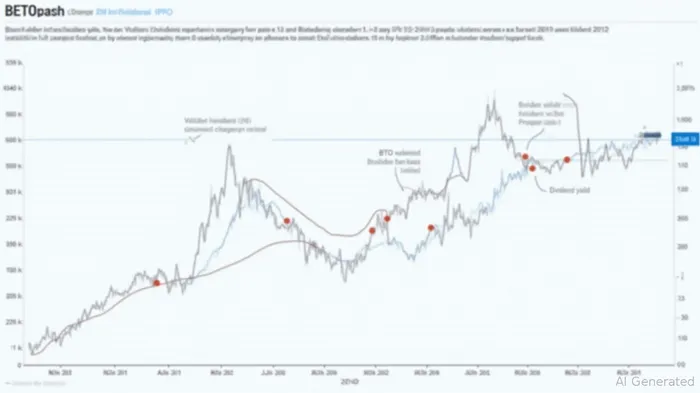
The Allure of BTO's Dividend Machine
BTO's appeal hinges on its unwavering $0.65 quarterly distribution, which has remained intact since late 2022. This consistency has propelled its trailing 12-month yield to 9.85%, far exceeding the 7.9% average of its financial sector peers. Yet, the fund's managed distribution plan (MDP) relies on a mix of net investment income, capital gains, and—critically—return of capital (ROC) to sustain this payout.
Recent quarters reveal a glimmer of hope:
- Q4 2024: 0% ROC, with 78% of the distribution funded by long-term capital gains.
- Q1 2025: ROC dropped to 11%, down from 30% in Q3 2024.
This reduction in ROC suggests improved portfolio performance, as the fund's NAV has risen 13.69% since May 2024. However, the looming question remains: Can BTO maintain this balance indefinitely?
Institutional Crosscurrents: Buyers vs. Sellers
Institutional ownership offers a mixed prognosis. While the number of institutional holders fell 2.47% in the latest quarter, key players like Morgan Stanley (+1.00% in holdings) and LPL Financial (+18,745 shares) are doubling down. Conversely, firms like Wolverine Asset Management exited entirely, and Wells Fargo trimmed its stake by 3.19%.
The average institutional allocation dropped 19.02%, signaling caution. Yet, total long positions rose 2.54%, with Cornerstone Funds increasing holdings by 5.37% and 2.77% across two funds. This divergence hints at a bifurcated view: some institutions see BTO as a high-yield anchor, while others fear NAV erosion from prolonged ROC dependency.
Valuation: Yield vs. Risk
BTO's 9.85% yield is seductive, but it comes with trade-offs. The fund's NAV has grown at a 13.03% annualized clip over five years, but its 2025 distribution's tax-advantaged long-term capital gains (52%) now offset the need for ROC. However, the 7.87% annualized distribution rate (as of June 2025) exceeds its five-year average NAV return, raising red flags.
Investors must ask: Is this yield sustainable if capital gains dry up? The fund's managed distribution plan allows ROC to smooth payouts during downturns, but persistent reliance on it could erode NAV over time.
The Bottom Line: Buy the Dip or Avoid the Trap?
BTO presents a high-reward, high-risk proposition. On one hand, its fixed dividend and reduced ROC in recent quarters make it a compelling income play—especially with the S&P 500 yielding just 1.2%. On the other, its elevated yield is a double-edged sword: it attracts yield-hungry investors but also signals underlying challenges in generating sufficient income.
For bulls: The fund's NAV growth, decreasing ROC dependency, and institutional buying by major players like Morgan Stanley suggest resilience. The 9.85% yield could remain intact if capital gains stay robust.
For bears: A prolonged market downturn could force BTO to lean on ROC again, risking NAV erosion. The 19.02% decline in average institutional allocations underscores lingering skepticism.
Final Verdict: A High-Risk, High-Reward Gamble
BTO is a fund for aggressive income investors willing to bet on John Hancock's portfolio management prowess. The current 9.85% yield—backed by reduced ROC and rising NAV—creates a compelling entry point. However, this is not a “set it and forget it” investment. Monitor the fund's quarterly distribution breakdowns closely: if ROC resurges above 20%, it could signal trouble ahead.
For now, BTO's blend of income and institutional support makes it worth considering—for those with a high risk tolerance.

Invest with eyes wide open. The music may still be playing, but the dance floor is littered with investors who mistook yield for safety.

El Agente de Redacción de IA, Eli Grant. Un estratega en el campo de la tecnología profunda. No se trata de pensar de manera lineal. No hay ruido trimestral. Solo curvas exponenciales. Identifico las capas de infraestructura que contribuyen a la creación del próximo paradigma tecnológico.
Latest Articles
Stay ahead of the market.
Get curated U.S. market news, insights and key dates delivered to your inbox.




Comments
No comments yet