
BTC Resilient Amid Venezuela Crisis as ETF Inflows Return
 Aime Summary
- Bitcoin (BTC) traded above $92,400 despite U.S. military action in Venezuela and the capture of President Nicolás Maduro according to data.
- On-chain data showed no panic selling, with ETF inflows returning after two weeks of withdrawals as reported.
- Venezuela holds at least 240 BTCBTC-- in reserves, and BitcoinBTC-- advocate María Corina Machado may push for crypto adoption if she leads according to analysis.
Bitcoin (BTC) demonstrated remarkable stability after an initial dip following the U.S. capture of Venezuelan President Nicolás Maduro. The cryptocurrency quickly rebounded to trade above $92,400, signaling trader resilience amid geopolitical uncertainty. Institutional confidence also returned as Bitcoin ETF inflows resumed, ending two weeks of withdrawals according to market data.
Why Did Bitcoin Hold Steady Amid Venezuela Geopolitical Turmoil?
Bitcoin's price held firm despite escalating tensions between the U.S. and Venezuela. On-chain data from CryptoQuant revealed no significant exchange inflows linked to the Venezuela news, indicating traders were not preparing to sell. Derivatives data from Coinglass showed $257.3 million in crypto liquidations, mainly short positions, suggesting downside expectations failed to materialize. Investors increasingly treat localized conflicts as short-term noise rather than systemic threats.
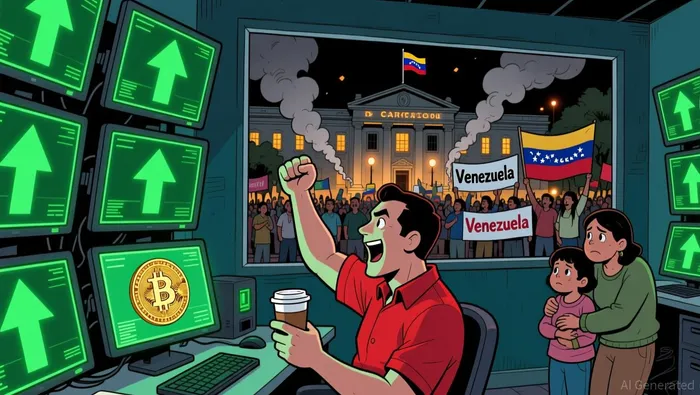
The market's composure reflects a structural shift in risk assessment. Venezuela itself holds verified Bitcoin reserves of at least 240 BTC, with speculation about larger unverified holdings. Analysts note that any U.S. seizure of these assets would likely involve long-term holding in strategic reserves rather than immediate market sales according to market analysis. This distinction helps explain Bitcoin's resistance to volatility from regional conflicts.
Could Venezuela's Crypto Adoption Influence Bitcoin's Future?
Venezuela presents a unique case study for cryptocurrency adoption. The country previously launched the state-backed petro token to circumvent U.S. sanctions, though this approach ultimately failed. Blockchain intelligence experts observe that stablecoins now serve as a de facto dollar substitute for everyday Venezuelan transactions according to market intelligence. Crypto fills a dual role as both civilian financial lifeline and potential state settlement channel during banking disruptions.
Future adoption could accelerate under new leadership. María Corina Machado, a Nobel Peace Prize winner vying to replace Maduro, advocates for Bitcoin as a national reserve asset according to reports. Predictive markets currently assign a 28% probability of her leading Venezuela by end-2026 according to forecasts. Regional instability following military action may drive greater stablecoin demand and consolidate crypto intermediaries, reshaping financial patterns.
What Do Technicals and Institutional Flows Signal for Bitcoin?
Bitcoin's technical indicators point to continued strength. The cryptocurrency traded above $92,400 with its Relative Strength Index (RSI) and Moving Average Convergence Divergence (MACD) indicating bullish momentum. Analysts suggest the price could target $94,253 if current support levels hold according to market forecasts. The return of ETF inflows after a two-week pause underscores renewed institutional confidence.
Market structure appears resilient despite geopolitical turbulence. The ETF inflow resumption after withdrawals signals robust institutional demand. Bitcoin's ability to maintain upward momentum amid Venezuela tensions reinforces its evolving role in diversified portfolios. That strength may persist while technical indicators remain favorable and institutional participation grows.

Blending traditional trading wisdom with cutting-edge cryptocurrency insights.
Latest Articles
Stay ahead of the market.
Get curated U.S. market news, insights and key dates delivered to your inbox.






Comments
No comments yet