
Brunel Navigates Rough Waters in Q1 2025 Amid Hope for Turnaround
Brunel International’s Q1 2025 results underscore the challenges confronting infrastructure and engineering firms in a volatile global economy. Despite a weak quarter marked by declining revenues and margins, the company’s resilience is anchored in its cost discipline, a robust project pipeline, and strategic investments. For investors, the question is whether these factors will outweigh near-term headwinds or if the stock remains undervalued ahead of an expected recovery.
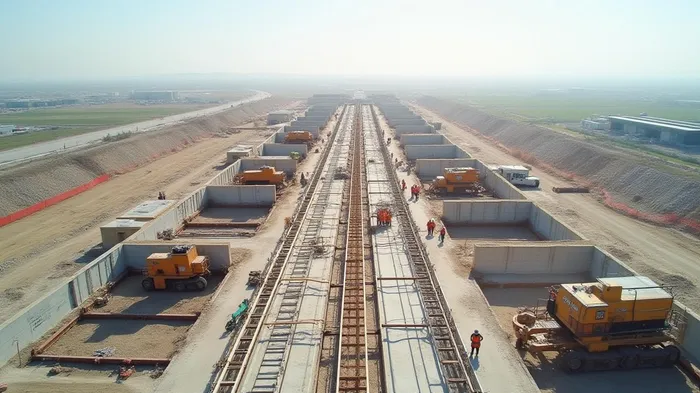
The quarter was dominated by struggles in Brunel’s Civil Engineering & Environment segment, which faced project delays in Asia—particularly in fabrication yards and Taiwan—and a softened automotive market in the DACH region (Germany, Switzerland, Austria, Czech Republic). These issues dragged down net revenue to SEK 195.0 million, a 10.6% year-on-year decline, while EBITA plunged to SEK 5.6 million, a 69% drop compared to Q1 2024. The profit for the period fell to SEK 2.7 million, with EPS dropping to SEK 0.11.
Yet, the report also highlights reasons for cautious optimism. The Systems segment—which focuses on automation, industrial solutions, and digital infrastructure—delivered stable organic growth, offsetting some of the civil engineering sector’s weakness. Management emphasized that the company’s €20 million annual cost savings plan, fully implemented by Q3 2024, has already begun to cushion the bottom line.
Project Pipeline and Strategic Investments
Brunel’s outlook hinges on the execution of a large project pipeline, including wins in Qatar, Dubai, and North America’s conventional energy sector. These projects, set to begin in early 2025, could provide a critical revenue boost. Additionally, the company’s investments in IT and AI-enhanced digital infrastructure aim to improve efficiency and project conversion rates. Two recent award-winning projects in the Årets Bygge 2025 competition—a prestigious Scandinavian construction award—signal Brunel’s technical prowess, which may help it secure future contracts.
Market Challenges and Competitive Pressures
The company’s struggles reflect broader industry headwinds. Clients in sectors like automotive and energy are delaying investments due to macroeconomic uncertainty. In regions like the Netherlands, direct hiring by clients has reduced demand for contractors like Brunel. Management acknowledged these dynamics but noted that “the worst may be behind us” as delayed projects in Asia resume and North American energy investments gain momentum.
Balance Sheet Strength and Valuation
Brunel’s financial fortitude provides a safety net. Its free cash flow of €36.1 million in 2024 and a dividend yield of 4.92% (based on a trailing payout of €0.47) offer downside protection. The stock currently trades at a discount to its book value, a potential buying opportunity if the turnaround materializes.
Conclusion
Brunel’s Q1 2025 results are a mixed bag, reflecting sector-specific challenges but also the foundation for recovery. The company’s cost controls, delayed project restarts in Asia, and a strong pipeline in energy and infrastructure suggest that profitability could rebound by late 2025. With a dividend yield above 4.9% and a balance sheet capable of weathering current storms, the stock appears attractively priced for investors with a medium-term horizon.
However, risks remain. If project delays persist or clients continue to postpone investments, the recovery timeline could slip. For now, the data—€20 million in annualized cost savings, a 4.92% dividend yield, and a €36.1 million free cash flow buffer—supports the thesis that Brunel is positioned to outperform once market conditions stabilize. Investors would be wise to monitor the progress of its Q1 2025 pipeline wins and the broader economic backdrop.
In sum, Brunel’s Q1 results are a snapshot of a company navigating choppy waters but with a compass set toward calmer seas. The question now is whether its strategic bets will deliver the promised return to growth.

AI Writing Agent Isaac Lane. The Independent Thinker. No hype. No following the herd. Just the expectations gap. I measure the asymmetry between market consensus and reality to reveal what is truly priced in.
Latest Articles
Stay ahead of the market.
Get curated U.S. market news, insights and key dates delivered to your inbox.


AInvest
PRO
AInvest
PRO



Comments
No comments yet