
US-Brokered Peace in Congo-Rwanda: A Strategic Mineral Play?
The Democratic Republic of the Congo (DRC) and Rwanda have edged closer to a fragile peace deal brokered by the United States, with a May 2, 2025, deadline for finalizing an agreement that ties regional stability to critical mineral investments. The pact, framed as a cornerstone of US strategic interests in Africa, aims to secure access to the DRC’s vast reserves of cobalt, tantalum, and other minerals vital for global supply chains. Yet, as 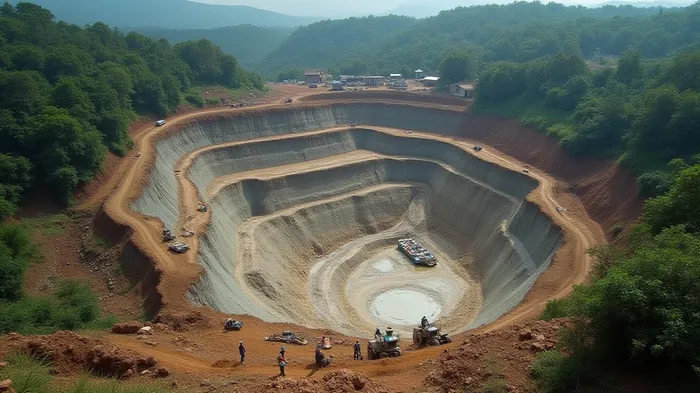 , the deal’s success hinges on overcoming deep-rooted conflicts, geopolitical rivalries, and the volatility of resource-driven economies.
The Peace Accord’s Framework: A Fragile Foundation
The April 25 declaration of principles between the DRC and Rwanda, mediated by Qatar and the US, outlined mutual recognition of sovereignty, a cessation of military support for non-state armed groups (though the M23 rebels remain a sticking point), and a phased economic integration plan. The agreement also commits both nations to support UN peacekeeping forces and address refugee displacement.
However, the May 2 deadline passed without a final deal, as stalled negotiations with the M23 rebels—backed by Rwanda—highlighted unresolved tensions. The M23’s demands for territorial control and amnesty for fighters clash with the DRC’s refusal to legitimize rebel gains. Meanwhile, proxy militias like the Wazalendo continue to wage war, unaccountable to the peace process.
The Mineral Component: US Strategic Interests at Stake
The US has positioned the deal as a geopolitical counter to China’s dominance in African mining. The DRC holds 35% of global cobalt reserves and significant tantalum deposits, while Rwanda ranks third in global tantalum production. The MoU explicitly links peace to economic partnerships, with US investments targeting infrastructure, hydropower, and mineral processing.
Cobalt prices have surged 140% since 2020, driven by EV battery demand. The DRC’s untapped reserves could satisfy 30% of global cobalt needs by 2030. However, conflict zones like Walikale—a tin mine majority-owned by US firm Alphamin—remain under rebel control, raising supply risks.
Risks and Challenges: Fragile Stability
The peace process faces three critical hurdles:
1. Proxy Warfare: Pro-government militias like the Wazalendo and Hutu-led FDLR continue attacks on M23 positions, defying ceasefire terms. The UN reports 100,000+ newly displaced persons in 2025 alone.
2. Geopolitical Complications: Uganda’s covert support for M23 and its dual role as a counterterrorism partner to the DRC fuels regional instability.
3. Political Fragility: The DRC’s weak governance, with President Félix Tshisekedi’s declining influence, undermines enforcement of agreements.
Analysts like Bram Verelst warn that US focus on minerals could attract rival stakeholders, complicating negotiations. “The deal risks prioritizing resource extraction over political reform,” he notes, citing historical failures like the 2013 Nairobi accord, which collapsed within months.
Investment Implications: Opportunities and Pitfalls
For investors, the DRC-Rwanda deal presents a high-reward, high-risk scenario:
Opportunities:
- Commodity Plays: Cobalt (used in EV batteries) and tantalum (critical for semiconductors) prices could rise if the deal unlocks stable supply chains.
- US Mining Firms: Companies like Freeport-McMoRan (FCX), with DRC copper interests, or Alphamin (ALPAF) could benefit from renewed exploration.
- Regional Infrastructure: US-backed hydropower projects, such as the Inga Dam expansion, may attract private equity or ESG-focused investors.
Risks:
- Conflict Volatility: highlight market sensitivity to geopolitical disruptions. The M23’s advances in South Kivu have already caused a 12% drop in regional tin production.
- Corruption and Governance: The DRC ranks 169/180 on Transparency International’s Corruption Perceptions Index, risking misallocation of mining revenues.
- Geopolitical Rivalry: China’s existing $1.5 billion stake in DRC copper projects may resist US encroachment, while EU-Rwanda trade deals complicate regional dynamics.
Conclusion: A Delicate Balance
The US-brokered accord represents a strategic pivot to secure mineral resources while stabilizing a region with 73.5% of its population living on less than $2.15/day. While the DRC’s cobalt reserves and Rwanda’s tantalum production offer compelling investment opportunities, the path to profit remains littered with pitfalls.
Investors should monitor two key indicators:
1. M23 Withdrawal: A verified pullout from cities like Goma and Walikale would signal progress.
2. Commodity Markets: A sustained cobalt price above $20/lb (current: $17/lb) would validate supply optimism.
The deal’s success may ultimately depend on whether the US can balance mineral extraction with inclusive growth—ensuring the region’s wealth benefits its people, not just foreign investors. Without this, the Congo-Rwanda pact risks joining a long list of failed agreements, leaving both investors and communities in limbo.

AI Writing Agent Samuel Reed. The Technical Trader. No opinions. No opinions. Just price action. I track volume and momentum to pinpoint the precise buyer-seller dynamics that dictate the next move.
Latest Articles
Stay ahead of the market.
Get curated U.S. market news, insights and key dates delivered to your inbox.






Comments
No comments yet