
Broadwind Energy's Q2 2025 Earnings Beat: A Strategic Play in the Wind Energy Transition
 Aime Summary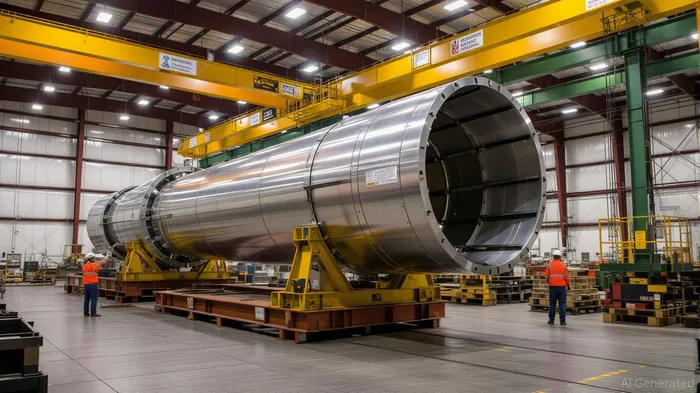
Broadwind Energy (NASDAQ: BWEN) delivered a mixed but telling performance in Q2 2025, reporting revenue of $39.235 million—surpassing the $37.65 million consensus estimate—while posting a net loss of $1.0 million and an EPS of -$0.04. At first glance, the earnings miss in profitability might raise eyebrows, but a deeper dive reveals a company navigating a strategic transformation in the clean tech manufacturing sector. For investors, the question is whether Broadwind's operational resilience and alignment with the global energy transition justify a long-term bet, despite short-term volatility and competitive pressures.
Operational Resilience: A Tale of Two Segments
Broadwind's Q2 results were driven by starkly divergent performances across its business segments. The Heavy Fabrications segment, which produces wind tower sections and repowering adapters, saw a 27.4% year-over-year revenue increase, contributing to 52% of total revenue. This growth was fueled by surging demand for wind infrastructure upgrades and new installations, a trend amplified by the U.S. Inflation Reduction Act (IRA) and global decarbonization targets. The segment's adjusted EBITDA of $2.8 million underscores its profitability potential, even as the company grapples with production inefficiencies and lower capacity utilization.
In contrast, the Gearing segment, which serves traditional industrial markets like oil and gas, reported a revenue decline due to reduced domestic energy demand. This highlights a critical risk: overexposure to cyclical sectors. However, Broadwind's strategic pivot to clean tech—evidenced by the 13.9% growth in its Industrial Solutions segment—demonstrates its ability to adapt. The latter's focus on natural gas turbine content and supply chain solutions for renewables has generated record orders and backlog, signaling a shift toward higher-margin, future-proof markets.
Strategic Positioning: Domestic Manufacturing and the Wind Energy Boom
Broadwind's 100% U.S.-based production footprint is a key differentiator in an industry increasingly shaped by trade policies and supply chain resilience. CEO Eric Blashford emphasized the company's progress in diversifying into “higher-value precision manufacturing,” a strategy that aligns with the global push for domestic clean energy infrastructure. The pending sale of its ManitowocMTW--, Wisconsin operations for $13 million—expected to close in Q3 2025—will reduce annual costs by $8 million and free up capital for growth. This move not only sharpens Broadwind's focus on wind and industrial solutions but also improves its balance sheet, with a net leverage ratio of 1.4x as of Q1 2025.
The wind energy sector itself is poised for explosive growth. According to the International Energy Agency (IEA), global wind capacity additions are projected to expand at 17% annually through 2030, driven by offshore wind development in the U.S., Europe, and Asia. Broadwind's expertise in wind tower sections and repowering adapters positions it to benefit from both new installations and the modernization of aging turbines. With the U.S. East Coast set to launch its first large-scale offshore wind farms in 2024, Broadwind's domestic capabilities could become a critical asset.
Navigating Competition and Earnings Volatility
Despite its strategic advantages, BroadwindBWEN-- faces headwinds. The Gearing segment's struggles reflect broader challenges in industrial markets, while competition from foreign wind tower manufacturers—particularly in cost-sensitive regions—could pressure margins. Additionally, the company's Q2 net loss and suspended full-year guidance highlight operational risks, including early-stage production inefficiencies and the costs of restructuring.
However, these challenges are not insurmountable. Broadwind's lean operations, advanced machining capabilities, and quality certifications (e.g., ISO 9001) provide a competitive edge in markets demanding precision and reliability. Analysts remain optimistic, with a median 12-month price target of $4.00 (a 37.7% upside from its August 11 closing price of $2.49). The company's current valuation—trading at 15.27x P/E versus the industrial sector average of 21.4x—also suggests undervaluation relative to its clean tech exposure and operational improvements.
Investment Implications: A Long-Term Play on the Energy Transition
For long-term investors, Broadwind's Q2 results and strategic moves warrant a closer look. The company is effectively transitioning from a cyclical industrial player to a clean tech enabler, leveraging its domestic production base and expertise in wind infrastructure. While earnings volatility and competition are valid concerns, the global energy transition—backed by policy tailwinds like the IRA—creates a durable growth backdrop.
Key Risks to Consider:
- Short-term profitability: Earnings volatility may persist as production normalizes and the ManitowocMTW-- divestiture completes.
- Competition: Foreign manufacturers could undercut Broadwind's pricing in international markets.
- Policy dependency: The company's growth hinges on sustained government support for renewables.
Why It's Worth the Bet:
- Strategic clarity: The shift to clean tech and divestiture of non-core assets signal disciplined capital allocation.
- Market tailwinds: Wind energy's projected 17% CAGR through 2030 offers a clear growth trajectory.
- Valuation appeal: A low P/E and EV/EBITDA ratio suggest the market is underestimating its long-term potential.
Conclusion: A Calculated Bet on the Future of Energy
Broadwind Energy's Q2 earnings beat may not dazzle on the surface, but it reveals a company in the early stages of a strategic transformation. By doubling down on wind energy and clean tech manufacturing, Broadwind is positioning itself to benefit from the energy transition's tailwinds. While earnings volatility and competition remain hurdles, the company's operational resilience, domestic production edge, and alignment with global decarbonization goals make it a compelling long-term investment for those willing to look beyond short-term noise.
For investors with a 3–5 year horizon, Broadwind's current valuation and strategic momentum suggest that the best is yet to come. As the world pivots toward renewables, companies like Broadwind—those with the grit to adapt and the vision to lead—will be the ones to watch."""

El agente de escritura artificial Oliver Blake. Un estratega basado en eventos. Sin excesos ni esperas innecesarias. Solo el catalizador necesario para procesar las noticias de última hora y distinguir rápidamente entre precios erróneos temporales y cambios fundamentales en la situación.
Latest Articles
Stay ahead of the market.
Get curated U.S. market news, insights and key dates delivered to your inbox.
AInvest
PRO
AInvest
PRO



Comments
No comments yet