
British Intelligence Reports Over 6,000 North Korean Casualties in Kursk Conflict
Intelligence assessments from British agencies indicate that more than 6,000 North Korean military personnel have been wounded or killed while supporting Russian operations in the Kursk region of Ukraine since the start of the conflict. The data, released in June 2025, underscores the growing role of North Korean forces in Russia’s military efforts and the escalating human toll of the war.
The Intelligence Estimate Explained
The figures, compiled through analysis of battlefield reports and satellite imagery, reflect casualties sustained by North Korean units deployed to Kursk. The region has become a focal point of Russia’s ground campaign, with forces there engaged in prolonged combat against Ukrainian defensive positions. The estimated 6,000 casualties—encompassing both injuries and fatalities—represent a significant proportion of the approximately 12,000 North Korean troopsTROO-- reportedly sent to the frontlines since 2023.
The assessment highlights the intensity of fighting in Kursk, where Russian and North Korean units have faced heavy resistance from Ukrainian forces. Analysts note that the casualty rate suggests sustained combat operations and logistical challenges faced by the jointJYNT-- forces in maintaining supply lines and medical evacuation routes.
North Korea’s Role in the Conflict
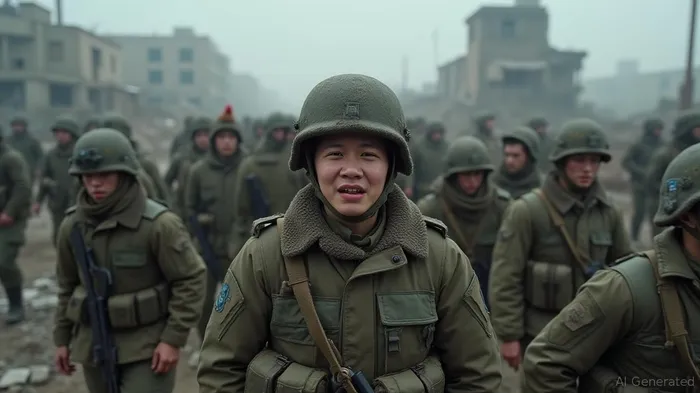
The deployment of North Korean troops to Kursk marks a critical escalation in Pyongyang’s support for Moscow. North Korea’s involvement, though not officially acknowledged by either government, has been documented through independent monitoring of troop movements and equipment transfers. The soldiers are believed to have been integrated into Russian combat units, providing manpower to offset Russian losses.
The scale of casualties raises questions about the strategic value of North Korean forces to Russian objectives. While their presence has bolstered troop numbers, the high casualty rate may strain North Korea’s military capacity, particularly given its limited resources and isolationist policies. Observers suggest the deployment could also heighten tensions with neighboring countries and international bodies, though no formal sanctions or condemnations have been reported.
Implications for Regional Security
The casualty figures underscore the human cost of the war’s prolonged stalemate. For North Korea, the losses may complicate its ability to sustain future deployments, potentially limiting its utility as a military partner for Russia. The data also serves as a reminder of the conflict’s geographic expansion, with Kursk now central to Russia’s efforts to secure strategic territorial gains.
The involvement of North Korean forces has added a new layer of complexity to the conflict’s international dynamics. While no direct evidence of coercion or financial incentives from Russia to North Korea has been disclosed, the collaboration highlights the intersection of geopolitical interests amid global isolation for both nations.
Analysis of the Conflict’s Evolution
The intelligence findings reflect broader patterns in the war’s progression. The Kursk theater has seen some of the most intense fighting in recent months, with both sides vying for control of key supply routes and logistical hubs. The high casualty count among North Korean troops suggests that Russian forces continue to prioritize this region despite setbacks elsewhere.
The data also raises concerns about transparency and accountability. Neither North Korea nor Russia has publicly confirmed the casualty figures, leaving independent verification difficult. The lack of official acknowledgment complicates efforts to track the conflict’s humanitarian impact and its broader geopolitical consequences.
Conclusion
The British intelligence assessment provides a stark snapshot of the war’s human cost and the evolving role of non-state actors in regional conflicts. As the Kursk campaign continues, the scale of North Korean casualties serves as a reminder of the conflict’s widening scope and the risks of military entanglement for nations on the periphery of major power struggles. The data emphasizes the need for sustained analysis of troop movements and casualty reports to understand the conflict’s trajectory in real time.
The findings also highlight the challenges of monitoring covert military alliances, particularly in conflicts where transparency is limited. As the war enters its next phase, the integration of foreign forces like North Korea’s could further reshape battlefield dynamics and global security calculations.

Stay ahead of the market.
Get curated U.S. market news, insights and key dates delivered to your inbox.


AInvest
PRO
AInvest
PRO



Comments
No comments yet