
British Airways' Strategic Turnaround Amid Post-Pandemic Turbulence


 Aime Summary
The post-pandemic recovery of the global airline industry has been uneven, marked by volatile demand, inflationary pressures, and shifting consumer expectations. British Airways, a flagship carrier of the International Consolidated Airlines Group (IAG), has navigated these challenges with a dual focus on operational efficiency and shareholder value. As the airline emerges from a period of turbulence, its strategic initiatives-spanning fleet modernization, cost-cutting, and digital transformation-offer a compelling case study for investors assessing long-term resilience in a sector still grappling with uncertainty.
Financial Resilience and Shareholder Returns
British Airways' parent company, IAG, has demonstrated remarkable financial discipline despite headwinds in key markets. For 2023–2025, IAG
maintained its long-term outlook, , . The airline has prioritized shareholder returns,
. This commitment reflects confidence in its business model, even as
North American demand softened and European pricing weakened.
The market's mixed reaction to these developments underscores the delicate balance IAG must strike. While
the share buyback program has bolstered investor confidence-evidenced by a doubling of IAG's share price in the past 10 months-challenges persist. For instance, ,
attributed to aggressive transatlantic expansion and intensified competition. These pressures highlight the need for strategic recalibration, particularly in high-cost, high-competition markets.
Operational Transformation: Fleet and Technology
,
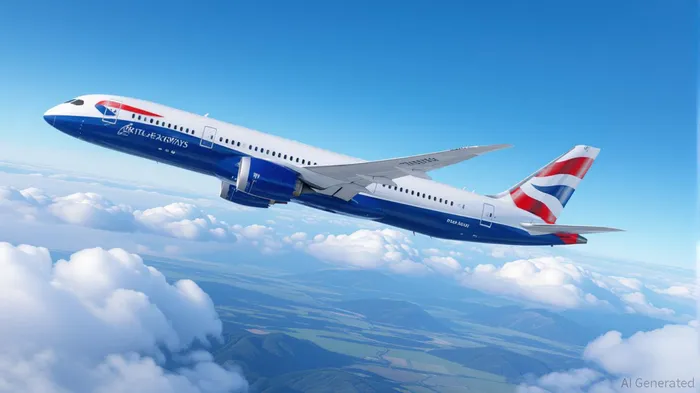
with half allocated to fleet modernization and the other half to operational upgrades. The airline is replacing aging aircraft with fuel-efficient models like the Boeing 787 Dreamliner and Airbus A350,
target by 2050. These investments not only reduce environmental impact but also lower fuel costs, a critical factor in an industry where energy expenses remain volatile.
Beyond hardware, British Airways has embraced to enhance operational efficiency. , reduced delays, and improved punctuality. For example, , while
now identify potential disruptions before they occur. These advancements have translated into tangible results:
in Q1 2025, a significant improvement from pre-pandemic levels.
Cost-cutting measures have also been pivotal.
stabilized operations and mitigated costs from past system failures. Meanwhile,
. These steps reflect a broader shift toward balancing cost control with customer experience-a critical differentiator in a competitive market.
Navigating North American Challenges
The North American market remains a focal point of both opportunity and risk. British Airways faces aircraft availability issues, particularly with Rolls-Royce Trent engines on its 787s, which have
constrained growth. Additionally, its high cost structure and reliance on the UK market expose it to economic fluctuations and competition from low-cost carriers.
To mitigate these risks, the airline is expanding its U.S. network, adding nonstop flights to destinations like Miami, Dallas/Fort Worth, and Austin. Simultaneously,
enhanced digital tools and are being deployed to optimize operations and manage disruptions. These strategies aim to strengthen BA's position in a market where it has
historically generated the highest returns. However, success will depend on its ability to maintain pricing power amid rising competition and macroeconomic volatility.
Long-Term Value for Shareholders
British Airways' strategic initiatives are designed to deliver sustainable value. Fleet modernization and digital investments enhance operational efficiency, while cost-cutting measures improve margins. Shareholder returns, supported by these operational gains, position IAG to reward investors even in a challenging environment. However, the airline's reliance on transatlantic routes and exposure to North American softness necessitate continued agility.
For investors, the key question is whether these strategies can translate into consistent profitability. The airline's
86% on-time performance at Heathrow and
upgraded -such as with 40% more storage space-suggest a strong focus on customer retention. Yet, the market's mixed reaction to recent results
underscores the importance of monitoring execution risks, particularly in high-growth markets.
Conclusion
British Airways' post-pandemic turnaround is a testament to its commitment to operational excellence and shareholder value. By modernizing its fleet, leveraging technology, and refining cost structures, the airline is positioning itself to thrive in a transformed industry. While challenges in North America and broader economic uncertainties persist, the strategic investments made thus far provide a robust foundation for long-term resilience. For investors, the path forward will hinge on the airline's ability to sustain these improvements and adapt to evolving market dynamics.

Stay ahead of the market.
Get curated U.S. market news, insights and key dates delivered to your inbox.


AInvest
PRO
AInvest
PRO



Comments
No comments yet