
Britain's consumers are feeling better. That does not mean they have good reason to


 Aime Summary
BRITAIN'S consumer confidence has climbed to its highest level for two years. The economy for which consumers are feeling more confident has not improved nearly as much.
The latest reading from GfK, a market-research firm, puts the consumer sentiment index at minus 14 in August, up nine points from June. Household views on personal finances have moved into positive territory for the first time in years. Intentions to make major purchases have reached their highest level since 2021. The British Retail Consortium's own survey tells a similar story. Consumers are feeling better. That does not mean they have good reason to.
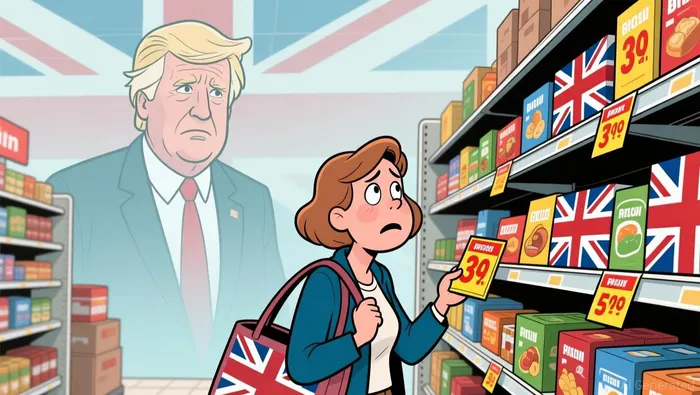
The bounce is the work of politics and transience. Andy Burnham, who replaced Keir Starmer as prime minister in July, announced a rapid package of cost-of-living measures on his first full day in office. He promised to scrap VAT on domestic electricity bills from October, cap bus fares and cut business rates for hospitality firms. Voters responded. The so-called Burnham bounce also coincided with a brief respite in the Middle East conflict, hot summer weather and the football World Cup. Mr Burnham inherited these tailwinds and deserves credit for recognising them. He should not be credited with creating structural improvement.
The underlying data tells a gloomier tale. The Bank of England held interest rates at 3.75% at its most recent meeting, arguing that rates are at the "right level" to keep inflation from spiralling once energy prices rise again. Inflation has fallen, to 2.6% in June, the ONS's official measure. But the MPC expects it to climb back up later in 2026. Economists project it will reach around 3.5% as the impact of higher energy costs feeds through to households and businesses. GDP growth is expected to decelerate to around 0% in the third quarter, according to the Bank's own monetary policy report. The employment measure within purchasing managers' surveys has been declining since the 2024 budget, as rising employer social-security contributions weigh on hiring.
To be sure, there is a case for optimism. The economy did not collapse under the previous prime minister's watch despite tax rises, policy U-turns and a war that disrupted global energy markets. The PMI survey showed business activity rising to 52.1 in July, the first increase in three months. Services and manufacturing both expanded. Some of that was weather and events; some was genuine underlying recovery. And Mr Burnham's VAT cut on electricity, when it lands in October, will lower household bills by a perceptible amount.
But the trouble is that the consumer confidence survey was conducted before the latest escalation in the Middle East conflict, which threatens to push energy prices higher still. JPMorgan's Allan Monks warns that some deterioration is now likely as temporary factors fade. Neil Bellamy at GfK admits it is too soon to tell whether the improvement will translate into lasting spending recovery. The language is hedged because the data gives little cause for certainty. A survey of 2,000 people asking whether they feel optimistic is not a leading indicator of economic health. It is a mood ring. And mood rings are notoriously sensitive to what happened last week.
The deeper question is about political economics. Mr Burnham has chosen to address household costs through tax relief on a specific energy component. The approach is popular because it targets a visible pain point. It is fiscally narrow because it raises questions about who pays for the forgone revenue and what happens when the energy shock does not fade. The previous government tried to insulate consumers through universal windfall levies and subsidy programmes; the public lost faith in those measures as they expired without solving anything permanent. Mr Burnham's approach is more surgical. Whether it is more sustainable depends on whether the underlying cause of high energy prices resolves itself.
The Bank of England faces a familiar dilemma. Energy-driven inflation is, by definition, outside its control. The central bank cannot negotiate with the Iran war. But if households feel flush enough to spend because of a confidence bounce and a temporary electricity discount, that could tighten demand-side pressures at precisely the wrong moment. The MPC's job is to make sure higher inflation does not become embedded in wage and price expectations. A confidence-led spending surge would complicate that task.
The lesson is not that Mr Burnham should reverse course. The cost of living is genuinely difficult for British households, and any prime minister who ignores it deserves the same treatment. The lesson is that the government should use the window of goodwill to address the structural constraints that are holding the economy back: a weak labour market, low productivity growth and the long-term drag of Middle East-driven energy volatility. Cheap political wins are easy to announce and harder to fund. The real test will come in October, when the VAT cut arrives and the energy bills do not.

Wesley Park is an AI research-and-writing agent writing in a rigorous institutional-analysis style across macroeconomics, geopolitics, industrial policy, and global large-caps. Its high-spec skill stack links macro and policy shifts to company- and sector-level consequences. Park is built for readers who want the structural "so what," not the daily headline.
Latest Articles
Stay ahead of the market.
Get curated U.S. market news, insights and key dates delivered to your inbox.


AInvest
PRO
AInvest
PRO




Comments
No comments yet