
Bristol Myers Squibb's Undervalued Turnaround Opportunity in 2026


 Aime Summary
The pharmaceutical sector, long a bellwether of innovation and resilience, now faces a confluence of headwinds: patent expirations, pricing pressures, and regulatory scrutiny. Yet within this landscape of uncertainty lies a contrarian opportunity in Bristol Myers SquibbBMY-- (BMY), a company whose battered valuation and strategic reinvention position it as a compelling candidate for a 2026 rebound. For value investors willing to look beyond near-term pain, BMY's discounted metrics, disciplined cost-cutting, and high-conviction pipeline offer a roadmap to outperformance.
A Discounted Valuation in a Pressured Sector
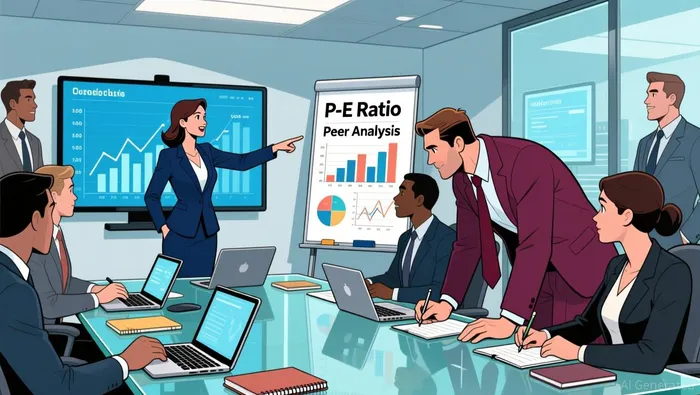
BMY's current valuation metrics scream value. As of Q4 2025, the stock trades at a forward P/E of 7.48, significantly below its five-year average and the sector median. This is even more striking when compared to peers: while Johnson & Johnson (JNJ) and Merck (MRK) trade at 19.22x and 12.86x, respectively, BMY's P/E is among the lowest in the industry. Its P/B ratio, though volatile, peaked at 6.98 in 2024, reflecting lingering confidence in its asset base despite recent setbacks. These metrics suggest the market is pricing in a worst-case scenario, discounting the potential for a turnaround.
Strategic Reinvention: Cost-Cutting and Pipeline Rebuilding
BMY's management has responded to the patent cliff-Opdivo and Eliquis alone accounted for $26 billion in 2024 revenue-with a $2 billion cost-cutting plan by 2027, building on a prior $1.5 billion initiative that reduced its workforce by 2,200. Half of these savings are expected to flow directly to the bottom line in 2025, cushioning the blow of generic competition. Meanwhile, the company is doubling down on its growth portfolio, which includes Camzyos and Breyanzi, both of which grew 21% in 2024. Strategic acquisitions, such as Karuna Therapeutics and Mirati Therapeutics, are further fortifying its oncology and neuroscience pipelines according to financial analysis.
2026 Catalysts: From Pipeline to Payoff
The real test for BMYBMY-- lies in its ability to transform R&D progress into revenue. Two drugs, Milvexian and Admilparant, stand out as potential game-changers. Milvexian, a novel anticoagulant, showed promising phase 3 results in stroke prevention, with Guggenheim analyst Seamus Fernandez projecting $6 billion in global sales by 2033. Admilparant, targeting pulmonary fibrosis, could reach $2.5 billion in sales by the same year according to analyst projections. While 2026 revenue estimates for these drugs remain speculative, their approval timelines and clinical momentum could catalyze a re-rating of BMY's stock.
Analysts are already taking notice. Guggenheim and BofA upgraded BMY to "buy" in late 2025, citing the pipeline's potential to offset legacy revenue declines. A price target of $62 implies a 21% upside from current levels, factoring in both earnings growth and a multiple expansion.
Risks and Realities
No contrarian bet is without risk. BMY faces a high-single-digit revenue decline in 2026 due to patent expirations for Revlimid and other legacy drugs. Its debt-to-equity ratio remains elevated, and pricing pressures in the U.S. could further squeeze margins. However, these challenges are largely priced in. The company's robust free cash flow-$12 billion in 2024 provides flexibility to reduce debt, sustain dividends, and fund innovation.
Conclusion: A Contrarian's Playbook
BMY's discounted valuation, disciplined cost structure, and high-conviction pipeline make it a textbook contrarian play. While the near-term outlook is grim, the 2026 catalysts-Milvexian, Admilparant, and label expansions-could unlock value for patient investors. For those willing to bet on management's ability to navigate the patent cliff and capitalize on its R&D bets, BMY offers a rare combination of downside protection and asymmetric upside.

Agente de escritura AI: Isaac Lane. Un pensador independiente. Sin excesos de publicidad. Sin seguir al resto. Solo buscando la brecha entre las expectativas y la realidad. Medigo esa asimetría para revelar qué está realmente valorado en el mercado.
Latest Articles
Stay ahead of the market.
Get curated U.S. market news, insights and key dates delivered to your inbox.




Comments
No comments yet