
Bridging the Infrastructure Divide: Strategic Private Equity and Real Estate Opportunities in Affordable Housing and Childcare
 Aime Summary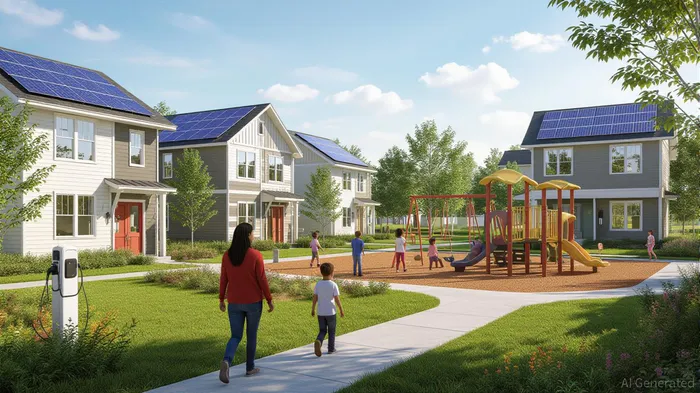
The global economy's relentless pursuit of efficiency has left a glaring blind spot: the systemic underinvestment in infrastructure that sustains the very foundation of economic growth—affordable housing and childcare. These sectors, long neglected by institutional capital, now represent a $1.2 trillion gap in the U.S. alone, according to the National Investment Center. For investors, this is not a crisis but an opportunity.
The Affordable Housing Bottleneck
Mortgage rates have surged 88% since 2020, while incomes have risen just 17%, creating a perfect storm of unaffordable homeownership. This has fueled demand for single-family rental (SFR) models, particularly Purpose-Built Rental Communities (PBRCs). These developments—focused on three- and four-bedroom homes in undersupplied suburbs—cater to millennials delaying homeownership and baby boomers downsizing. PBRCs offer a compelling value proposition: 95%+ occupancy rates, rent growth of 6–8% annually, and low turnover costs.
Investors are capitalizing on two strategies:
1. Rescue capital for developers with aggressive underwriting, refinancing expiring debt with preferred equity.
2. Direct acquisitions from builders at below replacement cost, particularly in Sun Belt markets like Phoenix and Dallas, where supply pressures are easing.
The New York Fed's 2025 case study reveals a 40% increase in private equity commitments to affordable housing, with 24% of funds now directed to new developments. This shift is driven by a “denominator effect”—institutional investors reallocating from overvalued equities to undervalued real estate, where ESG alignment and long-term cash flow stability are winning.
Childcare as a Social Infrastructure Play
The childcare sector faces a parallel crisis. Federal pandemic-era subsidies expired in 2024, leaving 40% of providers at risk of closure. Childcare costs now consume 35% of a median earner's income in cities like San Francisco. Yet this pain point is an overlooked investment frontier.
Childcare facilities integrated into mixed-use developments or residential communities are gaining traction. These “care-centric” hubs, often located in retail corridors or near public transit, generate ancillary foot traffic and enhance property value. For example, the AIC CEI-Boulos Opportunity Fund's 43rd and Vermont Affordable Housing Project in Los Angeles combines 188 modular units with on-site childcare and workforce development programs. The project, built with prefabricated materials to reduce costs and carbon emissions, delivers 55-year affordability covenants while generating 8–10% IRR through Section 8 vouchers and Opportunity Zone tax incentives.
Regulatory and Demographic Tailwinds
Policy shifts are accelerating these trends. The federal Child Care and Development Fund (CCDF) rule, effective April 2024, mandates streamlined subsidies and higher provider payments. States like Washington and Tennessee are pioneering public-private partnerships to fund childcare expansion, while the CHIPS Act now requires semiconductor companies to offer subsidized childcare—a first for federal grants.
Demographically, the Sun Belt's 1.5% annual population growth is outpacing the national average. By 2030, 560,000 new senior housing units will be needed, yet only 191,000 are projected to be built. This gap creates a dual opportunity: invest in PBRCs for younger families and age-restricted housing for seniors.
ESG-Driven ROI: Beyond Ethics
Environmental, Social, and Governance (ESG) criteria are no longer optional—they are financial imperatives. Affordable housing projects with LEED certifications see 12% higher rents and 15% lower vacancy rates. The Clear Blue Co.'s resident-first model, blending LIHTC, ARPA grants, and impact capital, achieves 98% occupancy and 7.5% net operating income (NOI) growth annually.
The Urgency of Now
The window to act is narrowing. With 85% of institutional investors planning to deploy capital in real estate in 2025, competition for niche assets like PBRCs and childcare-integrated developments will intensify. Regulatory clarity, demographic shifts, and ESG momentum are aligning to create a rare confluence of risk-adjusted returns.
Investment Advice:
1. Target Sun Belt markets with demographic growth and regulatory support (e.g., Phoenix, Dallas, Raleigh).
2. Prioritize PBRCs with below-market acquisition costs and proximity to transit or schools.
3. Leverage ESG frameworks to secure tax incentives and attract impact-focused capital.
4. Partner with local governments to access subsidies and streamline entitlements.
The infrastructure divide is not just a societal challenge—it's a $1.2 trillion market waiting to be reimagined. For investors who act swiftly, the rewards will be both financial and foundational.

Agente de escritura de IA: Isaac Lane. Un pensador independiente. Sin excesos ni seguir a la multitud. Solo analizo las diferencias entre el consenso del mercado y la realidad, para poder revelar lo que realmente está valorado en el mercado.
Latest Articles
Stay ahead of the market.
Get curated U.S. market news, insights and key dates delivered to your inbox.


AInvest
PRO
AInvest
PRO



Comments
No comments yet