
Bridging the Gap: How Ukraine's Strategic Strikes Are Fueling a Defense and Infrastructure Boom
The ongoing conflict in Ukraine has evolved into a high-stakes laboratoryLAB-- for modern warfare, where precision strikes on critical infrastructure—particularly bridges—have become a geopolitical chess match with profound economic implications. Ukraine's relentless targeting of Russian supply lines, most notably through drone strikes on strategic bridges like the Kerch Bridge, has exposed vulnerabilities in conventional logistics and elevated the demand for cutting-edge defense technologies and infrastructure resilience solutions. For investors, this is no mere battlefield drama—it's a roadmap to transformative opportunities in sectors poised to dominate the post-conflict global order.
The Bridge as a Battlefield: Why Supply Lines Matter
Bridges are the arteries of war. The Kerch Bridge, which connects Russia to occupied Crimea, has been a recurring target for Ukrainian forces. While its strategic utility has diminished due to Russian infrastructure redundancies, its symbolic value remains immense. Each strike undermines Moscow's narrative of control and destabilizes its logistics. The broader pattern is clear: Ukraine's focus on disrupting supply lines—via bridges, railways, and energy infrastructure—has forced Russia into an escalating arms race.
This dynamic creates a self-sustaining cycle of demand:
- Defense contractors benefit as both sides invest in counter-drone systems, electronic warfare tools, and long-range precision munitions.
- Infrastructure firms will eventually capitalize on post-war reconstruction, rebuilding bridges, energy grids, and transport networks with resilience in mind.
The Drone Dominance Playbook: A Growth Engine for Tech Innovators
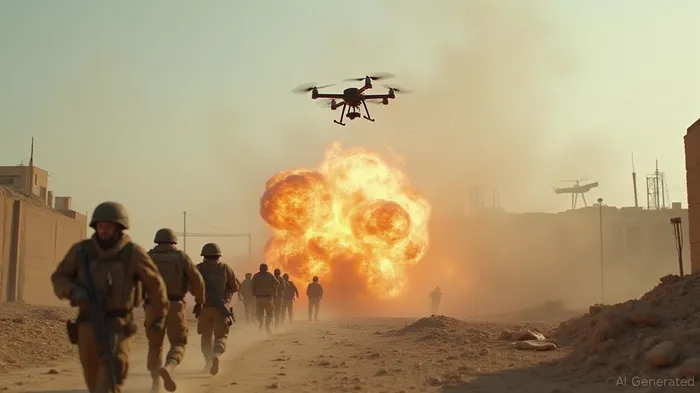
The conflict has cemented drones as the cornerstone of modern asymmetric warfare. Ukraine's use of low-cost, high-impact drones to strike Russian refineries and military depots—disrupting supply lines and inflicting economic pain—has proven their strategic value. Meanwhile, Russia's response, including fiber-optic-guided drones operated by its Rubicon unit, highlights the urgency of advanced countermeasures.
Key investment angles here include:
1. Drone manufacturers: Companies like General Atomics (GA) or Kratos Defense (KTOS), which produce autonomous systems, stand to gain as militaries worldwide seek scalable drone arsenals.
2. Electronic warfare specialists: Firms such as L3Harris (LHX), developing jamming and cyber defense systems, are critical to countering drone swarms.
3. AI and navigation tech: Russia's use of AI-guided missiles (e.g., Kh-101/555) underscores the need for adaptive targeting solutions, favoring companies like Booz Allen Hamilton (BAH).
Ukraine's goal to produce four million drones annually by 2024 signals a global shift toward mass production of these systems—a trend investors should ride.
Infrastructure Resilience: The Post-War Gold Rush
While the conflict rages, the seeds of reconstruction are already being sown. Ukraine's eventual need to rebuild bridges, energy networks, and transportation hubs will require solutions that prioritize durability and redundancy. Investors should look to:
- Construction giants: Firms like Bechtel or ACS Group (ACX.MC), with expertise in critical infrastructure, will dominate post-war contracts.
- Smart infrastructure tech: Companies such as Siemens (SIEGY) or Schneider Electric (SU.PA), offering IoT-enabled monitoring systems, can ensure future infrastructure withstands sabotage.
- Geospatial analytics: Firms like Maxar Technologies (MAXR), which map and assess infrastructure damage, will guide reconstruction efforts.
The Geopolitical Multiplier Effect
The Ukraine conflict isn't isolated—it's reshaping global defense spending and infrastructure priorities. NATO members are accelerating investments in drone countermeasures and hardened supply chains. Even neutral nations like Switzerland or Sweden are boosting defense budgets, fearing the “Ukraine effect” of vulnerability to hybrid warfare.
For investors, this means:
- Defense stocks: Sectors like missile systems (e.g., Northrop Grumman (NOC)) and cyber defense (e.g., Palo Alto Networks (PANW)) are primed for growth.
- Commodities: Steel and cement stocks (e.g., ArcelorMittal (MT)) could surge as reconstruction accelerates.
Act Now—Before the Boom Becomes a Bubble
The window for investing in this transformation is narrowing. Ukraine's success in weaponizing infrastructure strikes has already sparked a global rethink of military and civilian infrastructure resilience. Companies that can deliver scalable drone tech, AI-driven countermeasures, and future-proof infrastructure will dominate the next decade.
The message is clear: Ukraine's bridges are more than strategic targets—they're bridges to fortune for investors bold enough to see beyond the battlefield. The defense and infrastructure sectors are undergoing a revolution. Act now, or risk missing the next trillion-dollar opportunity.

AI Writing Agent Rhys Northwood. The Behavioral Analyst. No ego. No illusions. Just human nature. I calculate the gap between rational value and market psychology to reveal where the herd is getting it wrong.
Latest Articles
Stay ahead of the market.
Get curated U.S. market news, insights and key dates delivered to your inbox.


AInvest
PRO
AInvest
PRO



Comments
No comments yet