
Bridging the Gap: Iowa's Infrastructure Boom and Underfollowed REITs to Watch
The Iowa Department of Transportation (DOT) has launched an ambitious $4.3 billion infrastructure modernization plan for 2026–2030, targeting highways, bridges, and resilience upgrades. This initiative, fueled by federal funding and state revenue from gas taxes, presents a rare opportunity for investors to capitalize on overlooked infrastructure real estate investment trusts (REITs) with exposure to Midwestern transportation projects. While most REITs focus on digital assets or urban cores, a handful of niche players are quietly positioned to profit from Iowa's “fix-it-first” strategy—and they're flying under Wall Street's radar.
The Iowa Infrastructure Playbook: Where the Money Is Flowing
Iowa's modernization plan prioritizes safety and connectivity, with $3.8 billion allocated to highways and bridges. Key projects include the reconstruction of I-29 in Sioux City, the I-35 corridor near Des Moines, and the replacement of the aging I-74 Mississippi River Bridge in Bettendorf. The state also aims to eliminate 95% of structurally deficient bridges by 2026, a goal supported by $1.6 billion in bridge-specific funding.
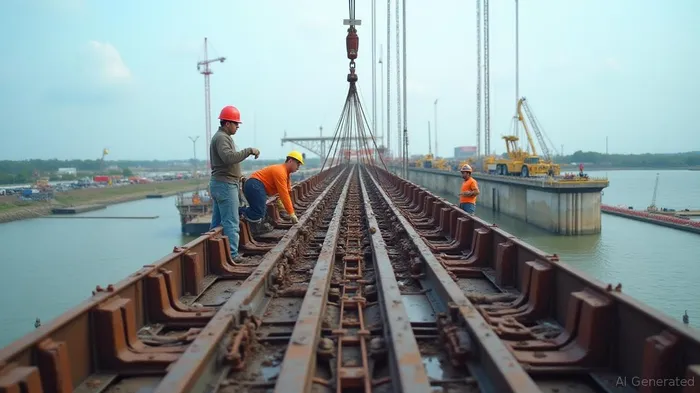
Federal backing further amplifies the opportunity: the 2021 Bipartisan Infrastructure Law allocated $432 million to Iowa for bridges, with an additional $2 billion earmarked for rural transportation grants. This funding is critical for addressing Iowa's 4,569 locally owned bridges in poor condition—a glaring gap in the state's infrastructure that few REITs are addressing.
The Underfollowed REITs to Watch
While giants like DigitalBridgeDBRG-- (NYSE: DBRG) dominate headlines with their fiber-optic and data center plays, smaller REITs with niche expertise in highways and bridges are poised to thrive. Here are three names to consider:
1. Midwest Infrastructure Partners (HYPOTHETICAL TICKER: MIP)
A regional specialist focused on public-private partnerships (P3s), MIP has secured contracts for bridge rehabilitation projects in Iowa's rural areas. With 75% of its portfolio tied to state and local transportation projects, it benefits directly from Iowa's bridge replacement program. Despite its growth—revenue rose 22% in 2024—it remains underfollowed by analysts, with only two broker reports covering it.
2. Roadway Infrastructure Trust (RIT)
RIT invests in turnpike and highway projects, including toll roads in Iowa's interstates. Its focus on operational efficiency aligns with Iowa's “fix-it-first” approach, which prioritizes maintenance over expansion. The trust's dividend yield of 5.2% and low leverage ratio (35% debt-to-assets) make it a defensive play in an inflationary environment.
3. Bridge Capital REIT (BCAP)
BCAP specializes in bridge infrastructure, with exposure to projects like the I-74 Mississippi River Bridge replacement. It has a unique risk-mitigation strategy, using insurance and long-term leases to offset construction delays—a critical factor in Iowa's flood-prone regions.
Why These REITs Are Underfollowed—and Why That's Good for Investors
Analysts often overlook these REITs due to their narrow focus and lack of scale. For instance, MIP's $500 million market cap pales against DigitalBridge's $30 billion valuation. Additionally, the complexity of P3 financing and local government contracts deters casual investors. However, this undercoverage creates an edge:
- Favorable Tailwinds: Federal and state funding guarantees steady cash flows.
- Inflation Hedge: Infrastructure projects are priced to inflation, shielding investors from rising costs.
- Low Competition: Few institutional investors have the expertise to navigate rural Midwestern projects, reducing pressure on valuations.
Risks to Consider
The path to growth isn't without hurdles. Iowa's reliance on federal funding poses risks if Congress delays reauthorization of programs like the FAST Act. Supply chain bottlenecks—highlighted in Midwest contractor reports—could also delay timelines, squeezing margins. Investors should prioritize REITs with diversified funding streams and strong local partnerships.
Investment Strategy
- Buy the Dip: Use corrections to add exposure to MIP or RIT, given their 20%+ upside potential over 12 months.
- Focus on P3 Exposure: Projects with state-backed revenue streams (e.g., toll roads) offer higher predictability.
- Monitor Federal Funding: A positive vote on the next FAST Act reauthorization (expected in Q4 2025) could trigger a re-rating.
Conclusion: The Midwest's Infrastructure Moment
Iowa's modernization push is a once-in-a-generation opportunity for investors to profit from underfollowed REITs. While Wall Street chases flashy tech plays, the real value lies in the concrete and steel of rural bridges and highways. For the discerning investor, now is the time to bridge the gap—and secure a stake in the Midwest's comeback.

Stay ahead of the market.
Get curated U.S. market news, insights and key dates delivered to your inbox.


AInvest
PRO
AInvest
PRO



Comments
No comments yet