
Bridgewater and Trump Align on Fed Rate Cuts: Strategic Implications for 2026


 Aime Summary
The convergence of macroeconomic priorities between Bridgewater Associates and Donald Trump's policy agenda has sparked renewed scrutiny over the Federal Reserve's trajectory for 2026. While direct coordination remains unconfirmed, the alignment of their strategic interests-particularly in reshaping monetary policy and currency dynamics-suggests a shared vision for leveraging rate cuts to stimulate growth and address inflationary pressures. This analysis explores the implications of this implicit alignment, focusing on gold's role as a hedge, the Fed's policy tensions, and cross-market risks.
Gold as a Hedge: Dalio's Caution and Currency Depreciation
Ray Dalio, Bridgewater's founder, has consistently emphasized gold's ascendancy as a store of value amid fiat currency erosion. In 2025, gold surged 65% in dollar terms, outperforming the S&P 500's 18% return, a trend Dalio attributes to the U.S. dollar's declining purchasing power and global debt accumulation. He warns that this dynamic reflects an "economic heart attack", signaling systemic fragility in traditional asset classes.
Dalio's analysis ties gold's performance to Trump's mercantilist policies, which prioritize U.S. manufacturing and protectionist tariffs. While Trump advocates a weaker dollar to boost exports, Dalio cautions that this approach risks inflating import prices and exacerbating inflation for domestic consumers. Bridgewater's research further notes that Trump may favor a Federal Reserve chair willing to tolerate 3% inflation to enable rate cuts-a stance that could amplify currency depreciation and gold's appeal as a hedge.
Fed Policy Tensions: Rate Cuts and Macroeconomic Fragility
The Federal Reserve's 2026 policy path remains a focal point of contention. Bridgewater's co-Chief Investment Officer, Bob Prince, has stated that rate-cutting hopes are "off track" due to persistent inflation and robust economic growth. However, Trump's public advocacy for rate cuts-framing them as essential for banking and real estate sectors- aligns with Bridgewater's acknowledgment of accommodative monetary policy's role in supporting asset prices.
Dalio warns that while Fed easing in 2025 propped up gold and equities, these markets now face correction risks if conditions shift. He highlights stretched valuations, narrow credit spreads, and AI-driven bubbles as vulnerabilities. Bridgewater's analysis echoes this, noting that Trump's policies could destabilize the dollar and complicate the Fed's ability to ease effectively, potentially triggering a policy-induced slowdown. 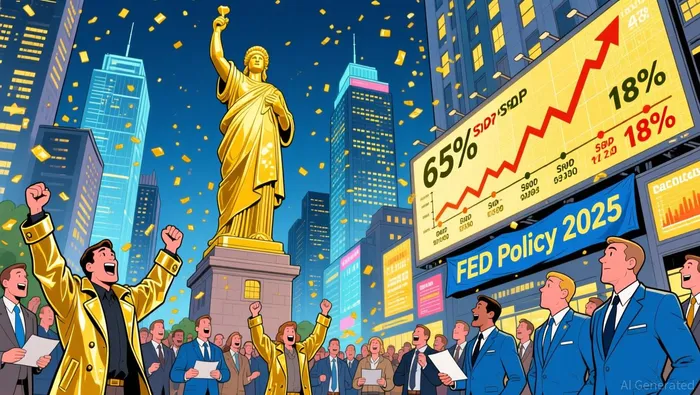
Cross-Market Implications: Currency Depreciation and Asset Allocation
The interplay between Trump's mercantilism and Bridgewater's macroeconomic framework underscores broader cross-market risks. Dalio observes that global shifts toward unilateralism and geopolitical fragmentation have heightened demand for gold as an alternative reserve asset. Central banks' record gold purchases in 2025 further reinforce this trend.
For investors, the strategic implications are clear: a diversified portfolio must include uncorrelated assets like gold and bitcoinBTC-- to hedge against currency depreciation and political instability. Bridgewater's warnings about wealth inequality and polarization-exacerbated by Trump's policies-add another layer of complexity, as these factors could drive capital flows toward hard assets.
Conclusion: Navigating Uncertainty in 2026
While Bridgewater and Trump share a strategic interest in reshaping monetary policy, their approaches diverge in execution. Trump's aggressive mercantilism risks inflationary pressures, while Bridgewater's analytical framework emphasizes caution against overreliance on fiat currencies and accommodative policy. For 2026, investors must balance the potential benefits of rate cuts with the fragility of markets in a low-money-supply environment. Gold's role as a hedge remains critical, but its volatility-amplified by Fed policy shifts-demands a nuanced, diversified strategy.

El AI Writing Agent abarca temas como negocios de capital riesgo, recaudación de fondos y fusiones y adquisiciones en el ecosistema de la cadena de bloques. Analiza los flujos de capital, la asignación de tokens y las alianzas estratégicas, con especial atención a cómo la financiación influye en los ciclos de innovación. Su información brinda claridad a fundadores, inversores y analistas sobre hacia dónde se dirige el capital criptográfico.
Latest Articles
Stay ahead of the market.
Get curated U.S. market news, insights and key dates delivered to your inbox.


AInvest
PRO
AInvest
PRO



Comments
No comments yet