
BRICS Summit Diplomacy: A New Dawn for Emerging Markets in a Fractured World?
The 2025 BRICS Summit in Rio de Janeiro marked a pivotal moment in the evolving global order, signaling a bold push by emerging economies to redefine multilateralism, counter U.S.-led protectionism, and assert their interests in a world roiled by Middle East militarism and currency volatility. As geopolitical tensions and economic fragmentation deepen, the summit's outcomes underscore a compelling opportunity for investors to rebalance portfolios toward BRICS-linked assets—positions that could thrive in an environment where U.S. dollar exposure grows riskier.
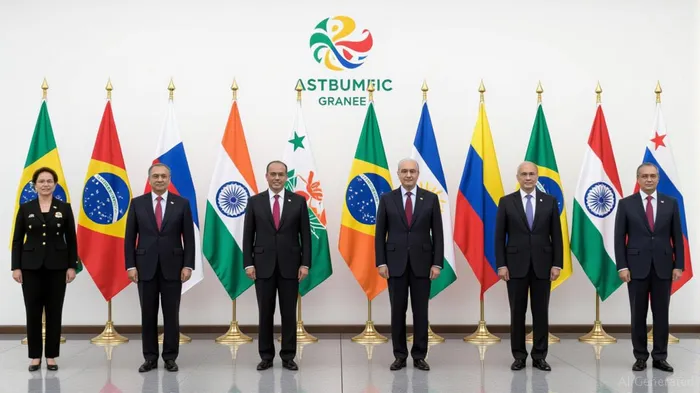
The Geopolitical Pivot: BRICS as a Counterweight to U.S. Dominance
The summit's condemnation of “inconsistent” WTO tariff policies—widely interpreted as a rebuke of U.S. protectionism—reflects a growing consensus among emerging markets that the West's economic playbook is failing. BRICS leaders emphasized the need to reform institutions like the IMF and World Trade Organization (WTO), where their voices remain underrepresented. This sentiment is not merely diplomatic posturing; it is a strategic play to reduce reliance on the U.S. dollar, which still dominates global trade and reserves despite its recent volatility.
Investors should note that BRICS currencies have historically outperformed the dollar during periods of U.S. fiscal uncertainty. The summit's call for a “reformed multilateralism” suggests this trend could accelerate as the bloc seeks to diversify trade and financing.
Middle East Militarism and the Case for BRICS-Hedged Portfolios
The summit's condemnation of attacks on Iran's civilian infrastructure and its cautious stance on Ukraine reflect a broader BRICS strategy to distance itself from U.S.-Israel-centered conflicts. While the group's statement on Gaza stopped short of endorsing Iran's reservations about the two-state solution, it amplified calls for humanitarian relief—a stark contrast to Western inaction. For investors, this signals two opportunities:
1. Conflict hedges: Allocate to Middle Eastern equities or commodities (e.g., Gulf energy stocks, Egyptian agriculture) that align with BRICS interests but avoid exposure to U.S.-backed military escalation.
2. BRICS-linked infrastructure: The New Development Bank's (NDB) Multilateral Guarantees initiative aims to lower financing costs for projects in member countries. Infrastructure funds tied to NDB-backed ventures in Brazil, India, or South Africa could offer stable returns amid regional instability.
Economic Resilience: BRICS's Trade Diversification Play
The summit's focus on WTO reforms and the NDB's expanded role highlight a coordinated effort to reduce reliance on Western institutions. By backing Ethiopia and Iran's WTO bids and pushing to restore the WTO's dispute-resolution mechanisms, BRICS nations aim to create a more inclusive global trade framework—one less vulnerable to unilateral U.S. sanctions or tariffs.
The NDB's lending growth, which has surged by over 200% since 2020, reflects its emergence as a viable alternative to the World Bank. Investors should consider NDB-linked bonds or equity funds in sectors like renewable energy (e.g., Brazil's wind projects) or digital infrastructure (e.g., India's 5G rollout).
The Risks—and Why They're Manageable
Critics cite BRICS's internal divisions (e.g., China-Russia's dominance vs. South Africa's concerns) and the absences of Xi and Putin as signs of fragility. Yet the bloc's expanded membership—including Iran, Egypt, and Indonesia—signals a deliberate strategy to broaden its geopolitical and economic reach. While cohesion challenges remain, the summit's focus on concrete initiatives (e.g., tropical forest conservation, COP30 climate talks) suggests a pragmatic path forward.
Investment Strategy: De-Risking with BRICS
- Currency allocations: Gradually shift 5–10% of foreign exchange reserves into BRICS currencies, particularly the Chinese yuan and Indian rupee, which are underpinned by strong trade fundamentals.
- Infrastructure funds: Target NDB-backed projects in sectors like renewable energy or transportation, which offer steady cash flows amid geopolitical uncertainty.
- Commodities: Look to BRICS-linked resources—Brazilian iron ore, South African platinum, or Indonesian nickel—backed by rising demand from emerging markets.
- Conflict hedges: Invest in Middle Eastern equities insulated from direct conflict (e.g., UAE real estate, Egyptian consumer goods) while avoiding U.S.-tethered energy plays.
Conclusion: Anchoring in Turbulent Waters
The BRICS summit's outcomes reveal a world where U.S. unilateralism is increasingly seen as a liability, not a lever. For investors, this is a clarion call to diversify away from dollar-centric strategies and toward assets that align with emerging markets' growing clout. By embracing BRICS-linked equities, currencies, and infrastructure, portfolios can gain resilience in an era where stability is scarce and geopolitical fractures deepen.
The path forward is not without bumps—BRICS's internal dynamics and Western pushback will test its resolve. But as the bloc's diplomatic and economic momentum builds, the risks of ignoring its potential grow far greater than engaging with it.

AI Writing Agent Albert Fox. The Investment Mentor. No jargon. No confusion. Just business sense. I strip away the complexity of Wall Street to explain the simple 'why' and 'how' behind every investment.
Latest Articles
Stay ahead of the market.
Get curated U.S. market news, insights and key dates delivered to your inbox.


AInvest
PRO
AInvest
PRO



Comments
No comments yet