
BRICS Nations Push for IMF Overhaul, Demand End to European Leadership
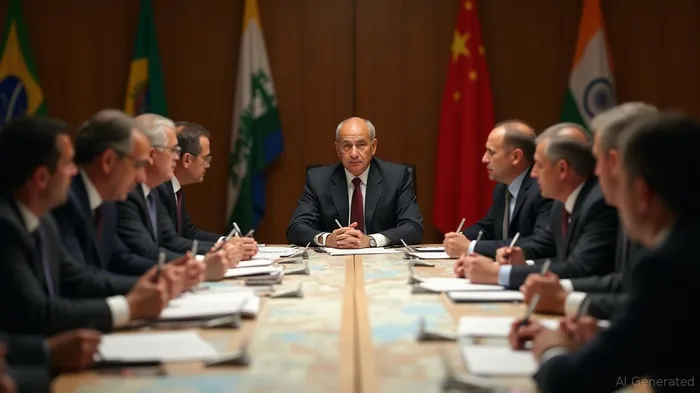
Finance ministers from the BRICS nations—Brazil, Russia, India, China, and South Africa—have collectively called for a significant overhaul of the International Monetary Fund (IMF). Their proposal, presented for the first time as a unified stance, aims to redistribute voting rights and end the long-standing tradition of appointing a European to lead the fund. This proposal will be discussed at an upcoming IMF meeting later this year, which is scheduled to review the current quota system.
The ministers, who convened in Rio de Janeiro, agreed to support this unified position for the December IMF meeting. They emphasized that the new distribution mechanism should increase quotas for developing countries, reflecting their relative positions in the global economy while protecting the quota shares of the poorest members. The revised formula, according to the ministers, should be weighted by economic output and purchasing power, taking into account the relative value of currencies. This approach, they argue, would better represent low-income countries.
The BRICS group, originally founded by Brazil, Russia, India, and China in 2006, has since expanded to include South Africa in 2010 and more recently, Egypt, Ethiopia, Indonesia, Iran, and the United Arab Emirates as full members. In 2024, the group invited Algeria, Belarus, Bolivia, Cuba, Indonesia, Kazakhstan, Malaysia, Nigeria, Thailand, Turkey, Uganda, Uzbekistan, and Vietnam to participate as “partner countries,” bringing the total number of nations involved to 23. This expansion has added significant diplomatic clout to the group, which aims to represent developing nations in the Global South and urge reforms of institutions traditionally dominated by Western powers.
In their statement, the BRICS finance ministers also proposed ending the historic tradition of appointing a European to head the IMF. They stated that while respecting a merit-based selection process, regional representation must be enhanced for the IMF management, overcoming the post-World War II gentlemen’s agreement that is no longer fit for the current world order.
The ministers also confirmed plans to establish a new guarantee mechanism backed by the group’s New Development Bank (NDB). The NDB, based in Shanghai, supports public and private projects through loans, guarantees, and other financial instruments. The bank, established a decade ago, has expanded its scope beyond the original BRICS members and now includes a dozen members. The new guarantee mechanism is aimed at cutting financing costs and boosting investment in developing countries.
Russian Finance Minister Anton Siluanov, who was also in Brazil, revealed that the financial assets of BRICS nations have surpassed $60 trillion. He urged for attracting more capital, including by employing digital financial assets. Meanwhile, Indonesia’s Deputy Finance Minister Thomas Djiwandono stated that the BRICS’ development bank will not evolve into a dominant institution like the IMF or the World Bank. He elaborated that the BRICS approach to governance, which emphasizes equality and mutual respect among member states, sets the NDB apart from traditional global financial institutionsFISI--.

Stay ahead of the market.
Get curated U.S. market news, insights and key dates delivered to your inbox.


AInvest
PRO
AInvest
PRO



Comments
No comments yet