
BRICS Nations Expand Partnership, Condemn Unilateral Actions
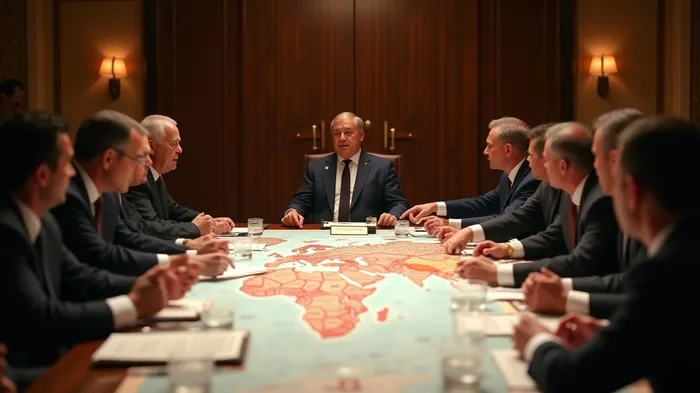
The foreign ministers of the BRICS nations—Brazil, Russia, India, China, and South Africa—concluded a two-day meeting in RioRIO-- deDE-- Janeiro, Brazil, on April 29. The gathering resulted in a chairman's statement that underscored the commitment to strengthening the strategic partnership framework among the BRICS countries. The focus areas for cooperation included policy security, economic and financial matters, and cultural exchanges.
The statement emphasized the BRICS spiritFLYY-- of mutual respect, understanding, equality, solidarity, openness, inclusiveness, and consensus. It highlighted the importance of enhancing cooperation among Southern countries to achieve more inclusive and sustainable governance. The meeting welcomed Indonesia as a new member of the BRICS and extended invitations to Belarus, Bolivia, Kazakhstan, Cuba, Nigeria, Malaysia, Thailand, Uganda, and Uzbekistan to become partner countries starting January 1, 2025.
The foreign ministers reaffirmed their commitment to multilateralism and international law, including the principles and purposes of the United Nations CharterCHTR--. They condemned unilateral actions that disrupt the work of global multilateral institutions and hinder their ability to fulfill their mandates. The statement noted the current global climate of polarization and mistrust, encouraging international efforts to strengthen peace and security. It stressed that the security of all nations is interdependent and reaffirmed the commitment to resolving international disputes through dialogue, consultation, and diplomatic means.
The ministers advocated for a multilateral approach that respects the views and positions of all countries on major global issues such as sustainable development, poverty and hunger eradication, and climate change challenges. They expressed serious concern over the rise of unreasonable unilateral protectionist measures that do not comply with WTO rules, including indiscriminate increases in reciprocal tariffs and non-tariff measures.
Supporting comprehensive reforms of the United Nations, including its Security Council, the ministers called for a more democratic, representative, effective, and efficient institution. They emphasized the need to increase the representation of developing countries in the Security Council to better address current global challenges. The ministers also expressed grave concern over the ongoing conflicts in the Middle East and North Africa, and discussed their respective positions on the Ukraine conflict in relevant forums such as the United Nations Security Council and General Assembly. They welcomed initiatives like the "African Peace Initiative" and the "Friends of Peace Group" for resolving conflicts through official dialogue and diplomatic means.
The ministers strongly condemned all forms of terrorism and reaffirmed their commitment to combating terrorism in all its forms and manifestations. They urged a zero-tolerance policy towards terrorism and rejected double standards in counter-terrorism efforts. The statement concluded with a pledge to fully support Brazil's chairmanship of the BRICS in 2025, with the theme "Strengthening South-South Cooperation for More Inclusive and Sustainable Governance." The next BRICS Foreign Ministers' Meeting is scheduled to take place during the 80th session of the United Nations General Assembly, to be hosted by India, the prospective chair of the BRICS in 2026.
Chinese Foreign Minister Wang YiYI--, during the meeting, emphasized the critical juncture in global governance and the role of the BRICS nations as representatives of emerging powers. He stressed the need for unity and cooperation to reform and improve global governance structures, making them more timely and effective in addressing global challenges. Wang Yi called for upholding multilateral trade rules, opposing all forms of protectionism, and maintaining a rules-based, WTO-centered multilateral trading system. He advocated for deepening practical economic and trade cooperation among the BRICS nations to promote trade liberalization and facilitation.
Wang Yi also highlighted the importance of strengthening global financial governance by reforming the international financial architecture to better reflect the changing global economic landscape and serve the growth of the global South. He called for the review of World Bank shares and the adjustment of IMF quotas to address the underrepresentation of the global South. Wang Yi emphasized the need for a green transition, advocating for the full and effective implementation of the Paris Agreement and urging developed countries to fulfill their obligations. He supported Brazil's hosting of the 30th Conference of the Parties to the United Nations Framework Convention on Climate Change, aiming to advance a fair and cooperative global climate governance system.
Wang Yi further stressed the importance of sharing digital opportunities by promoting the implementation of the Global Digital Compact under the United Nations framework. He called for bridging the digital divide, establishing common rules for cyberspace, and improving global governance of artificial intelligence. Wang Yi welcomed the participation of the BRICS nations in the 2025 World Artificial Intelligence Conference to be held in Shanghai.

Stay ahead of the market.
Get curated U.S. market news, insights and key dates delivered to your inbox.






Comments
No comments yet