
BRICS Nations Defy U.S. Tariff Threats, Push for De-Dollarization
Russia has responded to the U.S. tariff threats by emphasizing its commitment to constructive dialogue and strategic coordination within the BRICS bloc. Russian Deputy Foreign Minister Sergey Ryabkov, who serves as Russia’s BRICS representative, stated that Moscow is taking U.S. threats seriously but remains dedicated to fostering cooperation within the BRICS framework. Ryabkov clarified that the BRICS nations are not aiming to introduce a currency to compete with or replace the U.S. dollar. Instead, the group's economic initiatives are focused on reshaping the global financial system to protect member states from what they perceive as "monopolistic abuse" by dominant financial powers, primarily the United States.
Ryabkov explained that the economic reforms within BRICS are designed to ensure that cooperation among member states is not disrupted by those using their financial monopoly for malicious purposes. He noted that the foundations for these reforms have already been laid and that further evolution is expected under the current BRICS leadership in Brazil. Ryabkov dismissed the idea that any improvement in U.S.-Russia relations would undermine the BRICS bloc, asserting that both trends are feasible and unrelated.
BRICS' growing global influence was highlighted by Ryabkov, who emphasized that the organization now represents nations like India, China, Brazil, and South Africa, as well as prospective new members. The bloc has accelerated its progress in recent years, achieving tangible results in various areas and attracting interest from partner states. Ryabkov described BRICS as a new, internationally recognized grouping, with a reputation that has changed not just within member countries but also in the global community.
In response to the perceived financial threat posed by BRICS, U.S. President Donald Trump issued severe threats, vowing to impose 100% tariffs on certain goods if the BRICS countries abandoned the dollar for settling deals. This move was seen as a retaliatory measure against the BRICS nations' efforts to reduce their reliance on the U.S. dollar in international trade. Trump's threats came after he had previously warned of 25% tariffs on various goods, claiming that the BRICS bloc was "dead" due to his tariff threats. The U.S. administration framed these measures as correcting unfair trade practices and reviving American manufacturing, asserting that high import duties would "level the playing field" for U.S. workers and incentivize companies to bring factories back home.
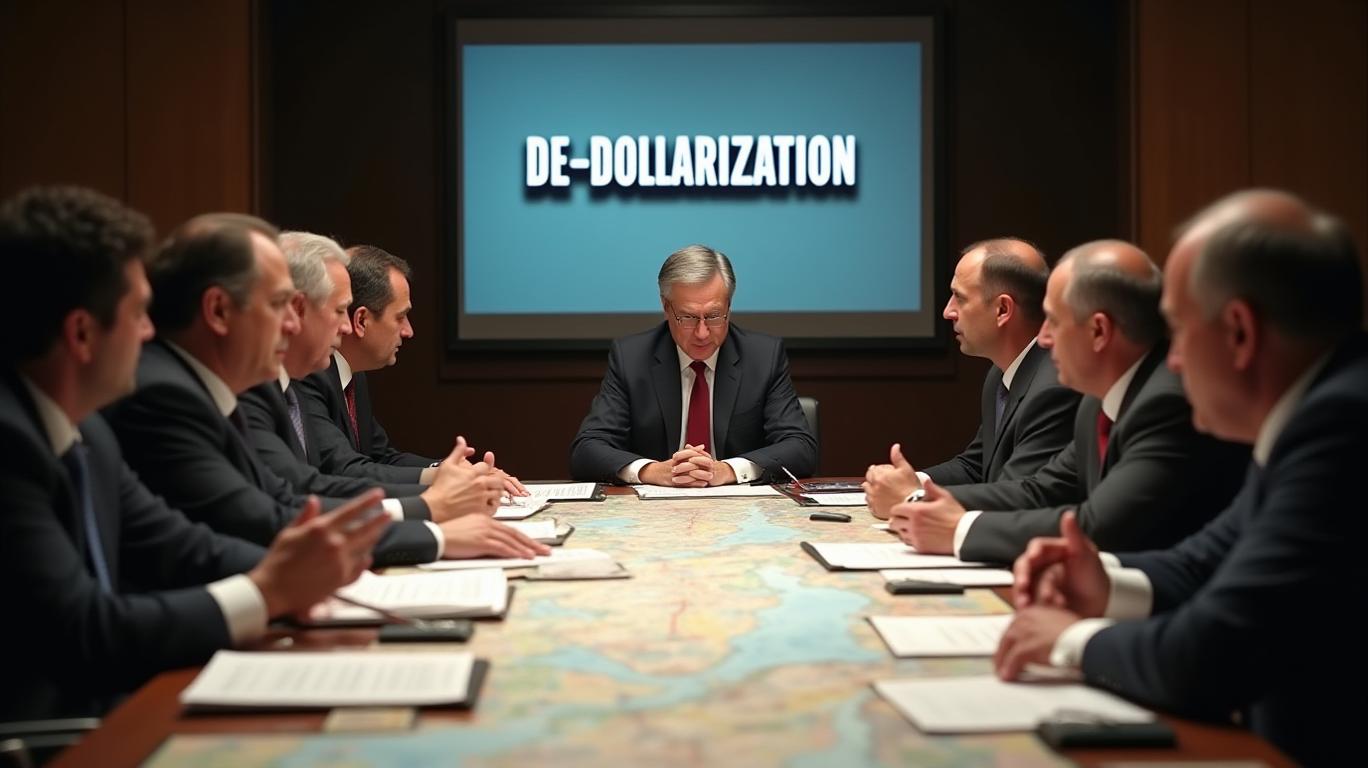
The BRICS nations have been accelerating their move away from the dollar, which poses a significant threat to the U.S. economy. The de-dollarization efforts by the BRICS nations are part of a broader trend of countries seeking to reduce their reliance on the U.S. dollar in international trade. This trend is driven by a desire to reduce exposure to U.S. economic policies and to promote greater financial independence. The BRICS nations have been exploring alternative payment systems and currencies to facilitate trade among themselves, which could further erode the dollar's dominance in global trade.
The U.S. administration's tariff threats and the BRICS nations' de-dollarization efforts have significant implications for the global economy. The tariff threats could lead to a trade war, which would have negative consequences for global growth and stability. The de-dollarization efforts by the BRICS nations could also have far-reaching implications for the global financial system, as the U.S. dollar has been the dominant currency in international trade for decades. The shift away from the dollar could lead to greater volatility in currency markets and could challenge the U.S. dollar's status as the world's reserve currency.
The geopolitical implications of these developments are also significant. The U.S. administration's tariff threats have been seen as a betrayal of the cooperative spiritSPR-- that the U.S. itself championed in the post-WWII era. This has led to a push by other countries to deepen regional alliances and diversify partnerships, effectively hedging against U.S. unpredictability. The strengthening of alternative blocs like BRICS is another dimension of this geopolitical shift. These nations have signaled a desire to reduce reliance on the U.S.-led financial system and have been discussing the creation of a BRICS currency or increasing the use of non-dollar trade. This trend could ironically spur diversification away from the dollar over time, as countries seek to reduce their exposure to U.S. economic policies. The future of globalization hangs in the balance, with a likely shift from an era of ever-increasing global integration to one of more selective, regional integration, sometimes called "slobalization" or even fragmentation. Trust, once broken, is hard to restore, so even a future U.S. administration that sought to undo these tariffs might find that other nations have moved on, securing new alliances and questioning the old model of U.S.-centric globalization.

Stay ahead of the market.
Get curated U.S. market news, insights and key dates delivered to your inbox.






Comments
No comments yet