
BRICS vs. the US: Investing in the New Geoeconomic Divide
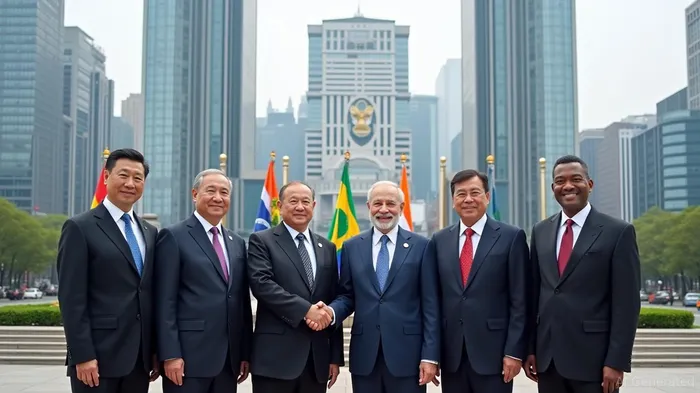
The geopolitical chessboard is shifting. As the U.S. escalates trade protectionism with 100% tariff threats against BRICS nations, the bloc—now expanded to 10 members including Egypt, Iran, and the UAE—is accelerating its push for financial autonomy and green industrialization. This divergence has created a stark opportunity for investors: allocate capital to BRICS-linked equities and infrastructure to capitalize on a world fracturing into rival economic blocs.
The Tariff Standoff: A Catalyst for BRICS Solidarity
The U.S. threat to impose 100% tariffs on BRICS imports—potentially slashing bilateral trade from $616 billion in 2024 to $325 billion by 2025—has galvanized the bloc's resolve. Instead of capitulating, BRICS nations are deepening intra-regional trade, with the New Development Bank (NDB) pledging $30 billion for climate projects in 2025 alone. This includes Nigeria's $4.5 billion solar farm and Brazil's wind energy expansion, both insulated from U.S. supply chain disruptions.
The NDB, now a $200 billion institution, is positioning itself as a rival to Western-dominated lenders. Its focus on renewable energy and infrastructure aligns with BRICS's "de-dollarization" agenda, exemplified by the mBridge digital currency initiative and China's Belt and Road projects. For investors, this signals a structural shift: capital flows are bifurcating between U.S.-aligned markets and BRICS's emerging financial ecosystem.
Middle East Tensions: A Double-Edged Sword
The inclusion of Middle Eastern nations like the UAE and Egypt into BRICS adds complexity but also strategic depth. The UAE's $10 billion solar academy partnership with China's LONGi—a joint venture using Brazilian iron ore for green steel—demonstrates how BRICS is leveraging regional alliances to build self-sufficient supply chains. Meanwhile, Iran's membership, despite U.S. sanctions, opens doors to discounted oil deals and gas infrastructure projects in South Asia.
However, Middle Eastern rivalries—such as Saudi Arabia-Iran tensions—threaten BRICS's cohesion. The July summit in Rio will test whether the bloc can balance these divisions. Investors should monitor intra-BRICS trade volumes and NDB loan approvals as proxies for unity; a successful summit could unlock $100 billion in new infrastructure funding.
Sector Opportunities: Where to Deploy Capital
- Renewable Energy:
BRICS's $30 billion NDB climate fund is a goldmine for solar and wind projects. Look to: - JinkoSolar (JKS): China's leading solar panel manufacturer, benefiting from BRICS's Africa-focused projects.
- Adani Green Energy (NSE: ADANIGREEN): A cornerstone of India's $1 trillion renewable target, with projects in Brazil and South Africa.
- Infrastructure and Logistics:
BRICS's "New Silk Road" ambitions—exemplified by China's Chancay port in Peru and Kenya's Lamu port—favor: - CRRC Corporation (OTC: CRRRY): A China-based rail infrastructure firm with contracts across BRICS nations.
Brazil's Vale (VALE): Supplies iron ore for green steel projects, now critical to the UAE's transition to EV manufacturing.
Currency Plays:
BRICS's push to settle trade in local currencies creates volatility but also opportunities. The South African rand (ZAR) and Indian rupee (INR) are undervalued against the dollar, offering carry-trade potential if BRICS's de-dollarization gains traction.
Risks and Mitigation
- Geopolitical Volatility: U.S.-BRICS tensions could spike if tariffs are implemented. Diversify across BRICS sectors and pair equity exposure with BRICS bond ETFs (e.g., PowerShares FTSE RAFI Emerging Markets Bond Portfolio) for stability.
- Currency Volatility: Hedge using gold (GLD) or copper ETFs (COPX), which are integral to green infrastructure projects.
Conclusion: The BRICS Opportunity is Structural
The U.S.-BRICS tariff dispute is not a temporary squabble but a defining moment in global economic realignment. BRICS's $30 trillion economy, bolstered by its green transition and alternative financial architecture, is a counterweight to U.S. hegemony. Investors ignoring this bloc risk missing a decade-long theme.
Allocate 5-10% of your portfolio to BRICS-linked equities via ETFs like the iShares MSCI BRIC ETF (BKF), and pair it with sector-specific plays in renewables and infrastructure. The July summit will be a litmus test—but the trend is clear: the world is no longer "made in America."
Investors who bet on BRICS's resilience now may reap rewards as the global economy splinters into competing blocs. The question is no longer whether to engage with BRICS—but how to do so before others catch on.

Stay ahead of the market.
Get curated U.S. market news, insights and key dates delivered to your inbox.






Comments
No comments yet