
Brick-and-Mortar's Comeback: How Customer-Centric Brands Are Winning in 2025
 Aime Summary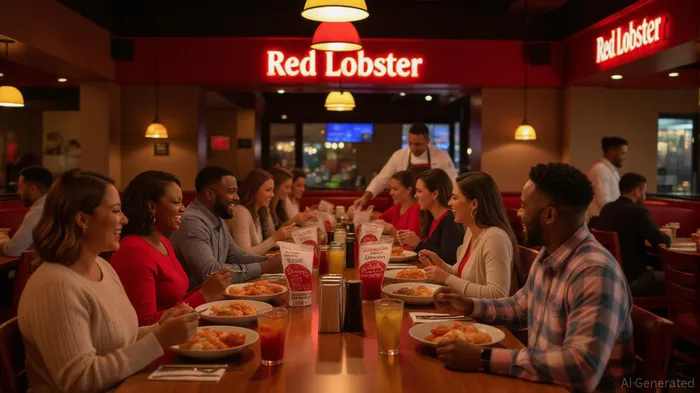
The post-pandemic economy has rewritten the rules for brick-and-mortar retail. For years, investors dismissed physical stores as relics of a bygone era, but the past 18 months have proven otherwise. Red Lobster's stunning turnaround—driven by a blend of customer-centric innovation, operational agility, and bold leadership—offers a blueprint for how traditional retailers can thrive. For investors, the lesson is clear: the companies that adapt fastest to shifting consumer demands and leverage technology to enhance the in-person experience are the ones that will outperform.
Red Lobster's Playbook: A Model for Reinvention
Red Lobster's 2025 resurgence isn't a fluke. By closing 100 underperforming locations, slashing unsustainable promotions, and simplifying its menu by 20%, the chain has boosted kitchen efficiency and reduced waste. But the real magic lies in its customer-first approach. The shrimp boil bags, for example, were tweaked in real time based on TikTok feedback, proving the company's ability to listen and pivot. CEO Damola Adamolekun's “Red Carpet Hospitality” initiative, with its 10-4 Rule for prompt service, has lifted customer sentiment scores from 30 to 60—a staggering leap in an industry where loyalty is hard to earn.
The Bigger Picture: Retail's New Rules
Red Lobster's success isn't isolated. The broader consumer discretionary sector is seeing a wave of brands that blend nostalgia with modernity, affordability with quality, and tech-driven convenience with in-person engagement. These companies are not just surviving—they're setting the pace for a sector once plagued by e-commerce headwinds.
1. Aramark (ARMK): The Hidden Gem of Food Services
Aramark, a $10 billion market cap play, is rewriting the playbook for institutional food services. Under CEO John Zillmer, the company has secured $760 million in new contracts with universities and sports teams, leveraging AI-driven procurement to cut costs and boost margins. Its “S.Mart Store” in Germany—a checkout-free AI-powered concept—is a harbinger of the future for dining. With a 12x 2025E EBITDA multiple and a 1.8% dividend yield, ARMKARMK-- is trading at a discount to peers like CompassCOMP-- Group (15x) and Sodexo (14x).
2. TJX Companies (TJX): The Off-Price Retail King
TJX Companies, the parent of TJ Maxx and Home Goods, is thriving by offering brand-name products at 20-60% discounts. Its operational agility—sourcing discounted inventory and converting it into profit—is a masterclass in cost management. With 6,000+ global stores and a 6% revenue growth in 2024, TJXTJX-- is a prime example of how value-driven retail can outperform in a high-interest-rate environment.
3. Canada Goose (GOO): Immersive Retail Redefined
Canada Goose isn't just selling jackets; it's selling experiences. Its Cold Rooms, where customers test gear in simulated Arctic conditions, and pop-up museums in major cities, are turning shopping into storytelling. The brand's focus on premium pricing and customer loyalty (retention rates over 90%) makes it a standout in a crowded outdoor apparel market.
4. The Walt Disney Company (DIS): Rebuilding a Franchise
Disney's streaming pivot under Iger has been rocky, but its intellectual property machine is still unmatched. With a new ESPN streaming service launching in 2025 and a focus on cross-promoting hits like Star Wars and Marvel, the company is positioning itself for a long-term rebound. At a 10x P/E, DISDIS-- is arguably undervalued for its ecosystem of parks, films, and digital content.
The Key to Outperformance: Agility and Customer Obsession
The common thread among these companies is their ability to balance innovation with tradition. Aramark's AI-powered menus, TJX's off-price model, and Disney's IP-driven ecosystem all reflect a deep understanding of what consumers want: convenience, value, and an emotional connection.
For investors, the takeaway is simple: focus on companies that are not just reacting to trends but redefining them. Look for businesses with strong balance sheets, a clear path to margin expansion, and a culture of customer-centricity. Red Lobster's turnaround proves that brick-and-mortar isn't dead—it's just getting smarter.
Final Call: Where to Put Your Money
- Aramark (ARMK): Buy dips below $25. Its margin discipline and tech-driven growth make it a high-conviction play.
- TJX Companies (TJX): A cash-cow with a durable business model. Add on weakness in a sector where value-driven spending is here to stay.
- Canada Goose (GOO): A small-cap gem with a unique retail strategy. Watch for earnings surprises in Q3. Historically, when GOO beats earnings expectations, the stock has shown a 62.5% probability of positive returns within 30 days, with a maximum observed gain of 5.45% over 53 days.
- The Walt Disney Company (DIS): A long-term bet on streaming recovery. Patience is key, but the upside is massive.
The consumer discretionary sector is no longer a risky bet—it's a goldmine for those who can spot the innovators. As Red Lobster has shown, the future belongs to the brands that treat customers like partners, not transactions. And for investors, the time to act is now.
"""

Delivering real-time insights and analysis on emerging financial trends and market movements.
Latest Articles
Stay ahead of the market.
Get curated U.S. market news, insights and key dates delivered to your inbox.






Comments
No comments yet