
BREV Lists on Binance Amid Strategic Airdrop Targeting BNB Holders
 Aime Summary
- Binance lists BREV today and distributes 15 million tokens to eligible BNBBNB-- holders and stakers via its 60th HODLer Airdrop according to the announcement.
- Brevis Network provides a verifiable computing layer using zero-knowledge proofs for complex off-chain computations as explained.
- BREV features a fixed supply of 1 billion tokens with core utilities spanning payments, staking, and governance according to technical documentation.
- The token previously debuted on OKX exactly one year ago to expand trading accessibility as reported.
Brevis (BREV) commences trading on Binance today following its selection for the exchange's 60th HODLer Airdrop. The listing introduces spot trading pairs including USDT, USDCUSDC--, BNB, and TRY alongside a distribution of 15 million BREV tokens to qualifying participants according to the announcement. This marks a strategic elevation for the zero-knowledge computation project founded on scalable blockchain infrastructure. The token now gains exposure to one of crypto's largest liquidity pools while rewarding BNB holders who maintained positions through late December as stated in the announcement.
What Is Brevis Network and How Does Its Tokenomics Work?
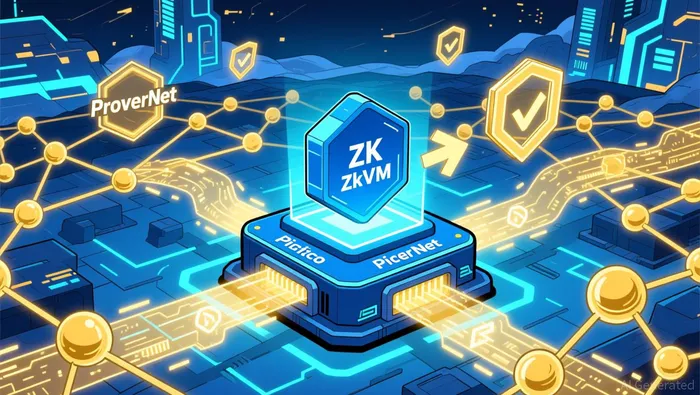
Brevis Network enables blockchain applications to process complex computations off-chain with cryptographic verification as described. Its architecture employs zero-knowledge proofs to validate results without burdening base layer networks with intensive workloads according to the technical explanation. The system addresses critical scaling limitations across DeFi, AI, and cross-chain systems while preserving decentralization principles.
The BREV token anchors the ecosystem's economic model with a fixed supply of 1 billion units as detailed. Distribution includes 25% initial circulation at launch, while utilities encompass payments for computation services within ProverNet, staking for network security, and governance participation according to technical documentation. This structure aims to align incentives between developers, validators, and token holders. The limited supply may support price stability as adoption increases over time as indicated.
Why Did Binance Select BREV for Its Latest HODLer Airdrop?
Binance strategically allocated 1.5% of BREV's total supply to reward BNB holders and stakers according to the announcement. Eligibility required holding or locking BNB in Simple Earn or On-Chain Yield products between December 17-20, 2025 as specified. The initiative demonstrates Binance's focus on incentivizing ecosystem participation while bringing emerging projects to its user base. Such airdrops typically increase token distribution while minimizing market impact during new listings according to market analysis.
Synchronized with the token listing, Binance converted BREV pre-market futures to standard perpetual contracts within three hours of spot trading commencement as reported. This approach maintains market continuity while integrating new assets into established trading frameworks. By selecting BREV, Binance signals confidence in its infrastructure niche amid growing demand for off-chain computation solutions in blockchain and AI convergence according to market analysis.
How Does Brevis Network Position Itself in Blockchain Computing?
Brevis differentiates through a three-component architecture targeting universal computation needs as detailed. Pico zkVM processes arbitrary logic, the ZK Data Coprocessor handles blockchain data analysis, and ProverNet operates as a decentralized marketplace for proof generation according to technical documentation. The system serves applications requiring historical data access or personalized computations unfeasible on-chain.
The network currently transitions ProverNet from Base Chain to a dedicated Brevis rollup, enhancing scalability as explained. This technical progression coincides with Binance's market introduction, potentially accelerating adoption among developers. Brevis enters a competitive infrastructure landscape where proving efficiency and cost-effectiveness remain crucial adoption drivers. Still, its unique focus separates it from general-purpose layer-1 chains and specialized oracle networks according to market analysis.

Blending traditional trading wisdom with cutting-edge cryptocurrency insights.
Latest Articles
Stay ahead of the market.
Get curated U.S. market news, insights and key dates delivered to your inbox.






Comments
No comments yet