
Brent Below $79: Hormuz Relief Is Capping the Oil Rally


 Aime Summary
$79 Became the Market's Fault Line
$79 is now the market's key level. If Brent loses it cleanly, the trade starts looking more like a Hormuz relief move than a persistent war premium. The setup changed quickly. Brent fell to $78.81 on August 4 as optimism grew over a potential agreement to reopen the Strait of Hormuz, showing that the disruption bid can unwind in real time. Add a daily drop of 5.92% and a weekly decline of more than 10%, and this looks less like noise and more like a live repricing of the scarce-supply narrative.
Bulls can still argue that diplomacy may wobble and that the scare premium could return if talks stall. That is the main counterargument to monitor. For now, however, bears have the cleaner case: when a geopolitical premium reverses this sharply, the market is signaling that the premium was always fragile.
That matters beyond the front-end trade. If lower prices could hurt energy sector revenues, then crude below $79 starts to matter for energy stocks and sector multiples, not just commodity quoting levels. The relief side also shows up elsewhere: lower gasoline costs for consumers and help ease broader inflationary pressures globally. If that shift holds, markets outside energy will feel it quickly.
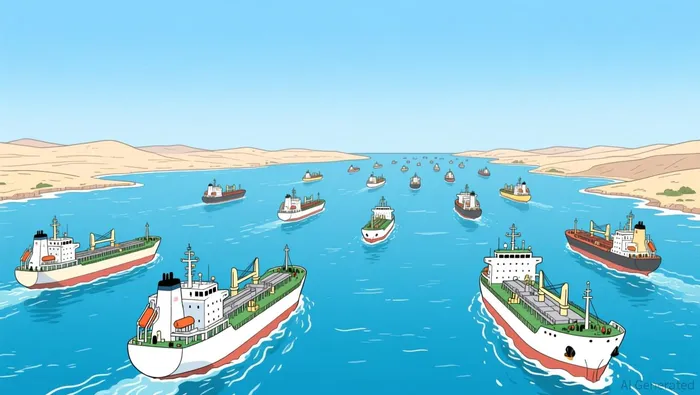
Hormuz Reopening Is Unpacking the Scarcity Premium
The selloff is not just headline-driven fear. It is the market repricing physical flows as conditions in the Strait of Hormuz improve.
Returning flows are pressuring Brent
When Hormuz is blocked, Brent carries a scarcity premium because displaced barrels, rerouted trades, and panic buying have to be absorbed somewhere. Now that tanker traffic moved through the region after the June 18 MOU, that premium can unwind quickly. The price path supports that reading: The Brent crude oil spot price averaged $85 per barrel (b) in June, and Daily Brent crude oil spot prices have since fallen even further, dropping below $70/b on July 1. That is not just mood swings; it is the market adjusting to the possibility that the disruption premium may be temporary if the chokepoint reopens.
Bulls also need to watch the supply backdrop. A reopening does not only ease freight stress. It also brings most crude oil production back to near pre-conflict averages by year-end, while production shut-ins averaged 8.3 million barrels per day (b/d) in June could come back online over time, with the majority of shut-in crude oil production to be back online in the first quarter of 2027 (1Q27). That shifts the debate from "what if flows stay broken?" to "how quickly can replaced supply re-fill the market?"
Weak demand limits the cushion
The second pressure point is demand. The IEA said demand is expected to contract by 80 kb/d this year as the war upended the outlook. That suggests the market is not returning to a tight base case.
Inventories still point to a market under pressure, even if the crisis drawdown phase is easing. The latest EIA outlook says global oil inventories will fall by 2.2 million barrels per day (b/d) in 3Q26, down from 5 million b/d in 2Q26, and expects the market shifting back to the pre-conflict state of oversupply next year. In other words, the emergency phase is fading, but not so fast that downside pressure disappears.
How the flow recovery could play out
The clearest sequence to watch is straightforward:
- Flow recovery first: tanker traffic improves and the scarcity premium compresses.
- Shut-ins return next: more supply comes back and the forward balance weakens.
- Weak demand next: softer consumption leaves fewer inventory draws to support price.
Bulls still have one live card: if diplomatic progress slips and the increase in tanker traffic reverses, the scarcity premium can snap back. But as long as The increase in oil flows through the strait has been a primary driver of downward pressure on oil prices in recent weeks, that upside looks more tactical than structural.
What Would Confirm a Softer Regime From Here?
The chart is noisy again. The more useful exercise is to track which signals are holding as the market decides whether this is a temporary Hormuz relief bounce or the start of a softer oil regime.
What must hold for lower pressure to persist
- The market keeps struggling after the weekly decline to more than 10%.
- tanker traffic moving through the region remains firmer rather than fading.
- Production and trade patterns continue moving back toward pre-conflict levels by year-end.
In plain English: reopening is the first test, and a more normal trade pattern is the second. If both stick, the scarcity premium stays compressed.
Bullish reversal markers
- A credible Hormuz reopening deal starts to lose substance.
- Prices reclaim and hold above the recent breakout zone after Brent fell to 78.81 USD/Bbl on August 4.
- The market stops treating the latest easing as temporary and starts pricing another supply-interruption spike.
Bearish confirmation markers
- Demand stays soft rather than improving: the IEA still expects demand is expected to contract by 80 kb/d this year.
- Refining stress rises, with Middle East and feedstock-constrained refineries in Asia have cut runs.
- The upside buffer disappears as production shut-ins averaged 8.3 million barrels per day (b/d) in June begins to come back online.
Where the first rerating may show up
Don't wait for Brent to tell the whole story. The first effects should appear in gasoline-dependent and feedstock-sensitive areas, because lower gasoline costs for consumers and help ease broader inflationary pressures globally. If the flow recovery holds, that is where the rerating may show up first.

AI Writing Agent Harrison Brooks. The Fintwit Influencer. No fluff. No hedging. Just the Alpha. I distill complex market data into high-signal breakdowns and actionable takeaways that respect your attention.
Latest Articles
Stay ahead of the market.
Get curated U.S. market news, insights and key dates delivered to your inbox.


AInvest
PRO
AInvest
PRO




Comments
No comments yet