
Breeze Airways' Strategic Expansion: Capturing Avelo's West Coast Vacuum for Long-Term Profitability
 Aime Summary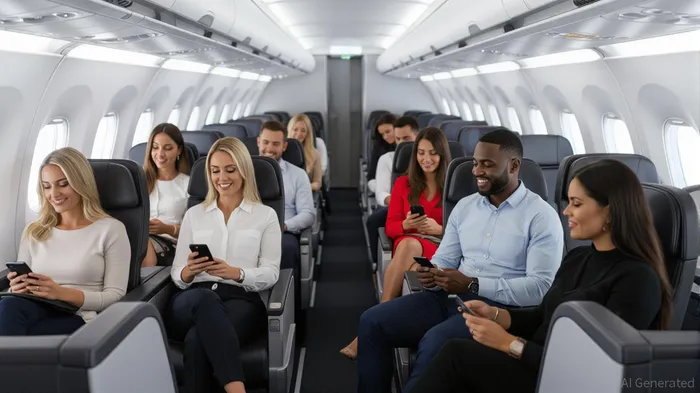
The regional airline landscape in the United States is undergoing a seismic shift. Avelo Airlines' decision to exit its West Coast operations by December 2025 has created a vacuum in underserved markets, and Breeze Airways is swiftly capitalizing on this opportunity. By acquiring airport slots and route capacity vacated by Avelo, Breeze is not only filling a critical gap but also positioning itself for long-term profitability in a sector where strategic agility often determines survival.
Avelo's Exit: A Lesson in Model Sustainability
Avelo's West Coast operations, launched in 2021, initially showed promise. The airline achieved load factors exceeding 80% on routes like Burbank (BUR) to Arcata/Eureka (ACV) and Eugene (EUG), underscoring strong demand for direct connectivity to secondary destinations. However, Avelo's ultra-low-cost carrier (ULCC) model—reliant on rock-bottom fares and minimal amenities—proved unsustainable in the face of rising fuel costs, pilot shortages, and competition from legacy carriers. By 2025, Avelo had scaled back its fleet to a single aircraft at Burbank, with all operations set to cease by year-end.
This exit highlights a critical industry trend: ULCCs must balance affordability with operational flexibility. Avelo's inability to adapt to these pressures has left a void in markets where travelers demand both low fares and a premium experience.
Breeze's Slot Acquisition: A Strategic Masterstroke
Breeze Airways has moved swiftly to fill this gap. Starting March 2026, the airline will operate five new routes from Burbank to Arcata/Eureka, Eugene, Pasco/Tri-Cities, Redmond/Bend, and Provo-Salt Lake City. Four of these routes directly replace Avelo's discontinued services, with Breeze inheriting airport slots and frequencies that Avelo had previously held. This move eliminates the need for Breeze to compete for new slots in a congested market, a costly and time-consuming process.
Breeze's strategy is rooted in a “Nice Low-Cost Carrier” (NLCC) model, which combines competitive pricing with premium amenities. Its Airbus A220-300 fleet offers first-class-style seating, free Wi-Fi, and family-friendly configurations—features absent in Avelo's all-economy setup. This differentiation allows Breeze to capture higher revenue per seat while maintaining affordability, a critical edge in markets where travelers increasingly prioritize comfort without sacrificing cost efficiency.
Financial Resilience Through Diversified Revenue Streams
Breeze's approach to route profitability extends beyond slot acquisition. The airline has secured Minimum Revenue Guarantees (MRGs) with local economic development groups in California and Oregon, ensuring baseline revenue for new routes. These agreements mitigate financial risks in markets with fluctuating demand, such as seasonal leisure destinations. Additionally, Breeze's dynamic pricing model—offering 44% lower fares than legacy carriers—attracts price-sensitive travelers while leveraging ancillary revenue from premium seating and in-flight services.
Avelo's routes operated at load factors as high as 90% in peak seasons, but its all-economy model limited ancillary income. Breeze's hybrid approach, by contrast, balances low base fares with upsell opportunities, creating a more sustainable revenue stream.
Long-Term Market Capture: Beyond the West Coast
Breeze's expansion into the West Coast is part of a broader strategy to dominate underserved regional corridors. The airline plans to grow from 70 airports in 2025 to 150 by 2030, leveraging its point-to-point model to avoid direct competition with legacy carriers on hub-and-spoke routes. Its “BreezeThru” model, which allows passengers to remain on board during layovers, further enhances convenience for travelers connecting to destinations like Las Vegas from Provo or Redmond.
The airline's focus on secondary airports—such as Burbank, Provo, and Redmond—aligns with shifting traveler preferences. These hubs serve communities with strong leisure and business demand but limited direct service from major airlines. By prioritizing these markets, Breeze taps into a growing segment of travelers seeking flexibility and affordability.
Investment Outlook: A High-Conviction Play
For investors, Breeze's strategic expansion presents a compelling case. The airline's ability to acquire Avelo's slots without additional costs, combined with its NLCC model and MRG partnerships, positions it to outperform peers in the regional aviation sector. While risks such as fuel volatility and pilot availability persist, Breeze's flexible route network and dynamic pricing strategies provide resilience.
Key Takeaway: Breeze Airways' acquisition of Avelo's West Coast slots and its NLCC model create a virtuous cycle of demand and profitability. As the airline expands its network, it is well-positioned to dominate underserved markets, offering investors exposure to a sector poised for long-term growth. For those seeking a high-conviction play in the post-Avelo era, Breeze represents a strategic and financially sound opportunity.
In conclusion, Breeze's strategic agility, innovative business model, and focus on underserved corridors make it a standout in the evolving regional airline landscape. As Avelo's exit underscores the fragility of traditional ULCC models, Breeze's ability to adapt and thrive offers a roadmap for sustainable profitability—and a compelling investment thesis for the future.

Delivering real-time insights and analysis on emerging financial trends and market movements.
Latest Articles
Stay ahead of the market.
Get curated U.S. market news, insights and key dates delivered to your inbox.


AInvest
PRO
AInvest
PRO



Comments
No comments yet