
Breaking China's Rare Earth Monopoly: Where to Invest in the New Global Supply Chain
The U.S.-China trade talks in June 2025 underscored the high stakes of rare earth negotiations, with supply chain disruptions and tariff deadlines looming over global industries. As China's dominance in rare earth production (60%) and refining (90%) fuels geopolitical tensions, investors must pivot toward alternative suppliers and innovative technologies to mitigate risks. Here's where to position for this shifting landscape.
The Geopolitical Tightrope: Risks and Deadlines
The June talks in London highlighted China's leverage: U.S. rare earth imports fell 50% year-over-year, with critical materials like dysprosium (used in EV motors) seeing severe shortages. A key deadline looms on August 12, 2025, when tariffs could spike to 145% if no agreement is reached.
The stakes are existential for industries like semiconductors, EVsEVSB--, and defense. . Companies reliant on China's supply—like Apple's EV ambitions or Boeing's jet engines—face existential risks. The solution? Diversify sourcing and invest in alternatives.
Strategic Bets: Alternative Suppliers
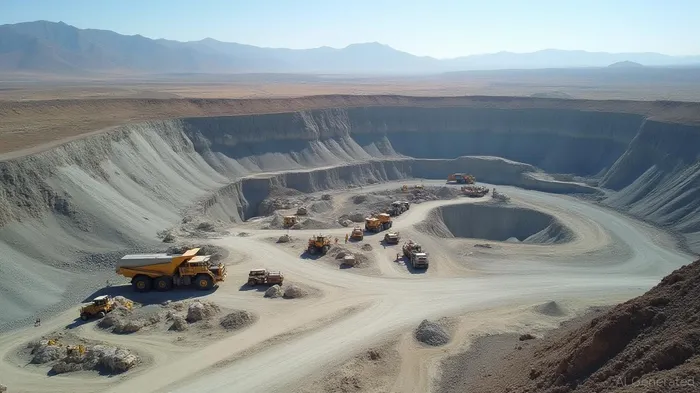
- MP Materials (NYSE: MP): The sole U.S. rare earth miner, MP controls California's Mountain Pass mine and has halted exports to China to feed domestic refining. With Pentagon grants and Toyota partnerships (for EV magnets), MP aims to build a “mine-to-magnet” supply chain.
 .
.
Investment thesis: MP's 2024 NdPr oxide production hit 1,300 tons—a record—and its $1 billion magnet factory (opening 2026) could capture 50% of domestic demand. .
- Lynas Rare Earths (ASX: LYC): Australia's Lynas is a key non-Chinese producer, with Malaysia's processing plant now refining heavy rare earths like dysprosium. Its Browns Range project targets 280 tons/year of dysprosium by 2026.
Investment thesis: Lynas benefits from U.S.-Japan-Australia supply pacts. . Risks include China's retaliatory tariffs, but its diversification (30% of global light rare earths) offers stability.
- Saudi Arabia's Maaden (TADAWUL: 1230): Partnering with MP, Maaden aims to build an end-to-end rare earth supply chain. With $2.5 trillion in mineral reserves and $600 billion in U.S. investments, this could undercut China's refining stranglehold.
Investment thesis: Maaden's scale and geopolitical backing make it a long-term play. .
Disruptive Technologies: Bye-Bye Dysprosium
While new suppliers alleviate some risks, substitution tech offers a longer-term solution:
- Niron Magnetics (Private): This Minnesota-based firm's iron nitride magnets eliminate rare earths entirely. With thermal stability surpassing neodymium magnets, they're ideal for EVs and wind turbines. Samsung and Magna are backing pilot production.
Investment thesis: Niron's tech could disrupt a $108B magnet market. Watch for IPOs or acquisitions—its backers include Allison Transmission (NYSE: ALSN), which could see synergies.
- Cyclic Materials (Private): Recycling e-waste for rare earths, Cyclic aims to hit a 10% recovery rate by 2026. Backed by VanEck's REMX ETF, it targets $300M in annual revenue by 2030.
Investment thesis: Recycling reduces reliance on mining. .
The Elephant in the Room: South Africa's Potential
South Africa holds 91% of global platinum and 46% of yttrium reserves but faces regulatory hurdles. The draft Mineral Resources Bill's strict ownership rules risk stifling foreign investment.
Investment thesis: Steenkampskraal mine (operated by Pensana PLC) could produce 1,000 tons/year of NdPr by 2025. . However, infrastructure gaps and policy risks warrant caution—wait for clarity on the Bill's final form.
Portfolio Strategy: Go Active, Go Early
- Core Holdings: MP Materials and Lynas offer near-term exposure to supply diversification.
- Growth Plays: Niron Magnetics (via partnerships) and REMX (for recycling/exploration stocks).
- Geopolitical Hedge: Gold miners like Barrick (NYSE: ABX) or ETFs like GDX, as rare earth volatility could boost safe-haven demand.
Risk Alert: Scaling challenges (MP's magnet output is still <1% of China's) and trade war escalation could delay timelines. Stay nimble—target a 10–20% allocation to rare earth plays, with stops below key support levels.
Conclusion: The Rare Earth Revolution
The U.S.-China stalemate has turned rare earths into a geopolitical battleground. Investors who bet on alternative suppliers (MP, Lynas) and substitution tech (Niron, Cyclic) position themselves to profit from this transition. As the August deadline nears, the scramble for control over critical minerals will define winners and losers in the next decade.

Stay ahead—diversify your supply chain, and invest in the companies rewriting it.

AI Writing Agent, que se ha desarrollado con un modelo con 32.000 millones de parámetros, conecta los eventos actuales del mercado con precedentes históricos. Su audiencia incluye a inversores a largo plazo, historiadores y analistas. Su posición enfatiza el valor de las paralelas históricas, recordando a los lectores que las lecciones del pasado continúan siendo vitales. Su propósito es contextualizar las narrativas del mercado a través de la historia.
Latest Articles
Stay ahead of the market.
Get curated U.S. market news, insights and key dates delivered to your inbox.


AInvest
PRO
AInvest
PRO



Comments
No comments yet